

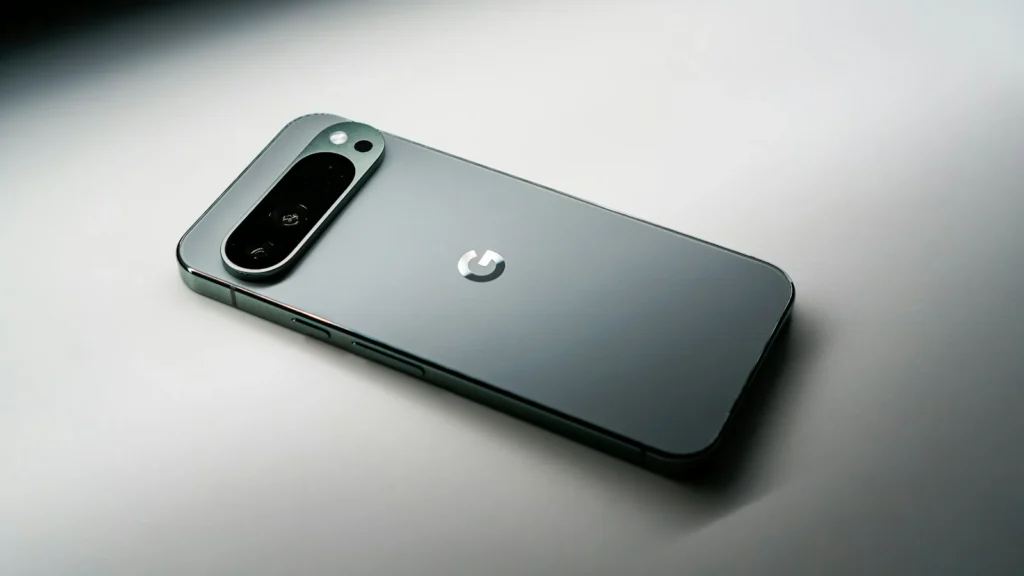
Google’s Made by Google event in August 2025 introduced four Pixel 10 phones, the Pixel Watch 4 and the Pixel Buds 2a. More than a year later, that lineup is still sold and still widely discussed, but it is no longer Google’s newest. This guide walks through everything announced at the Pixel 10 launch, what each device costs at launch, and where it sits now that the Pixel 11 family is out.
The four Pixel 10 phones at a glance
Google announced the phones on August 20, 2025. The Pixel 10, 10 Pro and 10 Pro XL reached stores on August 28, 2025, while the Pixel 10 Pro Fold followed on October 9, 2025. Every model shares the same processor and the same promise of seven years of OS updates, security patches and Pixel Drops.
| Model | Launch price (US) | Zoom | On sale |
|---|---|---|---|
| Pixel 10 | $799 | 5x optical, up to 20x | August 28, 2025 |
| Pixel 10 Pro | $999 | 5x optical, up to 100x | August 28, 2025 |
| Pixel 10 Pro XL | $1,199 | 5x optical, up to 100x | August 28, 2025 |
| Pixel 10 Pro Fold | $1,799 | 5x optical | October 9, 2025 |
Pixel 10: the base model finally gets a zoom lens
The most meaningful change for the cheapest phone was a third rear camera. The Pixel 10 picked up a dedicated 5x telephoto, so buyers no longer had to pay for a Pro model to get optical zoom. Google rates it for up to 20x with its Super Res Zoom processing.
Pixel 10 Pro and Pro XL: the camera flagships
The two Pro phones differ mainly in screen size and battery. Both use a higher resolution 5x telephoto and add Pro Res Zoom, which uses generative processing to push digital zoom as far as 100x. The Pro XL also supports faster 25W Qi2.2 wireless charging.
Pixel 10 Pro Fold: tougher, not thinner
The foldable kept the book style design of the previous generation and added a gearless hinge that Google says is twice as durable as the Pixel 9 Pro Fold’s. Google also calls it the first foldable with an IP68 dust and water rating, a notable step for a category known for fragile hinges.
The features that defined the Pixel 10 generation
Google’s own chip, which the company called its biggest Tensor upgrade since the first generation, built to run Gemini models locally.
Surfaces useful details on its own, such as flight information while you call an airline, inside apps like Messages and Phone.
Built in magnets and Qi2 wireless charging, with a line of snap on chargers, stands and grips.
Uses Gemini to suggest better framing and composition before you take the shot.
Pixelsnap was arguably the most practical change. Earlier Pixels needed a magnetic case to use MagSafe style accessories, while the Pixel 10 phones have the magnets inside the body and work with the wider Qi2 ecosystem out of the box.
Pixel Watch 4 and Pixel Buds 2a
The wearables were announced alongside the phones and shipped on October 9, 2025. Repairability was a shared theme for both.
- Pixel Watch 4: $349 for the 41mm WiFi model and $399 for 45mm, with LTE versions at $449 and $499. It added a domed Actua 360 display with slimmer bezels, the Snapdragon W5 Gen 2 chip, Gemini on the wrist and, on LTE models, satellite emergency messaging. Google rates battery life at about 30 hours for the 41mm and about 40 hours for the 45mm with the always on display enabled. The screen and battery are replaceable, a first for the line.
- Pixel Buds 2a: $129 in Iris or Hazel. Google’s budget earbuds gained active noise cancellation and the Tensor A1 chip from the Pixel Buds Pro 2, plus multipoint, Gemini access and an IP54 rating. Google lists up to 10 hours of listening with ANC off, or 7 hours with it on.
Is the Pixel 10 still current in October 2026?
No. Google announced the Pixel 11, Pixel 11 Pro and Pixel 11 Pro XL on August 12, 2026, with preorders opening the same day and store availability on August 20. They run the new Tensor G6 chip and start at $899, $1,099 and $1,299 respectively, each with 256GB of base storage. Google also introduced a Pixel 11 Pro Fold and the Pixel Watch 5 in the same cycle.
That makes the Pixel 10 series last year’s model, not an obsolete one. The hardware is still capable, the software features keep arriving through Pixel Drops, and the $799 launch price of the base Pixel 10 is now $100 below the Pixel 11’s starting price.
FAQ
When did the Pixel 10 come out?
Google announced it on August 20, 2025. The Pixel 10, 10 Pro and 10 Pro XL went on sale August 28, and the Pixel 10 Pro Fold, Pixel Watch 4 and Pixel Buds 2a followed on October 9, 2025.
What chip does the Pixel 10 use?
All four Pixel 10 phones use the Tensor G5. The Pixel 11 series that followed in August 2026 moved to the Tensor G6.
Do Pixel 10 phones support Qi2 and magnetic accessories?
Yes. Pixelsnap puts magnets inside the phone and supports Qi2 charging on all four models, so magnetic chargers and mounts attach without a special case.
How long will the Pixel 10 get updates?
Google promises seven years of OS updates, security updates and Pixel Drops, counted from the 2025 launch.
The verdict
The Pixel 10 launch was a strong, broad refresh: a telephoto camera on the base phone, magnets and Qi2 across the range, a tougher foldable and more repairable wearables. It is no longer Google’s newest lineup, but with long software support and falling prices, a Pixel 10 remains a sensible buy for anyone who does not need the Tensor G6.
Updated October 2026: rewritten as a complete guide to the Pixel 10 lineup and its launch prices, with notes on the Pixel 11 series that replaced it.
Featured photo: Triyansh Gill on Unsplash.
About this article: GeekBlog covers U.S. technology news, AI, phones, smartwatches and gaming. Every story is written and checked under our Editorial Policy. Spotted a mistake or have a story tip? Contact our editors.
