

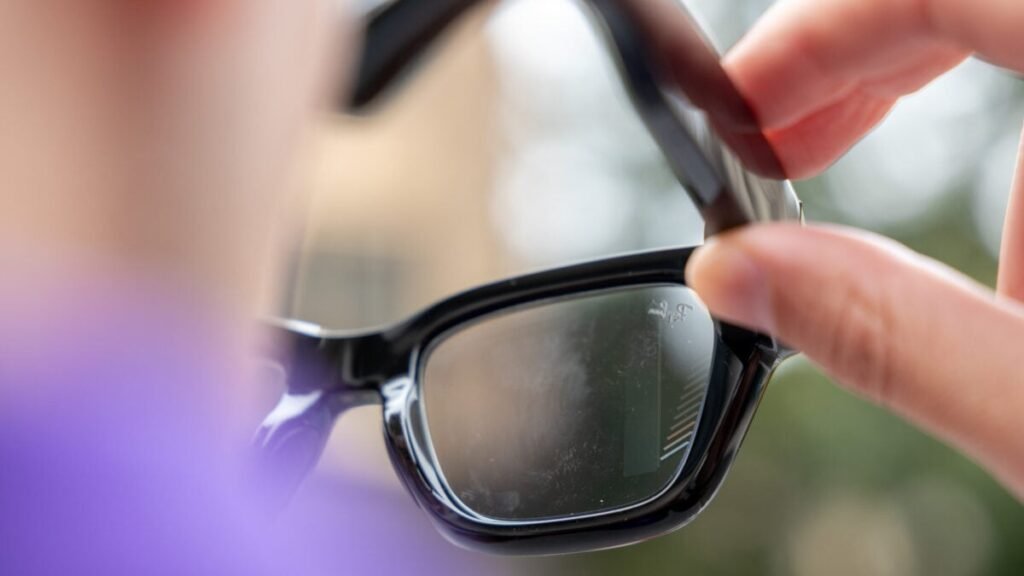
For most of the last decade, smart glasses felt like a running joke in the tech world. Google Glass flopped spectacularly. Snapchat Spectacles were more novelty than utility. Nobody could quite figure out why you would want a camera strapped to your face when your phone was already in your pocket.
Then something shifted.
In 2025, global AI glasses shipments reached 8.7 million units – a staggering 322% increase from the year before, according to fresh data from research firm Omdia. That’s not a niche gadget finding its footing. That’s a product category that has finally, genuinely broken through.
How We Got Here
The real turning point was Meta’s push with its Ray-Ban collaboration. EssilorLuxottica, the company behind Ray-Ban frames, confirmed it sold over 7 million AI glasses in 2025 alone – compared to just 2 million combined across 2023 and 2024. Meta now controls roughly 85.2% of the global AI glasses market, with 7.4 million units shipped and a year-over-year growth rate of 281.3%.
What made these glasses different from everything that came before? A few things converged at once. The hardware got lighter and more stylish – nobody wants to wear something that announces "I am a tech person" to every room they walk into. The AI inside got genuinely useful, with real-time voice queries, object recognition, live translation, and hands-free navigation. And pricing came down to where everyday consumers could actually see themselves buying a pair.
Meta also launched its Ray-Ban Display model at $800, adding a full-color heads-up display in the right lens.
China Is Closing the Gap
The United States isn’t running this race alone. China captured 10.9% of the global AI glasses market in 2025, making it the second-largest market worldwide – and it’s growing faster than anywhere else on the map.
Chinese companies including Rokid, Alibaba, and Even Realities now account for 71% of display-equipped AI glasses. Alibaba unveiled smart glasses running its Quark AI assistant, signaling that China’s biggest tech names see this category as worth a serious fight.
The overall share of glasses with built-in displays also jumped from 3.3% in 2024 to 8.4% in 2025. It’s still a small slice of the total market, but the direction is unmistakable: consumers increasingly want to see something, not just hear a voice in their ear.
Who’s Coming for Meta’s Crown?
The interesting question now isn’t whether AI glasses are going mainstream. At 8.7 million units, that’s already happening. The real question is who gets to own the category when the competitive pressure truly kicks in.
Google made a significant move: a $150 million partnership with Warby Parker to develop smart glasses powered by the Gemini AI assistant. That signal makes clear Google isn’t quietly stepping aside for Meta.
Apple, meanwhile, has been testing at least four distinct frame designs for its rumored N50 smart glasses. Production could start as early as late 2026, with a public launch targeted for 2027. The company reportedly redirected resources away from a cheaper Vision Pro specifically to accelerate its smart glasses effort. We covered Apple’s strategic pivot in depth: Apple shifts from Vision Pro to push AI smart glasses.
Samsung is also working on Galaxy Glasses, and Qualcomm’s new Snapdragon Wear Elite chip is specifically built for the next wave of AI-first wearables beyond traditional smartwatches.
The Road to 10 Million Units
Analysts at Omdia forecast that AI glasses will cross 10 million units in 2026. Meta has set that same number as its own internal sales target for the year. To put that in perspective: the company sold 2 million glasses in two years combined, then 7 million in just one. The growth trajectory is not subtle.
Reaching 10 million won’t just mean selling more of the same hardware. The category is evolving fast. Meta is reportedly developing an internal feature called "Name Tag" that would let wearers identify strangers in real time using facial recognition built right into the glasses. That raises serious questions about privacy and consent that the industry hasn’t fully worked out yet – questions worth keeping an eye on as we explored in our coverage of Meta’s push toward real-time facial recognition in smart glasses.
What the Numbers Actually Mean
The rapid growth of AI glasses puts quiet but real pressure on every other hardware category. Smartwatches still matter. Phones are nowhere near going away. But there’s a visible shift in how Silicon Valley – and Shenzhen – are thinking about what comes after the smartphone.
If a pair of glasses can handle your queries, translate a sign, identify objects, and overlay information on your field of view, the daily use case for pulling out your phone shrinks a little more each year.
The market isn’t fully there yet. But 322% growth in a single year is the kind of number that makes even longtime skeptics pay attention. The companies placing their bets right now – on hardware, AI models, and partnerships with frame makers – are betting that smart glasses become the next thing people put on in the morning without thinking twice about it.
Given what 2025 looked like, that bet is starting to look like a pretty solid one.
About this article: GeekBlog covers U.S. technology news, AI, phones, smartwatches and gaming. Every story is written and checked under our Editorial Policy. Spotted a mistake or have a story tip? Contact our editors.
