

The cheapest piece of investigative equipment in journalism right now costs twenty nine dollars, fits in a coin pocket, and is sold by Apple as a way to find your keys.
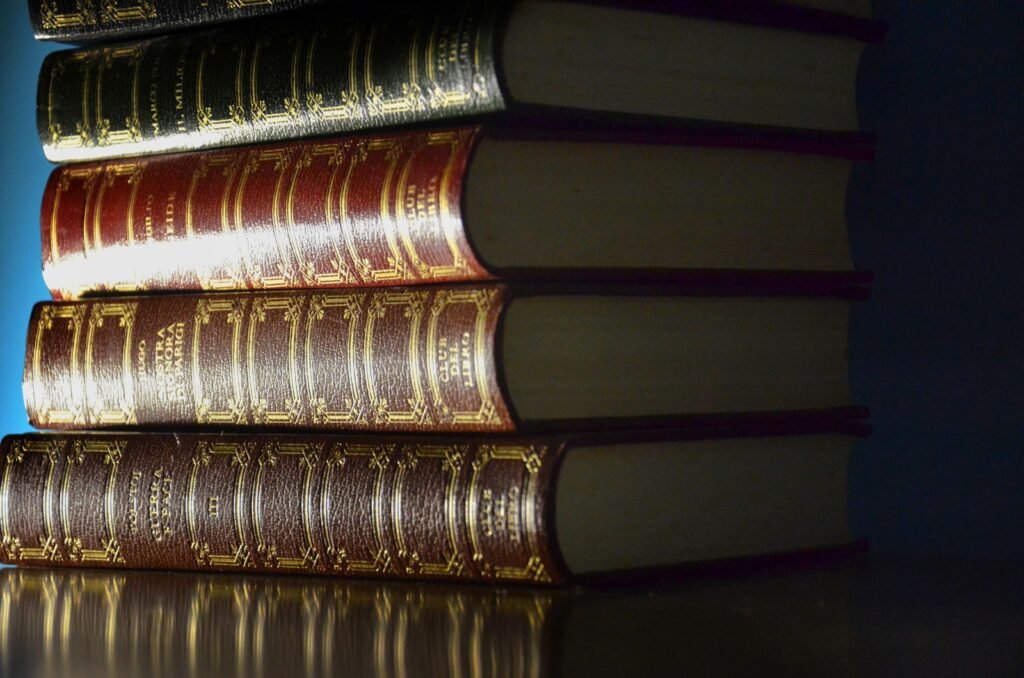
404 Media bought roughly a thousand secondhand books through Biblio, a marketplace that specializes in titles you cannot easily find anywhere else, and hid an AirTag among them. Then they watched where the shipment went. It crossed four states and stopped in northeast Las Vegas, at an Amazon warehouse designated LAS8.
What the AirTag Actually Proved
It is worth being precise about what this method does and does not establish, because that precision is the whole reason the story landed.
Reporting had circulated for months that AI companies were buying books in bulk through intermediaries and destroying them after scanning. The weakness was always the paper trail. Books get sold to a middleman, the middleman sells them on, and the chain goes dark. A company can truthfully say it does not buy books to destroy them while a supplier does exactly that on its behalf.
A tracker removes the ambiguity from one link of that chain. It does not prove what happens inside the building, but it proves the shipment arrived there, and it puts a specific address on a practice that had been discussed in the abstract.
| Stage | What happened |
|---|---|
| Purchase | A bulk lot of roughly 1,000 books bought through Biblio, a marketplace for scarce titles |
| Transit | The AirTag reported across four states on the way west |
| Destination | Amazon’s LAS8 warehouse, 5801 Nicco Way, northeast Las Vegas |
| The unit | A team called VGT3, split between staff who cut bindings and staff who scan barcodes on receipt |
| Outcome | Spines removed, pages digitized for AI training, physical copies discarded |
Why Anyone Would Cut a Book in Half
To someone who loves books this reads as vandalism. To someone running a digitization pipeline it is simply the correct engineering decision, and understanding why makes the whole story less mysterious.
Scanning a bound book is slow and awkward. Somebody has to hold it open, the gutter near the spine curves away from the glass and distorts the text, and optical character recognition on a curved page produces errors that then have to be corrected. Non destructive scanning of a single volume can take a long time and still yield a mediocre result.
Cut the spine off and the book becomes a stack of loose sheets. A production document scanner will pull those through at high speed, flat and evenly lit, with clean OCR on the other side. The throughput difference is not marginal. It is the difference between digitizing a few books an hour and digitizing pallets.
So the destruction is not spite or carelessness. It is the direct consequence of optimizing for volume, which is the only thing that matters when the goal is to convert a warehouse of paper into training tokens.
Amazon’s Answer, and What It Left Out
Asked about the operation, an Amazon spokesperson gave 404 Media one line: “Amazon purchases books through commercial channels to help develop and improve the products and services our customers use.”
Read carefully, that sentence confirms the acquisition and says nothing about the destruction. It is a statement engineered to be unfalsifiable. The company declined to say how many books it has bought, when the program started, which products the scans feed, or whether anyone checks a title for scarcity before the spine comes off.
That last question is the one that matters most to librarians and collectors, and it is the one Amazon most conspicuously did not answer. Separate reporting has traced these bulk purchases back to 2024, which suggests a program that has been running quietly for roughly two years.
Amazon Is Not the First, and the Law Is Unsettled
This practice has a precedent, and it is recent enough that everyone involved knows exactly how it played out.
Anthropic ran an effort internally described in unsealed filings as Project Panama, characterized in one planning document as an effort to destructively scan all the books in the world. The company bought physical books in bulk, prioritized less common titles, cut them apart and scanned them.
The legal outcome is more complicated than either side’s summary. In June 2025, Judge William Alsup ruled in Bartz v. Anthropic that buying a physical book legitimately and converting it into a digital training file was transformative fair use. That sounds like a green light, and in a narrow sense it was. But the same case turned on pirated material rather than purchased material, and it ended in July 2026 with a settlement of roughly 1.5 billion dollars, about 3,000 dollars for each of some 500,000 covered works, the largest copyright class action in United States history.
| What is established | What is not | |
|---|---|---|
| Buying and scanning | One district court called it transformative fair use | The ruling was never appealed, so it binds no other court |
| Destroying the copy | You may generally do as you like with a book you own | No court has weighed cultural loss as a factor at scale |
| Using pirated copies | Treated very differently, and it is what drove the settlement | Not what is alleged here, on the current evidence |
The practical lesson the industry appears to have drawn is not “stop scanning books.” It is “buy them properly first.” Amazon paying Biblio for a pallet of used titles is, on the current state of the law, most likely lawful. Whether it should be is a question legislators have not seriously taken up.
The Bigger Picture: Data Is the Constraint Now
Compute stopped being the only bottleneck a while ago. High quality text that is not already in every training set is scarce, and the open web has been thoroughly harvested. Printed books are one of the last large reserves of professionally edited, well structured prose that was never posted online.
That scarcity explains the economics. Buying a thousand used books, paying people to cut and scan them, and running a Las Vegas warehouse is expensive per token compared with scraping a website. Companies do it because the alternative sources are exhausted or contested, and because model quality now depends on data quality in a way it did not when everyone was still scaling parameters. The same pressure is visible in the way the frontier labs have been slashing prices against each other while their training costs climb.
It also fits the physical footprint these companies are now building out. Amazon’s AI ambitions already involve a Texas gas plant that would out-pollute every other power station in America, and a warehouse full of book guillotines is a much smaller line item on the same balance sheet. The pattern is consistent: whatever the model needs, buy it, build it, or consume it.
A Quiet Argument for Paper
There is an irony sitting underneath all of this that is hard to miss. The most durable, least corruptible copy of a text has always been the printed one. It does not need a server, a subscription or a license that can be revoked, and it survives the company that made it.
That is roughly the case Christopher Nolan has been making about film, when he argued for owning physical media rather than renting streams. The book version of that argument just got a much sharper illustration. A copy on your shelf cannot be fed into a scanner in Las Vegas.
The Bottom Line
An AirTag worth less than a hardback closed a gap that months of reporting had not. Amazon buys books in bulk, sends them to a facility in Las Vegas, and a team there takes them apart so the pages can be scanned for AI training. The company confirms the buying and will not discuss the rest.
Nothing about it appears to be illegal on the current reading of the law. Whether a system that converts scarce printed books into training data, one pallet at a time, with no public accounting of what is lost, is something anyone actually decided to allow is a separate question. It has not been asked in a courtroom yet, and the pallets are not waiting.
