

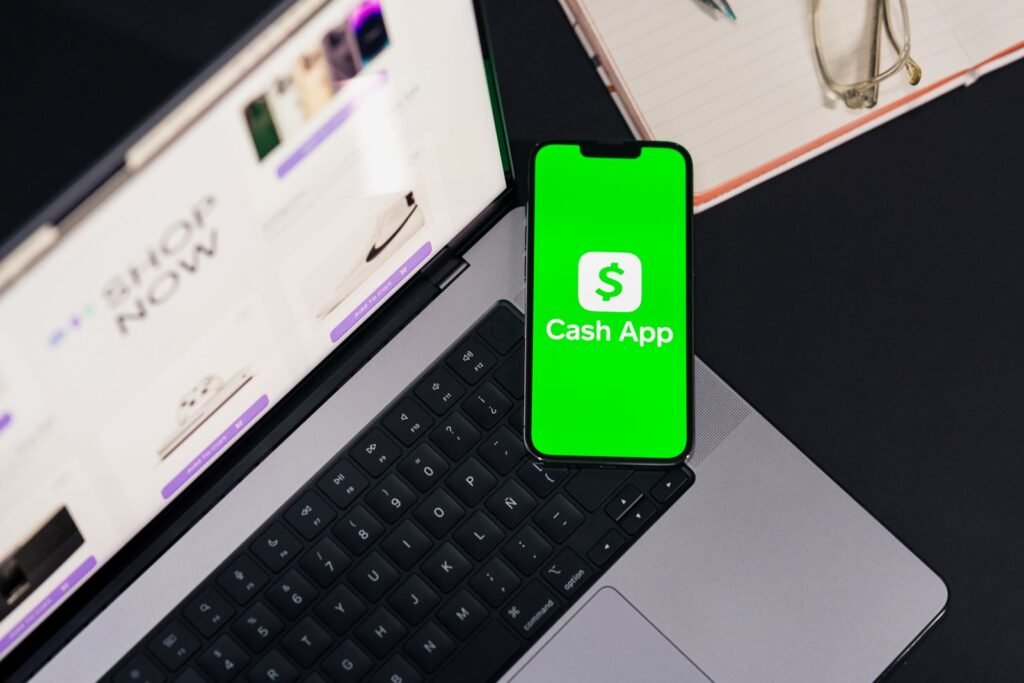
Amanda Smith opened her front door one afternoon in April and found sheriff’s deputies from her corner of upstate Pennsylvania waiting with an arrest warrant. The charge was computer fraud. The alleged crime had happened in Arkansas, a state she says she has never visited. She describes herself as not very tech savvy, and she says she has never used Cash App.
Six months later, she is still fighting the case. As UNILAD Tech reports, based on an investigation by 404 Media, Smith could face up to six years in prison over a Cash App account she insists someone else created with her stolen details. And when she asked Cash App for information about that account, the company said it could not help, because she could not prove she owned it.
The short version
- A scammer tricked a Facebook Marketplace buyer into sending $1,000 for items that were not really for sale.
- The money went to a Cash App account opened with Smith’s Social Security number and date of birth.
- Investigators got the account records from Block, Cash App’s parent company, and Smith was arrested and spent three nights in jail.
- 404 Media found the account’s address and network details did not match hers.
- Smith is charged with computer fraud. The case is ongoing, and she has not been convicted of anything.
How a Marketplace scam landed on her doorstep
The scheme itself was ordinary. According to Malwarebytes, the scammer had taken over someone else’s Facebook account, listed items for sale and directed a buyer to pay through Cash App. The buyer sent $1,000. The goods never existed.
When the buyer went to police, investigators followed the money to the Cash App account and asked Block for its records. Those records included a name, a Social Security number and a date of birth, all belonging to Amanda Smith. That was enough for a warrant. Deputies let her grab her contact lenses before taking her away in handcuffs, she told 404 Media’s Joseph Cox. “I was completely confused,” Smith said.
What came next is the part 404 Media describes as Kafkaesque. Smith tried to get information about the account that had her name on it, hoping to show it was not hers. “Cash App refused to provide me with any information about the account, because I couldn’t prove that I was the owner,” she said. The account was linked to her closely enough to justify an arrest, but not closely enough for her to see what was in it. She eventually received the records through the criminal case itself.
What the records actually show
When 404 Media reviewed the account records, several details pointed away from Smith. The address on the account and the network used to access it did not match hers. The phone number tied to the account was linked to an Amanda Smith in older breach data, and someone had used that same phone number to create a Venmo account under a different name entirely.
Smith suspects her Social Security number and birth date leaked in a data breach and were later used to impersonate her. That has not been proven, and the original source of her information is still unknown. But the pattern fits a common identity theft playbook: stolen identity details are used to open a payment account, which then becomes a drop for scam proceeds. When police trace the money, the name on the account belongs to someone who has no idea it exists.
Why the charge carries six years
Smith is charged in Arkansas, where computer fraud is generally treated as a Class D felony. That category carries a maximum of six years in prison, which is where the figure in the headlines comes from. A maximum is not a likely sentence, and Smith has not been convicted. But it explains why a $1,000 scam payment can come with such a heavy potential penalty.
It also shows how the burden can quietly flip in identity theft cases. Smith is presumed innocent, yet in practice she has spent half a year trying to show that an account carrying her personal details was never hers, against a company that would not talk to her about it.
Cash App’s fraud record
This is not the first time Cash App’s handling of fraud has drawn criticism. In January 2025, the Consumer Financial Protection Bureau ordered Block to pay $175 million, up to $120 million in refunds plus a $55 million penalty, over failures to properly investigate unauthorized transactions. The bureau called those investigations “woefully incomplete” and said Cash App offered no live customer service agents, which pushed some users toward fraudsters posing as support staff. Block disputed the findings but settled. The order required live phone support and full investigations of disputed transactions.
Smith’s situation is different, since she was never a customer. That is exactly the gap her case exposes. Payment apps have processes for account holders who report fraud. They have far less for people whose identities were used to open the account in the first place.
How to protect yourself
You cannot fully stop criminals from using leaked data, but you can make it much harder to open new accounts in your name and much easier to prove you did not. Malwarebytes recommends matching your response to what was exposed.
| If this leaked | Do this |
|---|---|
| Social Security number, date of birth | Freeze your credit for free at Equifax, Experian and TransUnion. Check your credit reports for accounts you do not recognize. |
| Passwords | Change the password everywhere you reused it, and turn on two-factor authentication. |
| Email or phone number | Expect phishing texts and calls, especially ones that mention the breach. |
| Bank or card details | Call your bank, watch statements closely and dispute anything unfamiliar right away. |
A credit freeze will not block every type of misuse, since some payment apps verify identity differently from lenders. But it shuts the easiest doors, and it costs nothing. For a broader checklist, our guide to online safety basics covers unique passwords, two-factor codes and spotting phishing.
If you buy on Facebook Marketplace, the old advice still holds. Pay in person when you can, never send money for an item you have not seen, and be wary of sellers who push you to a payment app. Marketplace has had a rough few weeks, including the case of Meta’s AI agent sharing a seller’s home address with a buyer. Smith’s story is a reminder that a scam can hurt more than the person who sent the money. Sometimes the victim is the stranger whose name was on the account.
Sources and further reading
- UNILAD Tech: Woman faces six years behind bars over Cash App account she “never opened”
- 404 Media: Someone opened a CashApp in her name. She faces years in prison
- Malwarebytes: Woman faces years in prison over a Cash App account she says she never opened
- CFPB: CFPB orders operator of Cash App to pay $175 million
- FTC: IdentityTheft.gov
- FTC testimony: The rising scam economy
About this article: GeekBlog covers U.S. technology news, AI, phones, smartwatches and gaming. Every story is written and checked under our Editorial Policy. Spotted a mistake or have a story tip? Contact our editors.
