

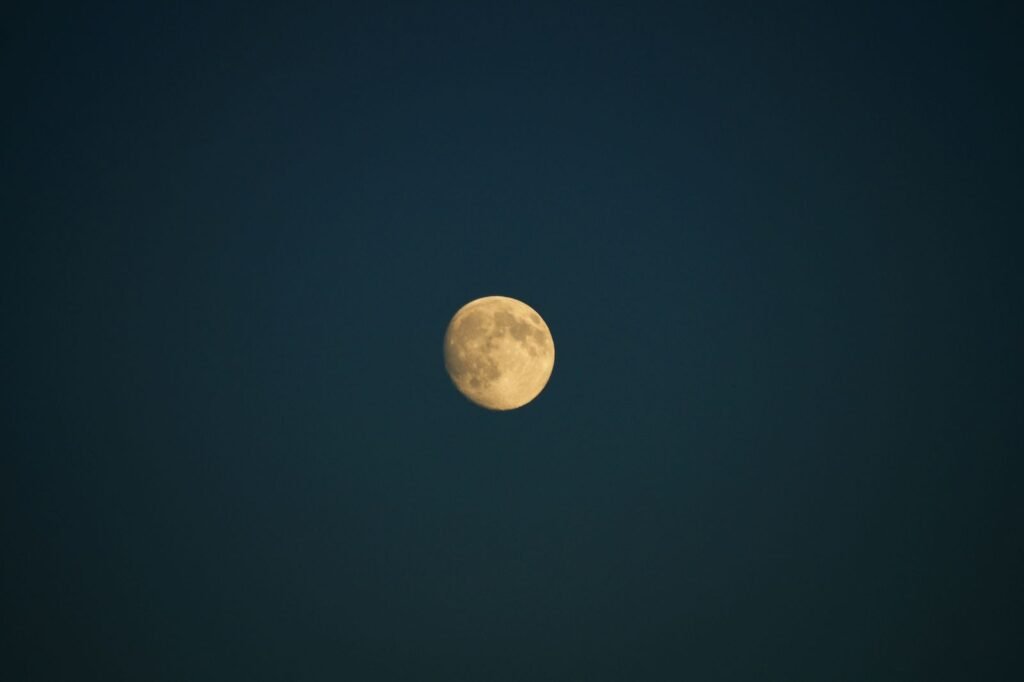
NASA has called a press conference with a title that does not leave much room for interpretation: “Artemis Acceleration.” Administrator Jared Isaacman, Associate Administrator Amit Kshatriya and Artemis program manager Jeremy Parsons are set to take the stage at Kennedy Space Center in Florida today, Friday, October 23, at 2 p.m. EDT (11 a.m. PDT, 6 p.m. UTC), to talk about the status of the next Moon missions and the push to put Americans back on the lunar surface by 2028.
As UNILAD Tech puts it, the update “could change space history.” That is a big claim for a status briefing. But the timing is interesting, the word “acceleration” is doing a lot of work, and there are only a handful of places where NASA can realistically find time. Here is what we know going in, and what to listen for.
The short version
- NASA’s “Artemis Acceleration” briefing starts at 2 p.m. EDT today and streams live at nasa.gov/live.
- NASA says it will cover Artemis III, now a crewed test in Earth orbit targeted for mid-2027, and the goal of landing astronauts in 2028.
- Artemis IV is planned as the first landing attempt, near the lunar south pole in early 2028, with Artemis V to follow later that year.
- The big unknowns are the landers. SpaceX’s Starship has not yet demonstrated in-orbit refueling, and Blue Origin’s New Glenn lost a booster in a May test.
- Artemis II already flew in April, carrying four astronauts 252,756 miles from Earth, the farthest humans have ever traveled.
What NASA has actually said about the briefing
The official media advisory is short. NASA says the briefing will discuss “Artemis acceleration” and the status of upcoming Moon missions as the agency works toward returning American astronauts to the surface of the Moon by 2028. It will stream on NASA’s live channels, and in-person accreditation for reporters closed on October 16.
We could not find any credible leak of what will be announced. No Reuters, Ars Technica or SpaceNews scoop, no slide deck floating around. So anything you read before 2 p.m. EDT claiming to know the exact news is guesswork. What we can do is look at where the Artemis schedule has slack and where it does not.
How we got here: the February reset
To understand what “acceleration” might mean, you have to go back to February 27, 2026. That day Isaacman, only recently confirmed as administrator, announced a major overhaul of the Artemis program. As Spaceflight Now reported, he acknowledged that landing astronauts in 2028 “was not realistic” without another preparatory mission first. “We’ve got to get back to basics,” he said.
The plan he laid out changed Artemis III from a south pole landing into a 2027 flight in low Earth orbit, where astronauts in Orion would rendezvous and dock with one or both commercial landers from SpaceX and Blue Origin. It is a lot like Apollo 9, which tested the command module and lunar lander in Earth orbit in 1969, four months before Apollo 11. Artemis IV and Artemis V would then attempt landings in 2028, using whichever lander is ready. The reset came two days after NASA’s Aerospace Safety Advisory Panel warned that the old Artemis III plan stacked too many “firsts” into one mission.
The same plan also changed the rocket. NASA wants the Space Launch System to fly roughly every 10 months, a big jump from the more than three years between Artemis I and Artemis II, and it dropped the long-planned Exploration Upper Stage in favor of a more standardized design.
Artemis II set the bar in April
Whatever NASA says today, it is building on a mission that went well. Artemis II launched on April 1, 2026, with Commander Reid Wiseman, Pilot Victor Glover and mission specialists Christina Koch and Jeremy Hansen of the Canadian Space Agency aboard the Orion spacecraft they named Integrity. We covered the Artemis II crew and their Orion capsule well before launch.
On April 6, the crew passed Apollo 13’s 1970 record of 248,655 miles from Earth and peaked at 252,756 miles, about 4,100 miles farther than any humans had been before. They splashed down off San Diego on April 10 after a little over nine days in space. NASA has said Orion’s heat shield, a major worry after Artemis I, performed as expected.
Where NASA could find time
Artemis III hardware is already moving. The SLS boosters were fully stacked on the mobile launcher by the end of September, and all four RS-25 engines are on the core stage, according to NASASpaceflight. The crew was named on June 9: Commander Randy Bresnik, Pilot Luca Parmitano of the European Space Agency, and mission specialists Frank Rubio and Andre Douglas. Sources give the launch target as anything from June to the third quarter of 2027, so the first thing to listen for today is a firm date.
The rocket is not really the bottleneck, though. The landers are. At the International Astronautical Congress in early October, NASA’s Human Landing System team shared timelines that put a Starship propellant transfer demonstration in early 2027 and an uncrewed Starship Moon landing before the end of 2027, with Blue Origin’s Blue Moon MK2 attempting its own uncrewed landing in early 2028. NASA has not yet said which lander Artemis IV will use.
| SpaceX Starship HLS | Blue Origin Blue Moon MK2 | |
|---|---|---|
| Launch vehicle | Super Heavy | New Glenn (NASA has asked Blue Origin to consider alternatives) |
| Latest milestone | Flight 14 reached orbit on Sept 28, 2026 | New Glenn booster lost in a May 28 static fire |
| Key hurdle | In-orbit propellant transfer, not yet flown | Getting the pathfinder MK1 lander flying |
| Uncrewed landing target | By end of 2027 | Early 2028 |
That leaves a few realistic forms “acceleration” could take. NASA could pull Artemis III earlier into 2027. It could commit to flying two landing missions in 2028 instead of hoping for them. It could name the Artemis IV lander early to lock in a supplier. Or it could change the order of events, for example letting a lander that proves itself early fly a crew sooner. All of these are possibilities, not predictions, and it is just as likely NASA uses the stage to confirm the existing plan is on track.
The race NASA does not like to talk about
Part of the urgency is China. Beijing’s stated goal is a crewed lunar landing before 2030, using the Mengzhou spacecraft, the Lanyue lander and the Long March 10 rocket. In February it ran a low-altitude flight test of Long March 10 combined with an in-flight abort test of Mengzhou, and the first orbital flight of the new capsule is expected either late this year or in 2027. If NASA lands in 2028, it stays ahead. If 2028 slips by two years, the two programs start to overlap.
Money is the other pressure. NASA’s Inspector General estimated in 2021 that each of the first four SLS and Orion launches would cost about $4.1 billion, a figure then Inspector General Paul Martin called unsustainable. In March, NASA paused the Lunar Gateway station “in its current form” and redirected resources to a south pole Moon base effort. The White House’s 2027 budget request would cut NASA overall to $18.8 billion while keeping $8.5 billion for Artemis, and the agency is currently running on a continuing resolution through December 11. A faster schedule is also a cheaper one, at least on paper.
SpaceX’s corporate future is in the mix too. Starship is the backbone of NASA’s near-term landing plans, and Elon Musk has been floating bigger moves for the company, including the Tesla and SpaceX merger he now calls a good idea. NASA’s schedule now depends heavily on a private company’s test cadence in Texas and Florida.
Why it matters
No human has walked on the Moon since Apollo 17 left in December 1972. Artemis II proved Orion and SLS can carry a crew around the Moon and back safely. Everything that remains, from refueling a spacecraft in orbit to landing a 50-meter-tall Starship on uneven ground near the south pole, is harder and newer than anything Apollo attempted.
So treat today’s announcement with healthy skepticism and real interest at the same time. If NASA genuinely found months on that path, that would be big news. If “acceleration” turns out to mean “we are still aiming for 2028,” that is useful to know too. The Moon itself has been busy without us in the meantime: researchers recently spotted a fresh crater bigger than the Colosseum from an impact nobody noticed in 2024. We will update our coverage once the briefing wraps.
Sources and further reading
- UNILAD Tech: NASA set to make major Moon announcement tonight
- NASA: NASA to Discuss Artemis Acceleration, Status of Upcoming Moon Missions
- Spaceflight Now: NASA announces major overhaul of Artemis Moon program
- NASASpaceflight: Artemis III teams prepare short stack tanking test
- NPR: NASA names the Artemis III crew
- NASA HLS presentation, IAC 2026 (PDF)
- NBC: Artemis II astronauts set new distance record
- Spaceflight Now: NASA head urges new launcher for Blue Origin’s Moon landers
- NASASpaceflight: NASA’s Moon base pivot and the Gateway pause
- SpacePolicyOnline: FY2027 budget request for NASA
About this article: GeekBlog covers U.S. technology news, AI, phones, smartwatches and gaming. Every story is written and checked under our Editorial Policy. Spotted a mistake or have a story tip? Contact our editors.
