Close Menu
GeekBlog

    Subscribe to Updates

    Get the latest creative news from FooBar about art, design and business.

    What's Hot

    Patrick Stewart Chose Aquamation Over Cremation. Here’s How Water Cremation Works.

    November 21, 2026

    Garmin Gives Your Dog a Profile: New Watch Update Adds Dog Workouts, Badges and Better Swim Tracking

    November 21, 2026

    Ashton Kutcher Turned $435 Million Into a $7 Billion Anthropic Stake. His Track Record Goes Back to Skype.

    November 21, 2026
    Facebook
    GeekBlog
    • Home
    • Mobile
    • Tech News
    • Blog
    • Gaming
    • Smartwatch
    • How-To Guides
    • AI & Software
    Facebook
    GeekBlog
    Home»Tech News»China’s Wuhu AI Data Center Cluster Explained: Status in 2026
    Tech News

    China’s Wuhu AI Data Center Cluster Explained: Status in 2026

    Marcus BennettBy Marcus BennettSeptember 28, 2025Updated:November 3, 20266 Mins Read
    Share Facebook Twitter Pinterest LinkedIn Tumblr Email Copy Link
    China's Wuhu AI Data Center Cluster Explained: Status in 2026
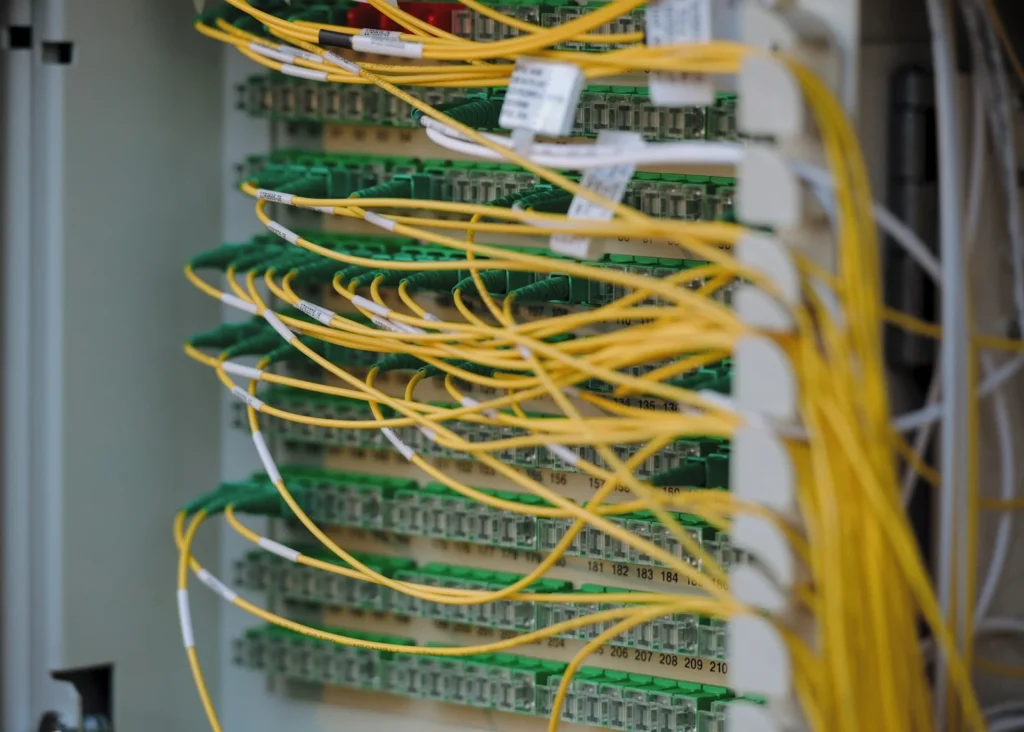
    Photo: Albert Stoynov on Unsplash
    Share
    Facebook Twitter LinkedIn Pinterest Email Copy Link

    Wuhu, a river city in China’s Anhui province, has become one of the country’s most important bets on artificial intelligence infrastructure. Former farmland along the Yangtze is being turned into large data center campuses run by Huawei and China’s three big state carriers, all part of a national plan to pool computing power. As of October 2026, the cluster is operating and still expanding. Here is what it is, why Beijing chose Wuhu and what is known about its progress.

    Quick answer: Wuhu is one of ten national data center clusters under China’s East Data, West Computing program, launched in 2022. Local officials say that by July 2026 the city had built about 224,700 standard server racks and roughly 64,000 PFLOPS of AI computing capacity, more than 70 percent of Anhui’s total. Huawei, China Telecom, China Unicom and China Mobile all run facilities there, and most of the chips are domestically made.

    The national plan behind Wuhu

    In February 2022, China’s National Development and Reform Commission formally launched a program usually translated as East Data, West Computing. The idea is to treat computing power a bit like electricity: build capacity where land and energy are cheap, then connect it with fast networks to the regions that need it.

    The program set up eight national computing hubs and ten data center clusters around them. Four hubs sit in the energy rich west and southwest (Inner Mongolia, Ningxia, Gansu and Guizhou), where latency tolerant work like storage and model training can run cheaply. The other four sit near the big economic regions of the east and south: Beijing, Tianjin and Hebei; the Yangtze River Delta; the Greater Bay Area; and Chengdu and Chongqing. Those eastern hubs handle work that needs quick response times.

    8 hubs
    Four in the west, four near major eastern and southern economic regions.
    10 clusters
    Physical data center zones built around the hubs, with Wuhu among them.
    One network
    The goal is to share and trade spare capacity across regions.

    Why Wuhu

    Recommended for you:

    GameSir Pocket Taco: Clip On Game Boy Style Phone Controller
    Tech News·Sep 29, 2025

    GameSir Pocket Taco: Clip On Game Boy Style Phone Controller

    Wuhu is one of two clusters serving the Yangtze River Delta hub, China’s wealthiest and most densely populated economic region. Location is the main advantage. The city sits a short fiber hop from Shanghai, Hangzhou and Nanjing, and local officials cite round trip latency of only a few milliseconds to the delta’s major cities. That matters for AI inference, the step where a trained model answers user requests and every millisecond adds up.

    It is also cheaper than the coastal megacities. Local reports put electricity prices noticeably below Shanghai’s, and land along the Yangtze, including former rice paddies, is far more plentiful than in the urban core. Anhui added support policies for the cluster in late 2023, including land and energy quotas, and Wuhu issued its own regulation in February 2024 on becoming a computing focused city.

    Who is building there

    Most of China’s biggest infrastructure players have a presence in Wuhu. Huawei operates a large cloud data center for East China and deployed its CloudMatrix 384 AI systems there in April 2025. China Telecom has run a group level cloud center in the city since 2017, and China Unicom and China Mobile both operate AI computing centers in the area. Server maker Sugon and ByteDance are also involved.

    In 2025, reports described a planned data island of roughly 760 acres in the Yangtze basin for Huawei and the three state carriers, along with local subsidies covering up to 30 percent of AI chip purchases. Some press accounts cited a total price tag near $37 billion. No official budget has confirmed that figure, so treat it as an estimate.

    Watch out: Chinese computing capacity figures are usually given in P, meaning petaflops, and are reported by local governments. They often count lower precision AI math and are not directly comparable with US data center numbers measured in megawatts or GPU counts.

    Status as of October 2026

    The cluster is real and running, not just a plan. According to figures from Wuhu officials published in August 2026, the city had about 224,700 standard racks and around 64,000 PFLOPS of AI computing capacity by July 2026, with 16 data center projects signed and landed. A local executive said domestic chips make up more than 80 percent of the cluster’s computing.

    Independent researchers tracking the Huawei campus through satellite imagery estimate that four of its buildings were operating by late 2025, running roughly 100,000 Huawei Ascend chips with around 157 megawatts of IT power. They reported a fifth building structurally complete in August 2026, with more buildings expected to come online by the end of 2026 and into 2027.

    The chip question

    Wuhu’s reliance on domestic hardware is partly a choice and partly a necessity. US export controls block sales of the most advanced Nvidia AI chips to China, so Chinese operators lean on Huawei’s Ascend line and other local processors. Individually these chips trail the best US hardware, which is why China focuses on scale, clustering and networking to close the gap. Pooling capacity in hubs like Wuhu, and linking older underused data centers in the west to busy eastern demand, is a core part of that strategy.

    Related reading

    For what this infrastructure push is producing, read our analysis of DeepSeek V4.1 Flash closing the gap with US models on LiveBench.

    Beijing’s view of AI as a strategic asset also shaped the Manus funding round that followed China blocking Meta’s $2 billion takeover.

    FAQ

    What is the Wuhu data center cluster?

    Recommended for you:

    Huawei Connect 2025: Ascend AI Chips, SuperPoDs and What Came Next
    Tech News·Sep 29, 2025

    Huawei Connect 2025: Ascend AI Chips, SuperPoDs and What Came Next

    It is one of ten national data center clusters in China’s East Data, West Computing program, located in Wuhu, Anhui, and serving the Yangtze River Delta.

    Is the Wuhu project operational?

    Yes. Multiple data centers are running, and construction continues on additional buildings through 2026 and 2027.

    Is Wuhu China’s answer to Stargate?

    It is often compared to the US Stargate effort, but it is a regional cluster within a broader state program rather than a single private venture.

    What chips does Wuhu use?

    Mostly domestic ones, especially Huawei Ascend processors, because US export rules restrict access to top Nvidia AI chips.

    The verdict

    Wuhu shows how China is approaching the AI race: a state coordinated network of hubs, cheap land and power, and domestic chips deployed at scale. The cluster is already one of the country’s largest concentrations of AI computing, and its expansion over the next year will be a useful signal of how fast China can grow capacity under export controls.

    Updated October 2026: rewritten as an explainer covering China’s national computing hub plan, the Wuhu cluster and its verified status.

    Featured photo: Albert Stoynov on Unsplash.

    About this article: GeekBlog covers U.S. technology news, AI, phones, smartwatches and gaming. Every story is written and checked under our Editorial Policy. Spotted a mistake or have a story tip? Contact our editors.

    China
    Share. Facebook Twitter Pinterest LinkedIn Tumblr Telegram Email Copy Link
    Previous ArticleThe Best Linux Laptops in 2026 for Students, Hobbyists and Pros
    Next Article How to Fix WiFi Dead Spots in Your Home
    Marcus Bennett

      Marcus Bennett is GeekBlog's Android expert, covering everything from Google's Pixel line and Samsung Galaxy flagships to OnePlus, Nothing, Xiaomi and the broader Android ecosystem. He follows each Android OS release, One UI and Pixel Feature Drop, custom ROMs and the foldable wave, translating spec sheets and beta builds into hands-on guidance for readers choosing their next Android phone, tablet or wearable.

      Related Posts

      6 Mins Read

      Patrick Stewart Chose Aquamation Over Cremation. Here’s How Water Cremation Works.

      5 Mins Read

      Ashton Kutcher Turned $435 Million Into a $7 Billion Anthropic Stake. His Track Record Goes Back to Skype.

      7 Mins Read

      Bryan Johnson Says Your Phone Is Hurting Your Eyes. Here’s What His Scans Found and What Actually Helps.

      7 Mins Read

      AI Flagged a Doritos Bag as a Gun and Police Came Armed. Now Four Students Are Suing.

      7 Mins Read

      A Former NASA Physicist Says Reality Only “Renders” When You Look. Here’s How His Parking Lot Theory Holds Up.

      7 Mins Read

      Reporters Had to Bag Their Phones on Air Force One Leaving China. Here’s What a Faraday Bag Actually Stops.

      Top Posts

      Every iPhone Camera Ranked in 2026 (Best to Worst)

      July 6, 2026388 Views

      Apple Watch Black Friday 2026: Early Deals, Prices to Beat and When to Buy

      November 8, 2026218 Views

      Best Browser for Android in 2026: Top Picks Ranked

      July 7, 2026187 Views
      Stay In Touch
      • Facebook

      Subscribe to Updates

      Get the latest tech news from FooBar about tech, design and biz.

      Most Popular

      Apple Watch Black Friday 2026: Early Deals, Prices to Beat and When to Buy

      November 8, 2026421 Views

      One UI 9 Watch: Which Galaxy Watches Get Wear OS 7, and Who Gets Left Behind

      November 6, 2026206 Views

      Garmin Lily 2 Review: Lily 2 vs Active vs Classic in 2026

      November 6, 2026118 Views
      Our Picks

      Patrick Stewart Chose Aquamation Over Cremation. Here’s How Water Cremation Works.

      November 21, 2026

      Garmin Gives Your Dog a Profile: New Watch Update Adds Dog Workouts, Badges and Better Swim Tracking

      November 21, 2026

      Ashton Kutcher Turned $435 Million Into a $7 Billion Anthropic Stake. His Track Record Goes Back to Skype.

      November 21, 2026

      Subscribe to Updates

      Get the latest creative news from FooBar about art, design and business.

      HEICJPG.online - Convert HEIC to JPG online
      Facebook
      • About GeekBlog: Our Mission, Team and Editorial Standards
      • Contact us
      • Privacy Policy
      • Disclaimer
      • Terms and Conditions
      • Editorial Policy
      • Cookie Policy
      • Your Privacy Choices
      © 2026 GeekBlog

      Type above and press Enter to search. Press Esc to cancel.