

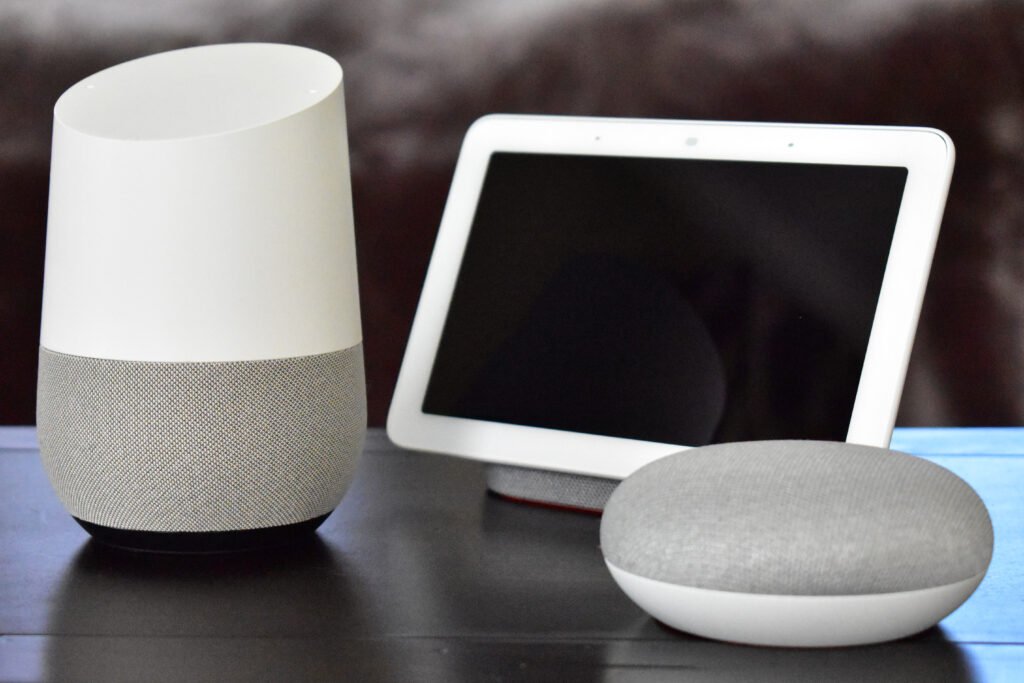
For a decade, the deal with a smart speaker was simple and a little bit resigned. You picked an ecosystem, Google or Amazon or Apple, and whichever assistant came with it was the one you lived with. If you wanted a different assistant, you bought different hardware. That deal just quietly ended for Google Home owners, and the mechanism is a piece of plumbing most people have never heard of.
On September 16, Google began rolling out early access to a Model Context Protocol server for the Google Home ecosystem. In plain terms, it means an outside AI agent, not just Gemini, can now read your device states, look through event history, and turn things on and off in your house, as long as it speaks a standard that Google didn’t invent and doesn’t control.
Quick facts
- Google started an early preview of an MCP server for Google Home on September 16, 2026
- MCP, the Model Context Protocol, is an open standard originally released by Anthropic, not built by Google
- Any MCP-capable agent, including Claude and third-party agent frameworks, can connect once granted access
- Supported capabilities include reading device states, searching camera and event history, and controlling connected devices
- Early access is limited to US users with a Google Home Premium Advanced subscription, priced at $20 a month or $200 a year
- Gemini for Home remains Google’s own default assistant across the Home app and Nest speakers, unaffected by the rollout
What actually changes in your house
Nothing changes automatically. Home MCP is opt-in access, not a new default assistant, and Google isn’t replacing Gemini with it. What it adds is a door. Any agent capable of calling MCP tools, whether that’s Anthropic’s Claude, one of the growing set of open agent frameworks, or a purpose-built assistant a developer wrote last month, can now be granted a key to that door by the person who owns the home.
Once connected, an agent can do things that used to require Google’s own app and Google’s own assistant: check whether the garage door is open, pull up what a driveway camera recorded an hour ago, dim the lights in a specific room, or troubleshoot why a thermostat stopped responding. Google has also described dashboards and voice notifications through Home speakers as part of what an MCP-connected agent can trigger, which pushes the idea further than simple remote control into something closer to a general-purpose home operator that happens not to be built by Google.
| Capability | Before Home MCP | After Home MCP |
|---|---|---|
| Who can control devices | Gemini for Home and the Google Home app only | Any MCP-capable agent the owner authorizes |
| Camera and event history | Viewed manually inside Google’s own app | Searchable by an outside agent on request |
| Cross-platform workflows | Limited to what Google chose to build | Whatever a developer builds on top of the standard |
| Access requirement | Free with any Google Home setup | Google Home Premium Advanced, $20/month or $200/year |
Why a two year old Anthropic standard is showing up in your thermostat
Model Context Protocol wasn’t built for smart homes. Anthropic released it as a general way for AI models to connect to outside tools and data sources without every developer writing a custom integration for every model. The pitch was straightforward: instead of a fragmented mess of one-off plugins, agree on one protocol, and any compliant model can talk to any compliant tool.
It worked well enough that it stopped being an Anthropic thing and became an industry thing. OpenAI added support for it. Independent agent frameworks built around it. And now Google, a company with every incentive to keep users locked inside Gemini, is wiring its home ecosystem into a protocol it doesn’t own, in the middle of the same stretch of months where coding tools are shipping coordinator agents that direct thousands of subagents without a human reviewing every step. MCP is becoming the connective tissue for that broader shift, the plumbing that lets one agent hand a task to another system without a developer building a bespoke bridge first.
The part Google is being careful about
Handing an outside agent the ability to search your camera history and unlock a workflow across every connected device in your house is not a small permission to grant, and Google’s rollout choices read like a company that knows it. Early access is gated behind a paid Premium Advanced tier rather than switched on for every Nest owner by default. It is limited to the US for now. And it is explicitly framed as early preview, the kind of soft launch that lets a company watch for problems before committing to a wider release.
That caution lines up with a pattern playing out across the industry this month. Google shut down the original Google Assistant only weeks ago, a transition that left plenty of longtime users scrambling to check what would and wouldn’t carry over, and it has spent the months since trying to prove Gemini can be trusted with the same routine tasks. Opening that same home layer to competing agents, while the migration from the old assistant is still fresh, is a bet that openness builds more trust than it costs. It is also, not incidentally, a hedge: if a household ends up preferring Claude or a specialized agent for home management, Google would rather that agent run through Google Home hardware than around it entirely.
What third-party access actually buys you
The practical case for Home MCP is less about novelty and more about consolidation. Most households now juggle several AI assistants across different apps, and until now each one operated in its own silo with no visibility into what the smart home was doing. An agent that already helps manage a calendar, draft messages, or coordinate a family’s schedule can, for the first time, also see whether the front door is locked or whether the driveway camera caught a delivery, without a person switching apps to check.
That kind of consolidation is the same instinct behind Google’s own push to let Gemini remember where you last put your keys or your passport inside Find Hub. The company clearly believes the winning assistant won’t be the one with the most features bolted onto a single app, but the one with the broadest, most reliable access to context about your actual life. Home MCP just concedes that the winning assistant, in any individual household, might not be built by Google at all.
What to watch next
- Whether the preview expands past Premium Advanced subscribers. A $20-a-month gate keeps this a niche feature until Google decides the security model is solid enough to widen.
- How granular the permissions get. Full camera history access is a very different privacy proposition than simple on/off device control, and today’s early access reportedly bundles both.
- Whether other smart home platforms follow. Amazon and Apple have both stayed quiet on MCP support for their own ecosystems. That silence gets more conspicuous the longer Google’s preview runs without a public incident.
- What happens to Gemini for Home’s role. Google says its own assistant isn’t going anywhere, but a company rarely builds a wide-open door next to its own front door without expecting some traffic to shift.
Smart home platforms have spent a decade being ecosystems in the most literal, restrictive sense: you were in one, or you weren’t. Home MCP is Google testing whether that has to keep being true, starting with a small, paying, US-only slice of its most engaged customers, and a protocol it had no hand in designing.
Sources and further reading
- TechCrunch: AI agents can now control Google Home devices
- Android Authority: Google Home lets you swap Gemini for another agent
- XDA Developers: Google Home opens smart home to any AI agent
About this article: GeekBlog covers U.S. technology news, AI, phones, smartwatches and gaming. Every story is written and checked under our Editorial Policy. Spotted a mistake or have a story tip? Contact our editors.
