

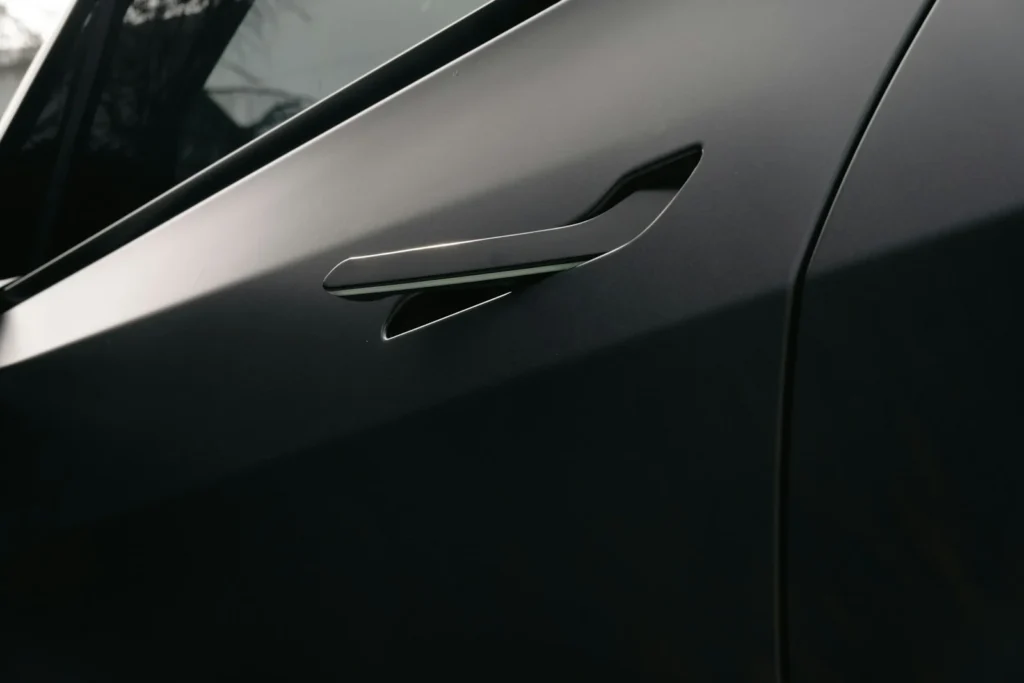
Rivian moved the rear manual door release on the R2 to a spot that is easier to find than on the R1. Instead of hiding the emergency cable behind a removable panel low on the door, the R2 places it at the front of the interior door handle, the same place where the front doors keep their mechanical release. It still sits behind a small cover, so rear passengers need to know it is there. Here is how it works, why Rivian changed it, and where the R2 stands in October 2026.
How the R2 doors open, in normal use and in an emergency
Like the R1, the R2 uses electronically released doors. Inside, you press a button on the handle and the latch lets go. That works as long as the vehicle has power. The concern with any electronic latch is what happens after a crash, a fire or a dead low voltage battery, when the button may do nothing.
For that case every door has a mechanical backup:
- Front doors: a mechanical release lever is built into the front part of the interior handle. Pulling it opens the door without power, much like a conventional handle.
- Rear doors: a release cord now sits in that same forward handle area. It is tucked behind a piece of plastic that has to be popped out first, so it takes one extra step compared with the front.
Rivian described the goal in October 2025: the new rear mechanism would mirror the front door releases so rear passengers could get out more easily in an emergency. The company also said the R2 would meet or exceed federal motor vehicle safety standards for doors.
What changed compared with the R1
The difference is mostly about location and visibility. On the refreshed second generation R1S and R1T, the rear manual release is a cable hidden behind a removable trim panel on the door card. A passenger who has never seen it would have little chance of finding it quickly, especially in the dark or under stress. Some R1 owners even modified their doors so children could reach the cable more easily.
| Door | R1 (second generation) | R2 |
|---|---|---|
| Normal opening | Electronic button | Electronic button |
| Front manual release | Mechanical lever in the handle | Mechanical lever in the handle |
| Rear manual release | Cable behind a removable door panel | Cord at the front of the handle, behind a small cover |
| How obvious it is | Hard to find without instructions | Easier, but still not fully visible |
So the R2 is a clear step in the right direction, but it is not the same as a plain mechanical handle that anyone would grab by instinct. Rivian has also said it has no reported injury claims tied to a rear door electrical failure on its latest R1 models.
Why carmakers are rethinking electronic door releases
Flush and electronic door handles became popular because they look clean and help aerodynamics. The trade off is that the emergency path out of the car is often hidden. Regulators on both sides of the Pacific are now acting on that.
In July 2026 NHTSA granted a petition and began rulemaking on a requirement for a robust and obvious door egress system in new vehicles. Final rules are likely years away.
In September 2025 NHTSA opened a defect investigation into certain Tesla Model Y vehicles after reports of children trapped inside.
A new national standard from the industry ministry requires mechanical door releases inside and out, starting January 1, 2027, with existing models given until January 2029.
A bill introduced in Congress in 2026 would also require manual door releases and ways for first responders to get in when a car loses power. None of these rules force an immediate change on vehicles already sold in the US, but they explain why Rivian and other brands are moving their releases into plain sight.
Where the R2 stands in October 2026
The R2 is no longer a prototype. Rivian began public customer deliveries on June 9, 2026, and the R2 helped the company post a record quarter, with 19,248 vehicles delivered in the third quarter of 2026. Rivian reaffirmed its full year delivery guidance of 65,000 to 70,000 vehicles.
- R2 Performance: from $57,990, dual motor, available now.
- R2 Premium: from $53,990, dual motor, scheduled for late 2026.
- R2 Standard: from $44,990, single motor, scheduled for 2027.
Rivian lists prices before taxes and fees, and they can change.
FAQ
Can you open the Rivian R2 doors if the battery dies?
Yes. Each door has a mechanical backup. The front doors use a lever in the interior handle, and the rear doors use a release cord near the front of the handle, behind a small removable cover.
Is the R2 rear release easier to use than on the R1?
It is easier to find, because it sits where the front release is instead of behind a larger door panel. It still requires popping out a cover first, so it is not as obvious as a standard handle.
Will Rivian change the R1 doors too?
Rivian has not publicly announced a change to the rear release on existing R1 vehicles. If you own an R1, learn where the rear cable is and show your passengers.
Do US rules require visible manual door releases yet?
Not yet. NHTSA started a rulemaking in July 2026, but a final standard and compliance date have not been set.
The verdict
The R2 handles emergency exits better than the R1 by putting the rear release where people already reach for the door. It is still hidden behind a cover, so the safest approach is simple: learn the releases, teach your passengers, and keep an eye on the NHTSA rulemaking, which could push every automaker toward truly obvious manual handles.
Updated October 2026: rewritten as an explainer on the R2 manual door releases, the regulatory push behind them and the R2 rollout status.
Featured photo: Eyosias G on Unsplash.
About this article: GeekBlog covers U.S. technology news, AI, phones, smartwatches and gaming. Every story is written and checked under our Editorial Policy. Spotted a mistake or have a story tip? Contact our editors.
