

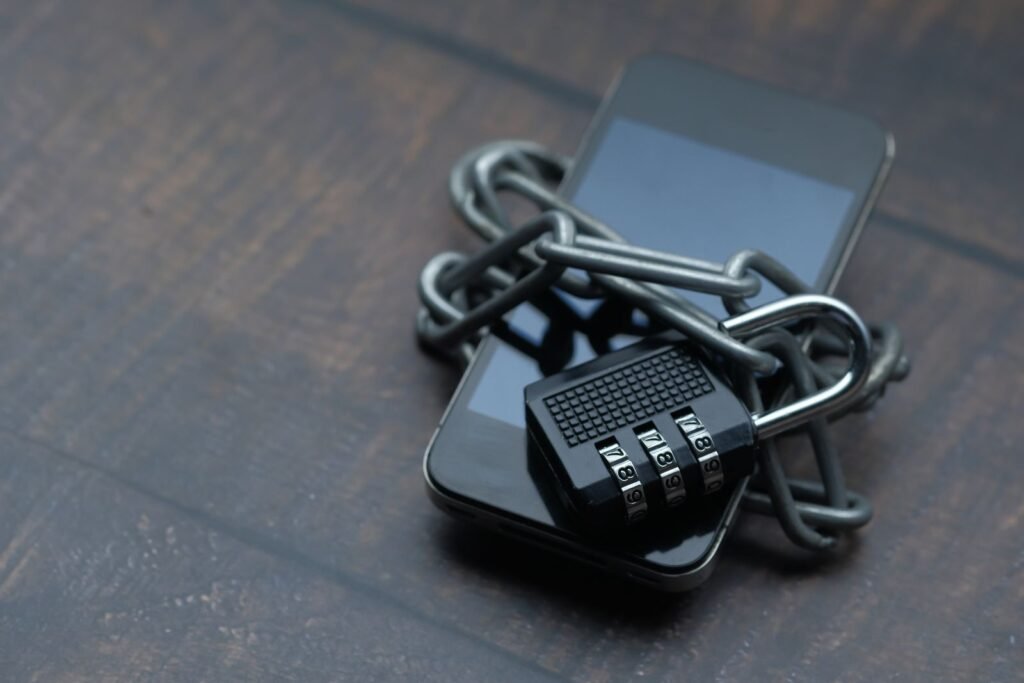
Every year around this time, the predictions start rolling in. This year, the man known online as the “Living Nostradamus” has picked a target that sounds a lot more technical than usual. Athos Salomé says 2027 will bring Q-Day, the moment a quantum computer cracks the encryption that protects almost everything we do online.
According to Salomé, “no state secret, no bank account and no password will be safe.” As UNILAD Tech reports, he believes the secrets of “the world’s most powerful people” will spill out for everyone to see.
Here’s the strange part. Q-Day is a real concept that governments and tech companies take very seriously. The question is whether it’s anywhere close to 2027.
The short version
- Salomé predicts an obscure nation or secret group will unveil a code-breaking quantum computer in 2027.
- Q-Day is real, but most experts place it in the early to mid 2030s, not next year.
- Breaking RSA-2048 is estimated to need around a million qubits. Today’s best machines have hundreds to about a thousand, and far fewer usable ones.
- The US government plans to phase out vulnerable encryption after 2030 and ban it after 2035.
- Your passwords are not the main target. Encryption keys and signatures are.
Who is the “Living Nostradamus”?
Athos Salomé is a Brazilian self-described psychic whom tabloids have dubbed the “Living Nostradamus.” His fans credit him with calling events like the COVID-19 pandemic and major tech outages, though his predictions tend to be broad enough to fit a lot of outcomes.
His 2027 list goes well beyond quantum computing. He also predicts a naval war over minerals beneath the Arctic, tech billionaires building “artificial intelligence sanctuaries” away from regulators, hospitals losing their “human touch,” and a handful of biotech companies controlling the world’s food through genetically modified super crops. He signs off with a typically ominous line: “The wheels are already turning in the darkness. The only question is whether humanity will awaken in time to prevent its own obsolescence.”
What Q-Day actually means
Most of the internet’s security rests on two kinds of math, RSA and elliptic curve cryptography. They protect the padlock in your browser, your banking app, software updates and the digital signatures that prove a message really came from who it says.
Both rely on problems that ordinary computers would need billions of years to solve. In 1994, mathematician Peter Shor showed that a large enough quantum computer could solve them dramatically faster. Q-Day, sometimes called Y2Q, is the day that machine actually exists.
How close are we, really?
The good news is that the hardware is still a long way off. The bad news is that the target keeps getting smaller.
Qubits needed to break RSA-2048
Published estimates of physical qubits required.
2012 ESTIMATE
~1 billion
Early surface code calculations
2019 ESTIMATE
~20 million
Gidney and Ekerå, about 8 hours of runtime
2025 ESTIMATE
<1 million
Google’s Craig Gidney, under a week of runtime
WHERE HARDWARE IS
Leading machines run from about 100 high quality qubits, like Google’s Willow chip, up to around 1,000 noisier ones. Most are not yet error corrected well enough for this kind of job.
That 2025 estimate from Google’s security team was a 20 fold drop in six years, thanks to smarter algorithms and better error correction. Newer research proposals claim even lower numbers. Still, nobody has built a machine with a million working qubits, and nobody is close. IBM’s public roadmap aims for about 200 error corrected “logical” qubits by 2029, which is impressive but still short of what Shor’s algorithm needs at this scale.
Could a secret government project be far ahead of the public? It’s possible in theory, which is exactly why prophecies like this get traction. But building quantum hardware requires huge facilities, rare components and teams of specialists. A quiet jump from hundreds of qubits to a million would be very hard to hide.
Prophecy vs. reality
| Salomé’s claim | What the evidence says |
|---|---|
| Q-Day arrives in 2027 | Most expert forecasts land around 2030 to 2035 |
| “No password will be safe” | Stored passwords use hashing, which quantum barely dents |
| “No bank account will be safe” | Banks are already testing quantum safe encryption |
| Spy agencies are stockpiling encrypted data | Likely true. It’s called “harvest now, decrypt later” |
| An unknown player gets there first | Unlikely. The race is led by the US, China and big tech |
The password line is the biggest stretch. Websites store passwords as hashes, and quantum computers only offer a modest speedup against those, the kind fixed by using longer passwords and stronger hashes. Encryption like AES-256 holds up well for the same reason. The real risk is to public key systems, the ones used to exchange keys and sign data.
Your passwords face far bigger threats today from regular old malware. This week alone, a researcher found nearly 2 billion stolen logins sitting in an open database, and no quantum computer was needed.
The part he gets right
Salomé’s warning about stockpiled data is the one worth taking seriously. Intelligence agencies are widely believed to be recording encrypted traffic now, betting they can unlock it later. That means secrets with a long shelf life, like medical records, state secrets or trade deals, are already at risk even if Q-Day is a decade away.
That’s why the transition has already started.
The real quantum safety timeline
1994
Peter Shor shows quantum computers could break RSA.
2023 TO 2024
Signal, Apple’s iMessage and Google Chrome add quantum resistant encryption.
AUGUST 2024
NIST publishes its first three post-quantum standards.
2027
The Living Nostradamus says Q-Day hits.
AFTER 2030
NIST deprecates RSA and elliptic curve encryption.
AFTER 2035
Those algorithms are disallowed for US federal use.
Those dates come from NIST’s transition plan, and they’re the clearest sign of when the people responsible for this think trouble could arrive. Nobody sets a 2035 deadline if they expect the locks to break in 2027.
What you should actually do
For most people, not much beyond keeping devices updated. The switch to quantum safe encryption is happening quietly in the background through browser, phone and app updates. If you’re on a current version of Chrome, iOS or Signal, some of your traffic is already protected.
Who should pay closer attention
Crypto holders, for one. Bitcoin and most other coins use elliptic curve signatures, and Deloitte has estimated that around a quarter of all bitcoin sits in addresses whose public keys are already visible on the blockchain. Businesses that store data for decades should also be planning their move to the new NIST standards now.
Prophecies have a way of borrowing real fears and attaching a date. Salomé picked a genuine problem, and his “decrypt later” warning is right on the money. But if you’re the type to lose sleep over this stuff, like the people who took quantum immortality a little too seriously, here’s the comforting bit. The experts building these machines say 2027 is far too early, and the fix is already rolling out.
About this article: GeekBlog covers U.S. technology news, AI, phones, smartwatches and gaming. Every story is written and checked under our Editorial Policy. Spotted a mistake or have a story tip? Contact our editors.
