

Eight months ago, Meta told the world that open source AI was a mistake. The company had just been caught submitting a doctored version of Llama 4 to public leaderboards while shipping a weaker model to everyone else, and the fallout was ugly enough that Mark Zuckerberg brought in former Scale AI CEO Alexandr Wang to run a rebuilt Meta Superintelligence Labs. Wang’s fix was to close the doors. Meta’s next flagship, codenamed Avocado and eventually released as Muse Spark, would not be free to download. It would live behind an API, just like GPT and Gemini.
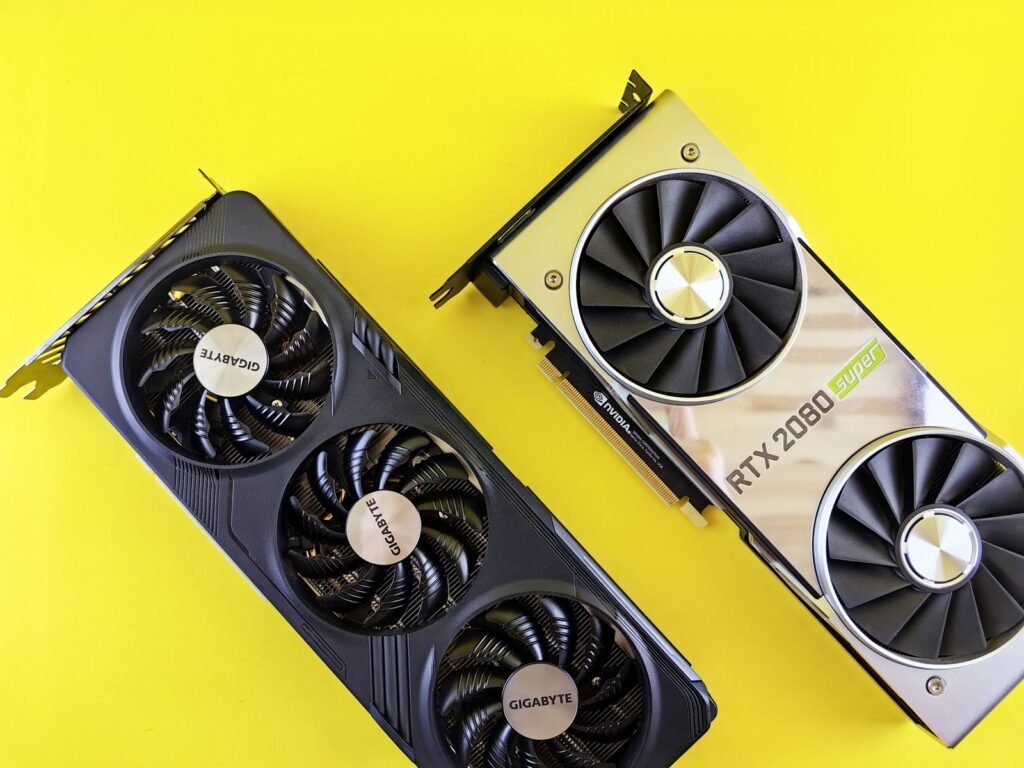
On August 10, 2026, Meta quietly reversed part of that decision. It released Muse Glimmer, a 30 billion parameter model distilled from the closed Muse Spark 1.2, licensed under Apache 2.0 and small enough to run on a single high end consumer GPU. No keynote, no livestream, no leaderboard victory lap. Just a Hugging Face upload and a blog post. After Llama 4, the restraint reads as deliberate.
Quick Facts: Muse Glimmer
- Released: August 10, 2026, by Meta Superintelligence Labs
- Size: 30 billion parameters, dense, multimodal
- License: Apache 2.0, commercial use and redistribution allowed
- Origin: Distilled from Muse Spark 1.2, Meta’s closed flagship
- Hardware: Fits in 24GB VRAM at 4 bit quantization, roughly 1 percent quality loss
- Built for: Agentic work, tool calling, local coding, file and schedule management
- Where: Free download on Hugging Face
The Backstory: How Meta Got Here
To understand why an open model release from Meta counts as news in 2026, you have to remember how badly the last one went. Llama 4 launched in April 2025 to a mix of confusion and anger. Independent testers found that the publicly available checkpoint performed noticeably worse than the version Meta had entered into leaderboard rankings, which turned out to be a specially tuned variant that was never shipped to anyone. Benchmark manipulation is close to a cardinal sin in the open model community, where trust is most of the product.
The internal response was a full leadership shakeup. Wang, who joined after Meta’s roughly 14 billion dollar investment in Scale AI, took over as Chief AI Officer and pushed the lab toward a secretive, product first culture that reportedly drove significant attrition among longtime researchers. Reports from December 2025 described Meta shelving its Llama successor entirely and building a closed model to compete with GPT and Gemini on their own terms. That model became Muse Spark, and version 1.2 launched closed on August 5, 2026, alongside Muse Code, Meta’s new terminal based coding agent.
Muse Glimmer arrived five days later.
Meta’s Open Source Whiplash
Benchmark scandal breaks. Developer trust collapses.
Meta invests ~$14B in Scale AI, rebuilds the lab.
Llama successor shelved. Capex forecast raised to $72B.
Closed flagship and paid coding agent launch together.
Apache 2.0, 30B params, runs on one consumer GPU.
It is not a reversal of the closed strategy so much as a hedge layered on top of it. Meta keeps its frontier model and its paid coding agent locked down, while handing developers a smaller, weaker, genuinely open sibling to build on. Llama 4 Scout and Maverick technically stayed open the whole time, and Google never left Apache 2.0 with Gemma, so Meta was not walking into an empty market. It was trying to win back a community it had alienated.
What Muse Glimmer Actually Is
Under the hood, Glimmer is a distillation exercise. Meta took the reasoning and tool use patterns learned by the much larger Muse Spark 1.2 and compressed them into a dense 30 billion parameter model built to run locally rather than in a data center. That is a meaningfully different goal from most flagship releases. Meta is not claiming Glimmer beats the best closed models on raw intelligence. It is claiming Glimmer can act as an always on agent that keeps state across restarts, manages files, calls functions and handles multi step tasks without sending every request to the cloud.
| Muse Glimmer | Muse Spark 1.2 | |
|---|---|---|
| Access | Open weights, Apache 2.0 | Closed, API only |
| Where it runs | Your machine, one consumer GPU | Meta’s cloud infrastructure |
| Cost | Free to download, run and modify | $1.25 per million input tokens, $4.25 per million output tokens |
| Strongest at | Agentic planning, tool use, offline privacy | Complex debugging, large repository comprehension |
How It Stacks Up Against Qwen
Meta is not the only company betting on smaller, locally runnable agents. Alibaba’s Qwen3.6-27B has become the default comparison point in this size class, and independent benchmarking shows a genuinely split result rather than a clean win for either side.
Benchmark Split: Glimmer vs Qwen3.6-27B
Higher is better. ■ Muse Glimmer 30B ■ Qwen3.6-27B
MCP Atlas (tool use)
75.5
62.5
SWE-Bench Verified (real code fixes)
76.0
77.2
OSWorld Verified (computer use)
65.9
75.6
TerminalBench 2.1 (command line work)
51.7
60.7
Charxiv Reasoning (chart understanding)
78.8
78.4
The pattern is consistent. Glimmer wins decisively at planning and tool use, the skills an agent needs to work out what to do next. Qwen pulls ahead at hands on execution: navigating a real desktop, working inside a terminal for extended stretches, closing out actual code fixes. Meta optimized for the thinking half of agentic work and left the doing half a step behind the leader. Whether that tradeoff is acceptable depends entirely on what you plan to point the model at.
Why Open the Small Model and Not the Big One
The strategy makes more sense once you look at where the money is. Muse Spark 1.2 and Muse Code, Meta’s answer to the coding agents that Grok and its rivals have turned into a real market, stay behind a metered API at $1.25 and $4.25 per million input and output tokens. That is where Meta expects to make money, or at least where it wants developers locked in long enough to justify a $72 billion infrastructure bill. Glimmer, by contrast, costs Meta almost nothing to give away. It buys goodwill, seeds a developer base and competes for mindshare against DeepSeek and Qwen without touching the revenue line.
It also lands in the middle of a brutal pricing fight. OpenAI and DeepSeek spent much of 2026 undercutting each other until API margins nearly vanished, and the tools built on top of those APIs keep getting cheaper to run. A free, locally hosted agent model does not need to win that war. It sidesteps it, because inference on hardware you already own costs nothing per token regardless of what the API market does next month.
What This Means for Developers and Software Teams
For teams actually shipping things, the case for Glimmer comes down to three points.
Privacy and offline operation. An agent running entirely on local hardware never sends proprietary code, internal documents or customer data to a third party. For regulated industries, or any company nervous about vendor data retention policies, that can outweigh a ten point benchmark gap without much argument.
Cost at scale. Once the GPU is bought, inference is free. A team running thousands of agent calls a day on a metered API can watch that line item disappear.
Real customization. Apache 2.0 means no restrictions on fine tuning, redistribution or commercial use. Companies can adapt Glimmer to their own codebase, internal tooling or domain vocabulary in ways a closed API will never allow. This matters more as AI assisted development moves from novelty to infrastructure, the same shift that took Lovable to a $13.3 billion valuation in under a year.
The tradeoff is real. If the job is heavy terminal work, sprawling refactors across an unfamiliar repository, or driving a desktop environment, the benchmarks say Qwen3.6-27B or a paid frontier agent will finish faster and with fewer retries. Glimmer is the better planner. It is not yet the better worker.
The Short Version
Meta did not go back to open source. It found a way to have both: a paid frontier model and coding agent for revenue, plus a free distilled version that runs on a gaming PC for goodwill and mindshare. If you need an agent that plans well, works offline and costs nothing per call, Glimmer is worth a download. If you need one that grinds through terminal sessions and large refactors, Qwen still has the edge.
What to Watch Next
Meta has not committed to opening Muse Spark itself, though Zuckerberg has said publicly that the company intends to release its weights eventually. Nothing in the Glimmer rollout suggests that is imminent. The more likely pattern is a repeating cycle: ship the best model closed, let it earn its keep commercially, then distill a smaller open version a few weeks later once the frontier has moved on.
If that holds, the story worth tracking is not Glimmer itself but whether the open releases keep coming. One Apache 2.0 upload after a benchmark scandal is a gesture. A steady cadence of them would be a strategy, and it would put real pressure on every lab currently betting that closed weights are the only way to build a business in AI.
