

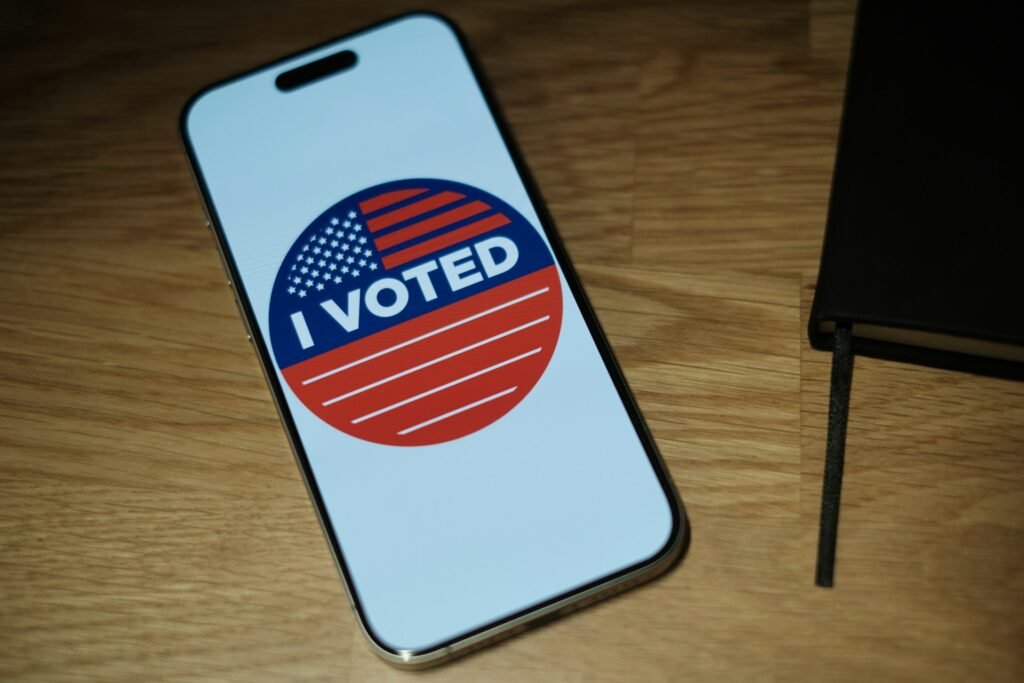
If your phone has been buzzing nonstop with messages from candidates, PACs and people named “Ashley from the campaign,” today is the day it all comes to a head. Americans vote in the midterm elections on Tuesday, November 3, with all 435 House seats and 35 of the 100 Senate seats on the ballot. And plenty of voters are just as focused on a different question: how did all these people get my number?
UNILAD Tech rounded up some of the frustration from Reddit. “Please, how the heck can I stop these text messages? I’m getting dozens a day. Opting out does nothing. I already voted!!!” wrote one user. Another said they reply STOP to all of them and “it never ends.” We dug into where the numbers come from, why the usual tools don’t work and what actually cuts down the flood.
The short version
- Campaigns start with voter registration data, then pay data vendors to add cell numbers and other details.
- Political texts are exempt from the National Do Not Call Registry.
- Replying STOP removes you from that one sender’s list. It does nothing about the dozens of other groups using the same voter file.
- Most campaigns use “peer to peer” texting, where a person taps send on each message. That keeps them clear of the strictest consent rules.
- Your best tools are your phone’s spam filters, forwarding junk to 7726 and, for the future, leaving your number off your voter registration.
Where your number comes from
It starts with the voter file. When you register to vote, the state collects your name, address and often your phone number and email. Every state makes some version of that list available to campaigns and parties, though the rules on who can buy it and how it can be used vary.
That public list is only the starting point. Both the Democratic and Republican parties maintain much bigger voter files that campaigns pay to access. As Houston Public Media and the San Antonio Report explained, those files add whether you voted in recent elections, which primary ballot you picked and whether you usually vote early. Then they pile on private data bought from other sources, like email addresses, home value, income range and ethnicity.
“They use third-party data vendors to enrich lists with phone numbers and demographic information,” San Antonio strategist Bert Santibañez said. “They even use statistical model scores to predict partisanship, turnout, propensity, things like that.” So even if you never gave the county your cell number, a data broker may have matched it to your name from a shopping account, a petition you signed or a past donation.
Once a number is in the file, it stays valuable. Candidates, party committees and outside PACs can all access the same record, which is why you can hear from five different groups supporting the same candidate in a single afternoon.
Why it got so bad
Texting is cheap. Messages can cost campaigns as little as a cent each, according to the same report, which makes it far cheaper than mail or TV ads. The numbers have exploded as a result.
That’s an increase of roughly 7,000% in a few election cycles, per FOX 13 Tampa Bay. AI tools are making it easier still, letting campaigns tailor messages to the issues in your file without hiring an army of writers. Not everyone thinks it works. “They’re the robocalls of the modern political age,” San Antonio strategist Kelton Morgan said. “They are horribly ineffective, but they’re so cheap; it’s just an easy numbers game.”
The loophole that keeps them legal
You might expect federal law to stop strangers from blasting your phone, and in theory it does. The Telephone Consumer Protection Act requires prior consent before anyone sends autodialed texts to a cell phone. But two things blunted that rule for campaigns.
First, in 2020 the FCC said that peer to peer (P2P) texting platforms, where a human volunteer or contractor taps send on each message, generally don’t count as autodialers. Second, the Supreme Court’s 2021 ruling in Facebook v. Duguid narrowed the legal definition of an autodialer even further. So campaigns hire people to sit in front of a screen and tap send thousands of times an hour. Each tap is technically a person sending one text.
On top of that, the National Do Not Call Registry only covers telemarketing. Political messages aren’t telemarketing, so adding your number does nothing here.
What replying STOP actually does
The FCC says that replying STOP to a legitimate political text revokes your consent and should get you removed from that sender’s list. That part works, mostly. The catch is in the word “sender.”
| What you do | What it stops | What it doesn’t |
|---|---|---|
| Reply STOP | Texts from that campaign or texting platform | Other PACs and campaigns using the same voter file |
| Join the Do Not Call Registry | Telemarketing calls | Political calls and texts (they’re exempt) |
| Forward to 7726 (SPAM) | Helps your carrier flag and block the sender | Doesn’t remove you from any list |
| Turn on spam filtering | Notifications from unknown senders | Messages still arrive in a filtered folder |
| Remove your number from voter registration | Future campaigns pulling it from the state list | Copies data vendors and parties already hold |
| Vote early | Get out the vote texts, once campaigns see you voted | Fundraising and persuasion messages |
One important warning: only reply STOP to texts that look like real campaign messages. Scammers love election season, and fake “donation” or “your ballot was rejected” texts are common. Replying to a scam confirms your number is active. If a text pushes a strange link or asks for payment details, don’t tap anything. Report it as junk and delete it.
How to filter them on your phone
Your phone can’t stop the messages from arriving, but it can stop them from buzzing your pocket all day. Here’s where to look.
Settings > Apps > Messages > Screen Unknown Senders > On
Then: tap “Report Junk” under any unwanted text from a stranger
ANDROID (Google Messages)
Profile icon > Messages settings > Protection & safety
> Spam protection > On
SAMSUNG MESSAGES
Three dots > Settings > Block numbers and spam
ANY CARRIER (AT&T, T-Mobile, Verizon)
Forward the text to 7726, then delete it
On an iPhone, screening unknown senders moves texts from numbers not in your contacts into a separate list and silences their notifications. You can still read them later. If you want to go further with calls too, our guide to Call Screening in iOS 26 covers how to make unknown callers explain themselves before your phone rings. Google Messages works similarly: spam protection uses Google’s models to flag suspicious senders and move them to a spam folder.
For next time, check your state’s voter registration portal. A phone number is optional on most registration forms, and many states let you update your record online. Removing it won’t erase copies that parties and data vendors already have, but it slows new ones from appearing. Just don’t let any of this put you off registering or voting.
When will it stop?
Get out the vote texts should drop off sharply once polls close tonight. Fundraising messages are another story. Close races, recounts and runoffs keep the asks coming, and your number will still be sitting in voter files when the 2028 presidential cycle starts. And this was the most expensive midterm ever, with one donor alone accounting for hundreds of millions of dollars, as we covered in our look at Elon Musk’s midterm spending. Money that size buys a lot of one cent texts.
Sources and further reading
- UNILAD Tech: How political campaigns got your phone number and what happens when you reply ‘STOP’
- Houston Public Media: ‘There’s no way to stop them’: How campaigns and PACs get away with nonstop texting
- FOX 13: Political texts are surging in 2026, here’s how to reduce them
- NBC News: Billions of political text messages were sent last year
- FCC: Rules for political campaign calls and texts
- U.S. Supreme Court: Facebook, Inc. v. Duguid (2021)
About this article: GeekBlog covers U.S. technology news, AI, phones, smartwatches and gaming. Every story is written and checked under our Editorial Policy. Spotted a mistake or have a story tip? Contact our editors.
