

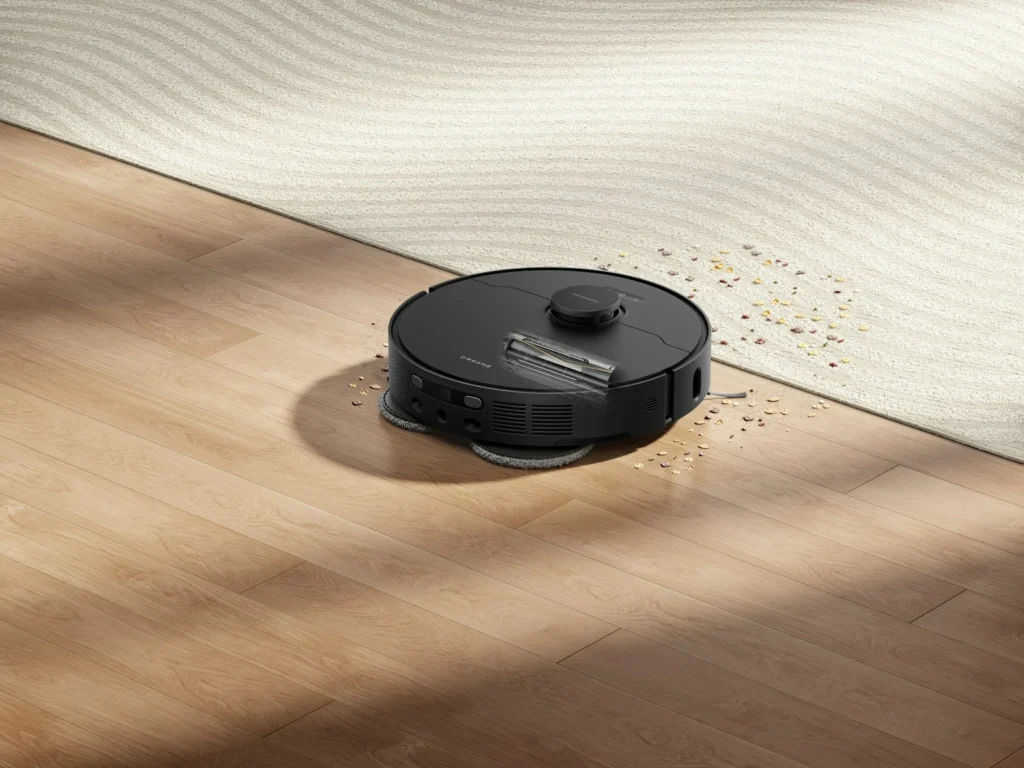
In February 2026, a hobbyist trying to steer his own DJI Romo robot vacuum with a game controller discovered that DJI’s cloud servers would answer him about thousands of other people’s vacuums too. DJI says the flaw is fixed and no action is needed from owners. Here is what happened, what DJI has said officially, and what any smart home owner can learn from it.
What happened with the DJI Romo
The Romo is DJI’s first robot vacuum and mop, launched in China in 2025 and later in several European countries and Australia. Like most premium robot vacuums, it carries cameras and obstacle sensors, builds a map of your home, and talks to a cloud service so you can control it from the DJI Home app when you are away.
Sammy Azdoufal, a tech worker and Romo owner, wanted to build his own controller app for his new Romo. He extracted the access token his vacuum used to talk to DJI’s servers. When his app connected, DJI’s message broker did not limit him to his own device. Instead it streamed status messages from thousands of Romo vacuums around the world, plus some DJI Power portable power stations that use the same infrastructure.
From that data he could see serial numbers, which room each robot was cleaning, battery levels and the floor plans the robots generated. He also reported being able to view live camera feeds. Importantly, he did not break into DJI’s systems in a conventional sense. The servers simply handed over data they should have refused to share.
What DJI said and how it fixed the flaw
DJI’s official position, shared in statements to the press in February and March 2026, covers these points:
- DJI says it found the issue in late January 2026 during an internal security review, before it became public.
- It describes the problem as a backend permission validation issue in the MQTT messaging between devices and servers, affecting the Romo and certain DJI power stations.
- A first patch went out on February 8. Because it had not reached every service node, a second update on February 10 finished the job. Both were deployed automatically on the server side.
- DJI says device traffic was always encrypted with TLS, so this was not an interception problem but an access control problem.
- According to DJI, actual unauthorized access to live video was extremely rare and nearly all of it came from security researchers testing their own devices. It says it found no evidence that user data was misused.
- DJI says the data of Romo devices, including those in Europe, is stored on US based Amazon Web Services infrastructure.
In March 2026, DJI confirmed it had compensated a researcher through its long running bug bounty program, which it says has received reports from more than 300 security researchers. Azdoufal said he was promised $30,000. DJI also said it would submit the Romo and the DJI Home app to independent third party security audits.
What Romo owners should do now
DJI says the server fixes needed no action from owners. Still, a few steps are sensible for anyone with a Romo or any connected camera device:
- Update the DJI Home app and the vacuum’s firmware whenever an update appears.
- Use a strong, unique password for your DJI account and turn on any extra login protection the account offers.
- Check the app for remote video or camera access settings and turn off what you do not use.
- Delete old maps and devices from the app if you have sold or replaced a unit.
Smart home security lessons from the Romo flaw
The Romo case is a clear example of a risk you cannot fix from your side: the weak point was in the manufacturer’s cloud, not in the owner’s password or WiFi. That makes the buying decision and your home network setup the parts you can control.
| Step | Why it helps |
|---|---|
| Put smart devices on a guest or separate network | A compromised gadget cannot easily reach your laptop or phone. |
| Prefer devices that work locally | Less data travels through the cloud when the device does not need it. |
| Disable unused cameras and microphones | A feature that is switched off cannot leak. |
| Check the maker’s security track record | Companies with bug bounties and fast, public fixes are a safer bet. |
| Keep router firmware current | Your router is the front door for every device in the house. |
Also think about placement. A robot vacuum with a camera sees whatever is at floor level, so keep it out of bedrooms and bathrooms when it is not cleaning, and use any no go zone feature your app offers for rooms you consider private.
FAQ
Is the DJI Romo safe to use now?
DJI says the vulnerability was fully fixed by February 10, 2026, and that it has found no evidence of user data being misused. Keeping the app and firmware updated remains the best protection.
Did hackers watch people through their vacuums?
DJI says real unauthorized access to live video was extremely rare and nearly all of it was from researchers testing their own devices, with only a handful of possible exceptions.
Can I buy a DJI Romo in the US?
Not officially. DJI launched the Romo in China, Europe and other markets, but not in the United States.
Was my DJI power station affected?
DJI said certain DJI power stations used the same messaging system and were covered by the same fix, which required no owner action.
The verdict
The DJI Romo flaw was serious, because a missing server check briefly exposed home maps and potentially camera feeds, but it was fixed quickly and automatically once found. The bigger takeaway applies to every connected camera in your home: choose brands with a strong security record, isolate smart gadgets on their own network, and turn off features you do not need.
Updated October 2026: rewritten as an explainer covering DJI’s official account of the Romo flaw, its fixes, the bug bounty and practical smart home security steps.
Featured photo: Dreame Vacuum Cleaner on Unsplash.
About this article: GeekBlog covers U.S. technology news, AI, phones, smartwatches and gaming. Every story is written and checked under our Editorial Policy. Spotted a mistake or have a story tip? Contact our editors.
