Close Menu
GeekBlog

    Subscribe to Updates

    Get the latest creative news from FooBar about art, design and business.

    What's Hot

    Stop falling for scams when Norton’s antivirus software is 70% off right now

    March 28, 2026

    Acer Promo Codes and Deals: Save 40% on Bundles

    March 28, 2026

    Playing Wolfenstein 3D with one hand in 2026

    March 28, 2026
    Facebook X (Twitter) Instagram Threads
    GeekBlog
    • Home
    • Mobile
    • Tech News
    • Blog
    • How-To Guides
    • AI & Software
    Facebook
    GeekBlog
    Home»Tech News»The LA Fires Spewed Out Toxic Nanoparticles. He Made It His Mission to Trace Them
    Tech News

    The LA Fires Spewed Out Toxic Nanoparticles. He Made It His Mission to Trace Them

    Michael ComaousBy Michael ComaousSeptember 27, 20253 Mins Read
    Share Facebook Twitter Pinterest LinkedIn Tumblr Email Copy Link
    The LA Fires Spewed Out Toxic Nanoparticles. He Made It His Mission to Trace Them
    Share
    Facebook Twitter LinkedIn Pinterest Email Copy Link

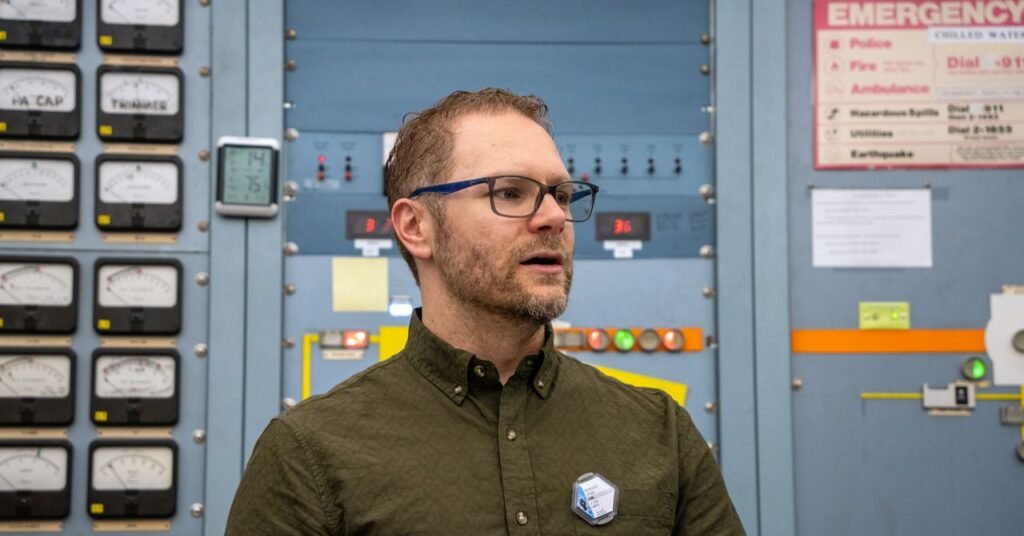
    Spada’s is one of the hardest projects to tune the beam for. “The beam is way over-powered to run my samples, at baseline,” Spada said, comparing the amount of power he needs to a couple drops of water, “but the beam, it’s like Niagara Falls.”

    The technique Spada relies on, particle-induced x-ray emission (PIXE), is a focused stream of protons to knock electrons out of atoms embedded in the sample. As those atoms stabilize, they emit x-rays—and each element gives off a signature energy. “It’s like a fingerprint,” Spada said. “Every metal shows up in a different color of x-ray.”

    Because PIXE is nondestructive, Spada can scan the same filter multiple times, looking for metals like lead, arsenic, cadmium, and antimony—elements he frequently finds in urban wildfire debris. The beam line at Crocker is one of only a handful in the country equipped for this kind of environmental work.

    “It’s not fast,” Spada said. “Sometimes it takes a couple of minutes just to scan a pinhead-sized area. But it’s precise, and it tells us what’s really in the air people are breathing.”

    Spada is still in the process of running each of the filters from his monitoring areas through thermal-optical analysis for organic carbon, and spectroscopy that could detect molecular structures, in addition to the PIXE process.

    Just the thermal-optical carbon analysis alone takes an hour per sample and gives just two numbers—how much elemental carbon and how much organic carbon.

    Spada had droves of samples to get through.

    “We turn everything into methane. We use a methanator, which sounds like something out of Phineas and Ferb, but it’s how we detect the organic carbon fractions,” said Spada. Each type of carbon burns off at a different temperature, revealing its origin—wildfire, diesel, gasoline, building materials. Because the signatures from the LA fires weren’t consistent with typical wildland burns, he noticed a strange pattern in one of the samples early on—high sulfur, high chlorine.

    “We think it was from PVC pipes,” he said. “That’s one of the only materials that would give you both those elements. And it was from the Altadena set, so in a residential area.”

    He flagged the findings for Baalousha. They have been reviewing each other’s results as an expedited substitute for formal peer review, and drafting community updates together.

    “It was really important to him that we not just publish something academic,” Knack said. “He wanted it readable—like, for families, not scientists.”

    Spada has been releasing reports on the ash samples on a rolling basis since he and Baalousha got the first results back in March. Each report went out with links to cleanup guidance, recommendations on protective gear, and a glossary.

    He hopes to be able to release a preliminary report on the air conditions during the fires shortly. In mid-August, over seven months after they tore through LA, Spada was finally able to review his preliminary PIXE data while on leave from work, recovering from a routine outpatient surgery.

    So far he’s found that the majority of nanoparticles were created and circulated in the air during the active fire phase, and once the fire had been contained and transitioned to the smoldering phase, the number dropped off steeply. “For example, in Pasadena, silicon in the 0.09- to 0.26-micrometer size range was 8 times higher during the active fire period,” Spada said via email.

    fires mission Nanoparticles Spewed Toxic Trace
    Share. Facebook Twitter Pinterest LinkedIn Tumblr Telegram Email Copy Link
    Previous ArticleWoman hospitalized with pain and vomiting—diet soda cured her
    Next Article Report finds Copilot accesses millions of records per company, raising data protection concerns
    Michael Comaous
    • Website

    Michael Comaous is a dedicated professional with a passion for technology, innovation, and creative problem-solving. Over the years, he has built experience across multiple industries, combining strategic thinking with hands-on expertise to deliver meaningful results. Michael is known for his curiosity, attention to detail, and ability to explain complex topics in a clear and approachable way. Whether he’s working on new projects, writing, or collaborating with others, he brings energy and a forward-thinking mindset to everything he does.

    Related Posts

    3 Mins Read

    Stop falling for scams when Norton’s antivirus software is 70% off right now

    4 Mins Read

    Acer Promo Codes and Deals: Save 40% on Bundles

    2 Mins Read

    Playing Wolfenstein 3D with one hand in 2026

    7 Mins Read

    Whoop has LeBron – now it wants your mom

    1 Min Read

    Sony temporarily suspends memory card sales due to shortages

    2 Mins Read

    Apple TV is now home to CrunchyRoll anime

    Top Posts

    Discord will require a face scan or ID for full access next month

    February 9, 2026765 Views

    The Mesh Router Placement Strategy That Finally Gave Me Full Home Coverage

    August 4, 2025760 Views

    Trade in your old phone and get up to $1,100 off a new iPhone 17 at AT&T – here’s how

    September 10, 2025326 Views
    Stay In Touch
    • Facebook

    Subscribe to Updates

    Get the latest tech news from FooBar about tech, design and biz.

    Most Popular

    Discord will require a face scan or ID for full access next month

    February 9, 2026765 Views

    The Mesh Router Placement Strategy That Finally Gave Me Full Home Coverage

    August 4, 2025760 Views

    Trade in your old phone and get up to $1,100 off a new iPhone 17 at AT&T – here’s how

    September 10, 2025326 Views
    Our Picks

    Stop falling for scams when Norton’s antivirus software is 70% off right now

    March 28, 2026

    Acer Promo Codes and Deals: Save 40% on Bundles

    March 28, 2026

    Playing Wolfenstein 3D with one hand in 2026

    March 28, 2026

    Subscribe to Updates

    Get the latest creative news from FooBar about art, design and business.

    Facebook
    • About Us
    • Contact us
    • Privacy Policy
    • Disclaimer
    • Terms and Conditions
    © 2026 GeekBlog

    Type above and press Enter to search. Press Esc to cancel.

    Ad Blocker Enabled!
    Ad Blocker Enabled!
    Our website is made possible by displaying online advertisements to our visitors. Please support us by disabling your Ad Blocker.