

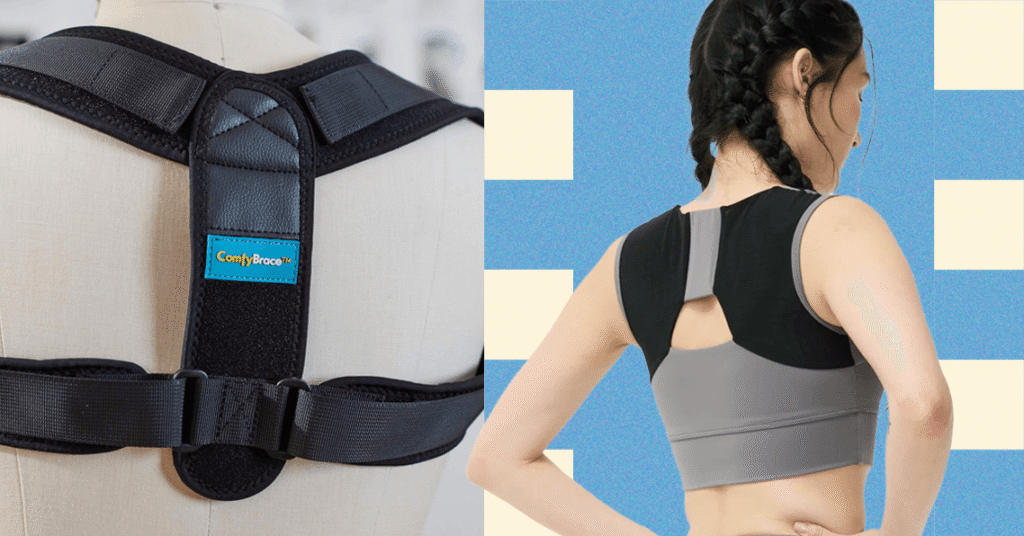
A posture corrector is a reminder, not a cure. Worn for short sessions it pulls your shoulders back and makes slouching obvious, and the research supports that it changes your alignment while you have it on. What no device has been shown to do is fix your posture permanently once you take it off. That distinction decides which one you should buy, and whether you need one at all.
Quick answer
For most desk workers the useful choice is a vibrating sensor that nags you rather than a strap that holds you, because the goal is noticing the slouch, not being propped up. The Upright GO 2 is the established version of that at $99.95 list, frequently discounted to $79, with a cheaper GO S beneath it. If you want a physical strap instead, pick one sized properly and wear it for 20 to 30 minutes at a time, not all day. And before spending anything, raise your screen to eye level, which fixes more forward head posture than any brace.
Below is what the clinical evidence actually found, the five types of corrector worth considering with the devices that define each one, how long to wear them, and the cheap changes that outperform the whole category.
Posture correctors at a glance
Evidence figures from a 2025 systematic review of orthotic devices for forward head posture. Prices are manufacturer list prices at the time of writing.
What the evidence actually says
This category is sold on before and after photographs, so it is worth knowing what has been measured. A systematic review published in 2025 pooled 10 studies covering 450 people with forward head posture, the specific problem most desk workers have, and looked at devices ranging from simple shoulder braces to cervical traction orthoses and posture garments.
The headline finding is real but narrow. Orthotic devices did significantly improve spinal alignment, measured mostly by the craniovertebral angle, and several also reduced neck pain and disability scores. The authors concluded that these devices show considerable potential for improving postural conditions associated with forward head posture.
Two caveats come with that, and both matter more than the headline. Results varied a lot by device type, duration and person, and some devices produced no significant effect at all. And the authors explicitly called for future research into long term effectiveness, which is the polite way of saying nobody has demonstrated that the improvement outlasts the wearing.
Note
Treat any product page promising permanent posture correction in two weeks as marketing rather than evidence. The honest case for these devices is that they make you aware of your own slouching often enough to change the habit, and that awareness is the part that lasts.
The five types worth considering
Almost every product in this category is a variation on five ideas. Pick the type first, then the product, because the differences between brands within a type are much smaller than the differences between types.
| Type | The device that defines it | Best for | The catch |
|---|---|---|---|
| Vibrating sensor | Upright GO 2, $99.95 list and often $79. Sticks to your upper back or hangs on a necklace and buzzes when you slouch, with an app that tracks sessions. | Desk workers who slouch without noticing. The only type that trains awareness rather than holding you. | Adhesive pads are a running cost, and the buzzing becomes easy to ignore after a few weeks. |
| Entry level sensor | Upright GO S, $79.95 list and often $59. One sensor and three training modes instead of two sensors and nine. | Trying the approach without committing a hundred dollars to it. | Less granular feedback, and the gap to the GO 2 narrows whenever both are discounted. |
| Figure eight strap | The classic elastic brace that crosses behind your shoulder blades, sold by dozens of brands from roughly $20. | Short sessions when you want a physical cue, and the cheapest way to find out whether you like the sensation. | Sizing is the whole game and most brands run small. Cheap ones dig into the armpits within an hour. |
| Padded shoulder brace | BackEmbrace, made in the US, sized XS to XL for both men and women, with adjustable padded straps rather than thin elastic. | Anyone whose complaint about cheap straps is chafing or pinching, and anyone outside the narrow size range those assume. | Several times the price of a generic strap, for the same basic mechanism done properly. |
| Posture garment | Compression shirts and bras with the tension built into the fabric across the upper back. | Wearing something under work clothes without a visible brace, and for longer stretches than a strap allows. | The gentlest cue of the five, and you are buying a garment, so it needs washing and replacing. |
How long to wear one
Start at 20 to 30 minutes a day and build slowly. The muscles that hold you upright are the ones you want doing the work, and a brace worn all day does that work for them, which is the mechanism behind the common complaint that a corrector left the wearer weaker and sorer than before. Sensors are different: because they only buzz rather than hold, wearing one for a full working day is fine.
Expect soreness between the shoulder blades in the first few sessions, the same as after any unfamiliar exercise. Sharp pain, numbness or tingling down the arms means it is too tight or the wrong shape, and that is a stop signal rather than something to push through.
Warning
If you have persistent neck or lower back pain, diagnosed kyphosis or scoliosis, or any numbness in the arms or hands, speak to a doctor or physical therapist before buying a corrector. These are consumer products aimed at ordinary desk slouching, and a brace can make a structural problem worse if it is the wrong one for your condition.
The cheap changes that beat the whole category
Forward head posture usually has an obvious cause sitting on the desk in front of you. A laptop screen is roughly 30 centimetres too low, which pulls your head forward for eight hours a day. Raising the screen so the top of it is level with your eyes removes the cause rather than counteracting it, and a stand plus a separate keyboard and mouse costs less than most of the devices above.
The other two things worth doing before buying anything: get up roughly every half hour, because no position is good for eight hours including a perfect one, and do something that strengthens the upper back. Rows, planks and regular yoga all qualify. The evidence for exercise improving posture is considerably stronger than the evidence for wearing a device.
Tip
You can make a usable shoulder strap from a yoga strap you already own, and plenty of physical therapists suggest exactly this. Wrap it around your back at roughly bra line height, bring both ends over your shoulders, cross them into an X behind you, then bring them forward and buckle. You need at least 10 feet of strap; anything shorter pulls hard enough to hurt.
Frequently asked questions
Do posture correctors actually work?
They work while you wear them. A 2025 systematic review of 10 studies covering 450 people found that orthotic devices significantly improved spinal alignment in forward head posture, and some reduced neck pain. What has not been demonstrated is any lasting effect after the device comes off, and the same review called for research into long term effectiveness.
How long should you wear a posture corrector each day?
Start with 20 to 30 minutes and increase gradually if it stays comfortable. Wearing a supportive brace all day lets it do the work your own muscles should be doing, which is why people often report feeling weaker after heavy use. A vibrating sensor is the exception and can be worn all day, because it only signals rather than supports.
Are vibrating posture trainers better than straps?
For desk workers, usually yes, because the problem is not being unable to sit upright but forgetting to. A sensor buzzes the moment you slouch and builds the habit of noticing. A strap gives a constant physical cue that your body adapts to and stops registering, and it cannot be worn for long enough to cover a working day.
Can a posture corrector fix rounded shoulders permanently?
Not on its own. Rounded shoulders are usually a mix of habit, a desk setup that encourages them and weak upper back muscles. A corrector can help you notice the habit, but the fix is raising your screen, moving regularly and strengthening the muscles that hold your shoulders back.
How much should you spend on a posture corrector?
Useful straps start around $20 and the established vibrating sensors run from roughly $59 to $100 depending on model and discount. Spending more mainly buys better fit, better materials and app tracking, none of which changes the underlying mechanism. Buy the cheapest version of the type you want, and upgrade only if fit is the thing that stopped you wearing it.
Who should not use a posture corrector?
Anyone with diagnosed kyphosis or scoliosis, persistent back or neck pain, or numbness and tingling in the arms should get a professional assessment first. A corrector aimed at everyday slouching is not designed for structural spinal conditions and can aggravate them.
The bottom line
Buy a posture corrector to notice your slouching, not to be held upright by it. That points most desk workers at a vibrating sensor rather than a brace, and at short sessions rather than all day wear if they choose a strap. The evidence says these devices genuinely change your alignment while worn, and says nothing yet about what happens afterwards, which is the strongest argument for spending the money on a monitor stand first and a device second.
About this article: GeekBlog covers U.S. technology news, AI, phones, smartwatches and gaming. Every story is written and checked under our Editorial Policy. Spotted a mistake or have a story tip? Contact our editors.
