

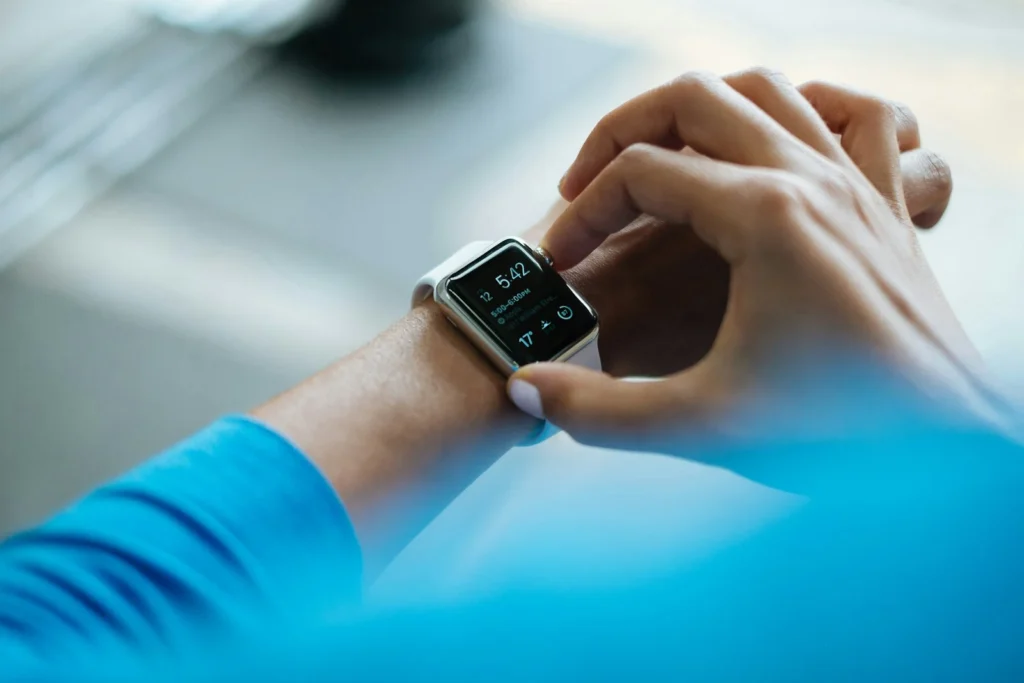
The Apple Watch Series 11 was Apple’s mainstream smartwatch from September 2025 until the Series 12 replaced it in September 2026. Its headline upgrades were longer battery life, hypertension notifications, a new sleep score and 5G on cellular models. Here is what the Series 11 offers on paper, what it cost at launch and whether it still makes sense now that a newer model is out.
What Apple changed with the Series 11
Apple announced the Series 11 on September 9, 2025, opened preorders that day and started sales on September 19. On the outside it looks almost identical to the Series 10: the same 42mm and 46mm case sizes, the same 9.7mm thickness and the same S10 chip. The changes are mostly about stamina, durability and health software.
- Battery: Apple rates it at up to 24 hours of normal use, up from 18 hours on the Series 10, and up to 38 hours in Low Power Mode. Fifteen minutes on the fast charger adds up to 8 hours.
- Tougher glass: aluminum models use Ion X glass with a new ceramic coating that Apple says is twice as scratch resistant as the Series 10 glass. Titanium models keep a sapphire crystal.
- 5G: cellular versions moved to 5G with a redesigned antenna.
- Finishes: aluminum in jet black, rose gold, silver and a new space gray, plus polished titanium in natural, gold and slate.
Series 11 specs at a glance
| Spec | Apple Watch Series 11 |
|---|---|
| Launch price (US) | From $399 |
| Sizes | 42mm and 46mm, aluminum or titanium |
| Chip | S10 with 4 core Neural Engine |
| Display brightness | Up to 2,000 nits, down to 1 nit |
| Battery | Up to 24 hours, 38 hours in Low Power Mode |
| Water and dust | Water resistant to 50 meters, IP6X |
| Health sensors | ECG, blood oxygen, temperature, optical heart |
| Requires | iPhone 11 or later |
Health features: hypertension alerts and sleep score
The biggest new health tool was hypertension notifications. The watch uses its optical heart sensor to watch how your blood vessels respond to each heartbeat, reviews the data passively over 30 day windows and alerts you if it spots consistent signs of high blood pressure. Apple says the algorithm was trained on studies with more than 100,000 participants and validated in a clinical study of more than 2,000 people, and the feature received FDA clearance in September 2025. It does not give you a blood pressure reading. Instead, Apple suggests logging readings with a regular cuff for seven days and sharing them with a doctor. It is not meant for people under 22, people already diagnosed with hypertension or during pregnancy.
Sleep score arrived with watchOS 26. It rates each night based on how long you slept, how consistent your bedtime was, how often you woke up and how much time you spent in each sleep stage. Both features are software, so they also reached older models: hypertension notifications work on Series 9 and later, and sleep score goes back to the Series 6. The longer battery is what makes overnight wear practical on the Series 11 itself.
Series 11 vs Series 12
Apple announced the Series 12 on September 9, 2026, and it went on sale September 18. It keeps the $399 starting price and the 24 hour battery rating, but moves to the S11 chip and adds a redesigned health sensor system.
Series 12 takes background heart rate readings every five seconds, which Apple says is 60 times more often than Series 11.
Aluminum Series 12 models use Ceramic Shield 2, rated 60 percent tougher than the Series 11 glass.
A 15 minute charge adds up to 12 hours on Series 12, versus 8 hours on Series 11.
Series 12 adds a daily readiness score, a ceramic case option and Audio Intelligence features.
The Series 12 also needs an iPhone 11 or later running iOS 27. For everyday basics such as notifications, Apple Pay, workouts, ECG, sleep score and hypertension alerts, the two watches behave much the same.
Can you still buy a Series 11?
Apple’s online store in the US now lists only three models: Series 12 from $399, Ultra 4 from $799 and SE 3 from $249. The Series 11 is no longer offered there, so any new unit you find comes from another retailer’s remaining stock. Because the Series 12 costs the same at full price, a Series 11 only makes sense with a meaningful discount.
FAQ
How long does the Apple Watch Series 11 battery last?
Apple rates it at up to 24 hours of normal use and up to 38 hours in Low Power Mode. Real results vary with display settings, workouts and cellular use.
Does the Series 11 measure blood pressure?
No. It flags possible chronic high blood pressure after analyzing 30 days of data, but it never shows a systolic or diastolic number.
What chip does the Series 11 use?
It uses the S10, the same chip as the Series 10. Apple put the efficiency gains into battery and connectivity rather than a new processor.
Should I upgrade from Series 11 to Series 12?
Most Series 11 owners do not need to. The Series 12 brings faster heart sensing, faster charging and tougher glass, but the core experience is very similar.
The verdict
The Apple Watch Series 11 was a solid step up thanks to a full day battery rating, 5G and new health alerts. In October 2026 the Series 12 sells for the same $399, so new buyers should pick the newer model unless a Series 11 is noticeably cheaper.
Updated October 2026: rewritten as a Series 11 overview with official specs, health features, launch pricing and how it compares with the Series 12.
Featured photo: Luke Chesser on Unsplash.
About this article: GeekBlog covers U.S. technology news, AI, phones, smartwatches and gaming. Every story is written and checked under our Editorial Policy. Spotted a mistake or have a story tip? Contact our editors.
