

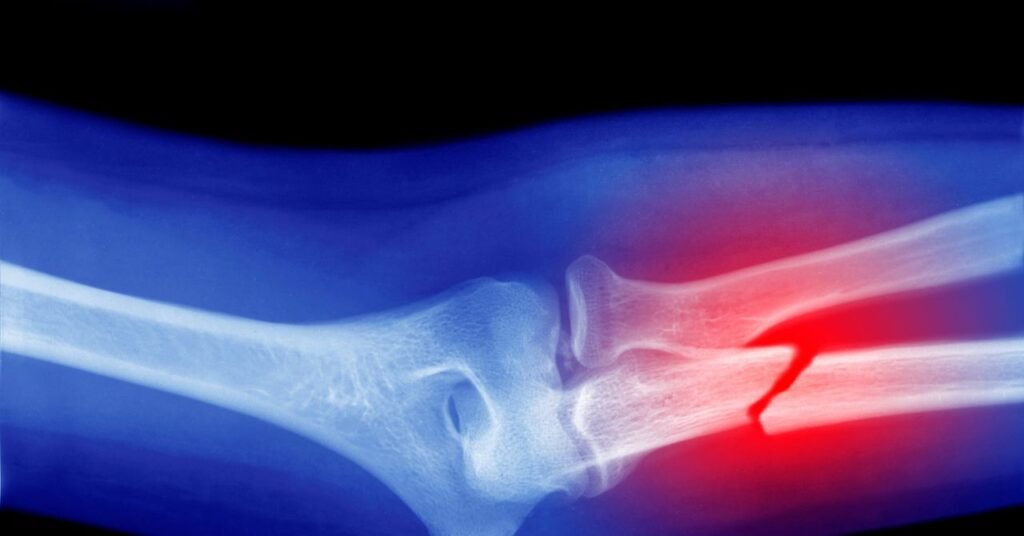
Microplastics could be a factor in driving up cases of osteoporosis worldwide, according to recently published research. The study reveals that when these tiny plastic particles enter the body, they disrupt the functioning of bone marrow stem cells, which are essential for maintaining and repairing bone tissue.
Throughout your life, your bones are replenished. Osteoporosis is a condition where this process goes wrong, with the breakdown of bone outstripping the rate at which it is replaced. This leads to bones weakening over time and becoming more likely to fracture. The condition has many risk factors—age, sex, medications, diet, smoking and drinking, and genetics are all known to influence it—with the disease developing slowly over time. Often people don’t realize they have the condition until they break a bone.
This new analysis, published in the journal Osteoporosis International, adds exposure to microplastics as a potential new risk factor. The research reviewed 62 scientific articles that had run various laboratory and animal tests on the possible effects of micro- and nanoplastics on bone. Analysis of lab experiments showed that microplastics stimulate the formation of osteoclasts, cells created by stem cells in the bone marrow that degrade bone tissue to promote resorption, the process in which the body breaks down and eliminates old or damaged bone.
The study also found that, in relation to bones, plastic particles can reduce the viability of cells, induce premature cellular aging, modify gene expression, and trigger inflammatory responses. The combination of these effects generates an imbalance in which osteoclasts destroy more bone tissue than is regenerated, causing an accelerated weakening of bone structure.
When then looking at animal studies, the researchers found that the accumulation of microplastics in the body decreases the white blood cell count—which is suggestive of alterations in bone marrow function. In addition, these animal studies suggested that the impact of microplastics on osteoclasts may be associated with deterioration of bone microstructure and the formation of irregular structures of cells, increasing the risk of bone fragility, deformities, and fractures.
“In this study, the adverse effects observed culminated, worryingly, in the interruption of the animals’ skeletal growth,” said coauthor Rodrigo Bueno de Oliveira in a press release. “The potential impact of microplastics on bones is the subject of scientific studies and isn’t negligible.”
Oliveira, who is the coordinator of the Laboratory for Evaluation of Mineral and Bone Disorders in Nephrology at the State University of Campinas in Brazil, is now working with his team to further prove in practice the relationship between exposure to microplastics and bone deterioration. This research will begin by evaluating the effects of microplastic particles on rodents’ femurs.
“Although osteometabolic diseases are relatively well understood, there’s a gap in our knowledge regarding the influence of microplastics on the development of these diseases. Therefore, one of our goals is to generate evidence suggesting that microplastics could be a potential controllable environmental cause to explain, for example, the increase in the projected number of bone fractures,” Oliveira said.
Microplastics and nanoplastics are small fragments of plastic—some so small that they’re invisible to the naked eye—that become detached from everyday objects when sunlight, wind, rain, seawater, or abrasion degrade them. The main difference between the two lies in their size: microplastics measure from 1 micrometer (one-thousandth of a millimeter) to 5 millimeters, while nanoplastics are smaller than 1 micrometer. These particles have been detected all over the world in natural environments, as well as throughout the human body and in meat, water, and various agricultural products.
Studies have started to show that this type of plastic contamination can damage health. Experts argue that this means the world urgently needs to reduce its use of plastics. Every year more than 500 million tons of the material are produced worldwide, but only 9 percent is recycled, with much of the remainder spreading into the environment and degrading.
This story originally appeared on WIRED en Español and has been translated from Spanish.
