

Vibe coding, the habit of describing what you want to an AI model and accepting the code it writes with little line by line review, has gone from a joke to a daily workflow for millions of developers. Open source projects feel the effects first, because they accept code from strangers and their volunteer maintainers have to review it. Here is what vibe coding is, why maintainers are worried, and how major projects are responding in 2026.
What vibe coding actually means
AI researcher Andrej Karpathy coined the term in February 2025 to describe programming where you fully give in to the vibes: you tell a model what you want, run the result, paste in any error messages and keep going without really reading the code. The phrase spread so fast that Collins named vibe coding its Word of the Year for 2025.
The approach is genuinely useful for prototypes, personal tools and learning. The trouble starts when code nobody has fully read ends up in shared software that thousands of other projects depend on. That is exactly the role open source libraries play.
The concerns open source maintainers raise
AI makes it cheap to open a pull request, but reviewing it still takes human time that volunteers do not have.
Plausible sounding security reports that describe problems which do not exist.
Models can suggest insecure patterns or packages that do not exist.
Unclear copyright and license status of code produced by a model.
The clearest example of review overload came from curl, the data transfer tool built into countless devices. Its lead developer, Daniel Stenberg, spent years complaining about low quality AI generated vulnerability reports. In January 2026 the project announced it would end its bug bounty program at the end of that month, saying the flood of submissions put a heavy load on its small security team and that removing the cash reward would remove the incentive for junk reports.
Security: hallucinated packages and slopsquatting
A model writing code will happily import a library that sounds right but does not exist. Attackers can register that made up name on a package registry and fill it with malware, waiting for the next developer who blindly installs what the AI suggested. Seth Larson, a security developer at the Python Software Foundation, called this slopsquatting in April 2025.
The risk is measurable. A 2025 study presented at the USENIX Security Symposium found hallucinated package names in 21.7% of code samples from open source models and 5.2% from commercial models. Vibe coding makes the problem worse because the whole point is to skip the careful reading that would catch a strange dependency.
Licensing and code provenance
Open source runs on licenses, and licenses depend on knowing who wrote the code and under what terms. AI output muddies that. The US Copyright Office said in a January 2025 report that material generated purely by AI, without enough human authorship, cannot be protected by copyright. Maintainers also worry that a model could reproduce chunks of code from its training data under an incompatible license, with no attribution.
Those concerns are why some projects drew hard lines early. Gentoo voted in April 2024 to forbid contributions created with generative AI tools. NetBSD treats code produced by large language models as tainted and will not accept it without prior written approval from its core team. QEMU, the popular open source emulator, declines contributions that include or derive from AI generated content, citing unresolved copyright and license questions, although a May 2026 proposal would loosen the rule for small fixes, tests and documentation.
How projects and platforms are responding
Not every project chose a ban. A growing group prefers disclosure and accountability:
- Fedora approved an AI assisted contributions policy in October 2025. Contributors may use AI tools, but they remain fully accountable and must disclose when a significant part of a contribution came from a tool unchanged.
- The Linux kernel added guidance for coding assistants to its process documentation in December 2025. Tools are credited in a dedicated trailer line, and only a human can certify the Developer Certificate of Origin for a patch.
- GitHub gave maintainers new controls in 2026. Since February, repository owners can turn off pull requests or limit them to collaborators. In June it added caps on open pull requests from users without write access, and pull requests opened by AI agents count toward that cap. A later setting lets admins restrict who can open issues.
FAQ
Is vibe coding bad?
Not by itself. It is a fast way to build prototypes and personal tools. Problems appear when unreviewed AI code is shipped to users or submitted to shared projects without testing.
Do open source projects ban AI generated code?
Some do, including Gentoo, NetBSD and QEMU. Others, such as Fedora and the Linux kernel, allow AI assistance as long as a human takes responsibility and discloses tool use.
What is slopsquatting?
It is an attack where someone registers a package name that AI models tend to invent, so developers who install hallucinated dependencies end up downloading malware.
Why did curl end its bug bounty?
The project said low quality reports, many of them AI generated, overloaded its security team, and ending cash rewards removes the incentive to send them.
The verdict
Vibe coding is not going away, and open source will keep absorbing its side effects. The projects handling it best set clear rules, require humans to stand behind every change and use platform tools to slow the flood. For developers, the lesson is simple: AI can write the first draft, but a person still has to read it.
Updated October 2026: rewritten as a neutral explainer on vibe coding and open source, with verified project policies, security research and GitHub changes through 2026.
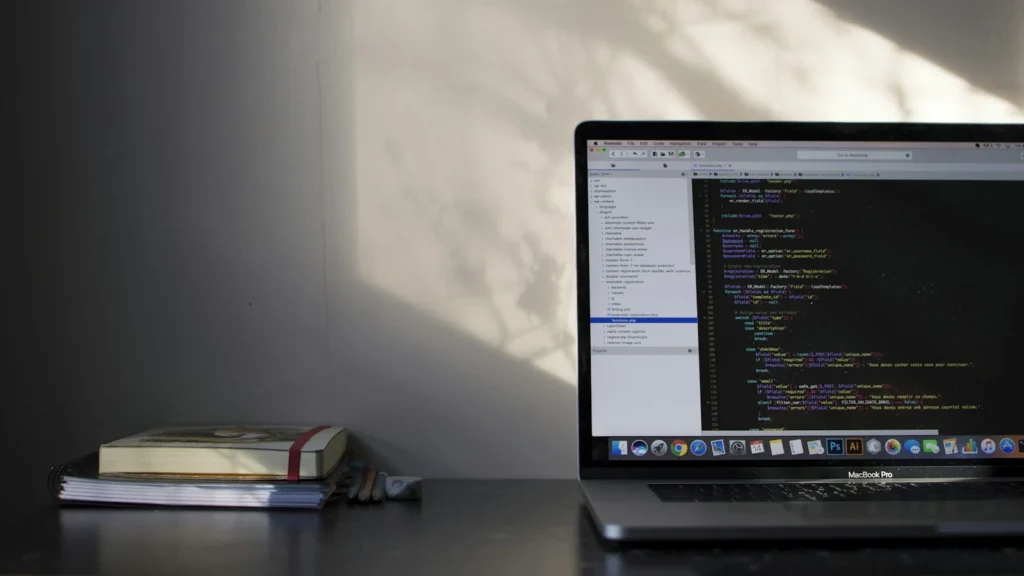
Featured photo: Emile Perron on Unsplash.
About this article: GeekBlog covers U.S. technology news, AI, phones, smartwatches and gaming. Every story is written and checked under our Editorial Policy. Spotted a mistake or have a story tip? Contact our editors.
