

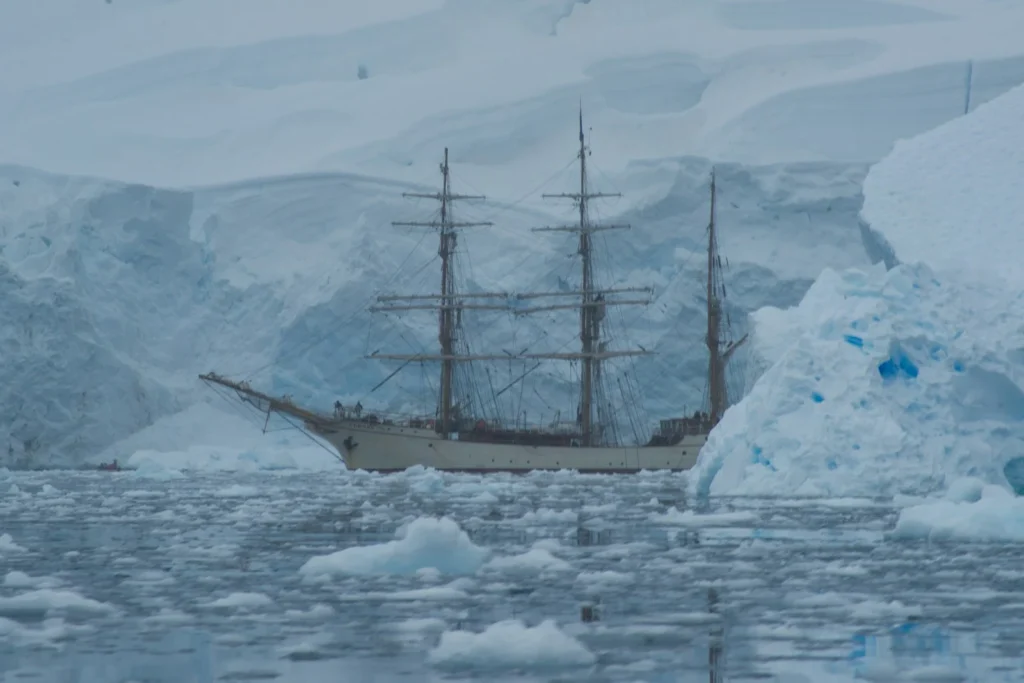
For more than a century, the loss of Ernest Shackleton’s ship Endurance has been told as a story of bad luck and a broken rudder. A study published in October 2025 argues that the real problem was built into the ship itself. Endurance, it says, was simply not designed to survive the crushing pressure of Antarctic pack ice, and Shackleton had reasons to know that before he sailed.
A quick refresher on the expedition
Shackleton’s Imperial Trans Antarctic Expedition set out in 1914 with an ambitious goal: the first crossing of Antarctica on foot. Endurance was meant to carry the landing party into the Weddell Sea, while a second ship, Aurora, supported the team from the Ross Sea side of the continent.
The plan fell apart early. In January 1915, Endurance became locked in thick sea ice before it could reach land. The crew lived aboard for months as the ice drifted, until the pressure became so severe that they abandoned ship in October 1915. Endurance finally went under on November 21, 1915.
What followed is one of the great survival stories of the 20th century. The men camped on the ice, sailed lifeboats to Elephant Island, and Shackleton then led a small crew on an open boat voyage of roughly 800 miles to South Georgia to get help. Every member of the Endurance party survived.
What the new study found
Tuhkuri combined basic structural analysis with archival research, including construction drawings, photographs, letters and diaries kept by the crew. His conclusion challenges the popular image of Endurance as the strongest wooden polar ship of its era.
Compared with other early Antarctic ships, the deck beams and the frames of the hull were lighter and less able to resist sideways squeeze.
The machinery space ran for a large stretch of the hull with only one beam spanning its full width, leaving a weak section right where ice pressure hit hard.
Ships built for ice compression often used diagonal beams to spread the load. Endurance had none.
In plain terms, the ship was strong enough to push through loose ice but not built to withstand being squeezed from both sides for months. That is exactly the situation it ended up in.
Rudder, keel and the moment the hull gave way
The traditional account, repeated by Shackleton himself and later popularized in books, points to the rudder. Ice did wreck the rudder and the stern post, and water started coming in. According to Tuhkuri, though, the crew managed that leak with pumps. The fatal damage came later, when the moving ice compressed the hull so hard that, as the ship’s carpenter recorded, the keel was ripped off. With its backbone gone and the sides crushed, Endurance could not stay afloat.
Tuhkuri argues that the danger of compressive ice and the methods to design against it were well understood before 1914. That is why the rudder story feels incomplete to him: the rudder was a symptom, not the cause.
| Popular belief | What the 2025 study says |
|---|---|
| Endurance was the strongest polar ship of its time | It had several structural weaknesses compared with other early Antarctic ships |
| The broken rudder sank the ship | The rudder leak was manageable; hull compression and keel failure were decisive |
| The ship was simply unlucky | It was not designed for compressive pack ice, the exact conditions it met |
Did Shackleton know?
This is the part of the study that drew the most attention. Endurance was not originally built for Antarctic exploration. It was launched in 1912 under the name Polaris and intended for tourist trips to the Arctic ice edge. Shackleton bought it later.
Tuhkuri found that Shackleton wrote to his wife that the ship was weaker than Nimrod, the vessel from his earlier 1907 to 1909 expedition. He also notes that Shackleton had previously recommended diagonal beams for another polar ship while visiting a Norwegian shipyard, and that ship survived months trapped in compressing ice.
The study does not claim to know why Shackleton went ahead anyway. Tuhkuri has pointed to possible money and time pressures, since the expedition had only months to prepare, but stresses that the reasons may never be known. He has also been clear that the research is not meant to diminish what Shackleton and his crew achieved in getting everyone home alive.
The 2022 wreck discovery that made this possible
For decades, nobody knew exactly where Endurance lay. That changed on March 5, 2022, when the Endurance22 expedition, led by John Shears and working from the South African icebreaker SA Agulhas II, located the wreck at a depth of 3,008 meters in the Weddell Sea. It sat about four nautical miles from the position calculated by the ship’s captain, Frank Worsley, in 1915.
The wreck turned out to be in remarkably good condition, with the name still visible on the stern. Tuhkuri was on that expedition as an ice researcher, which gave him firsthand experience of the conditions that trapped the ship. The wreck is protected under the Antarctic Treaty as a historic site, so it is being studied with cameras and scans rather than disturbed.
FAQ
Who wrote the new study on Endurance?
Jukka Tuhkuri, a professor at Aalto University in Finland who specializes in ice mechanics and Arctic marine technology. The paper appeared in Polar Record in October 2025.
So the rudder did not sink Endurance?
The rudder was damaged and caused a leak, but the study argues the crew kept it under control. The ship was lost because ice pressure crushed the hull and tore away the keel.
When and where was the wreck found?
On March 5, 2022, in the Weddell Sea off Antarctica, at a depth of 3,008 meters, by the Endurance22 expedition.
Did anyone die when Endurance sank?
No. All members of the Endurance crew survived, which is why the expedition is remembered as a triumph of leadership despite failing its original goal.
The verdict
The new research does not change the ending of the Endurance story, but it changes the cause. The ship was not a nearly perfect vessel undone by one broken part. It was a ship built for other waters, sent into the one kind of ice it could not handle. That makes the survival of all its crew even more remarkable.
Updated October 2026: rewritten to explain the 2025 Polar Record study on why Endurance sank, with expedition background and the 2022 wreck discovery.
Featured photo: Torsten Dederichs on Unsplash.
About this article: GeekBlog covers U.S. technology news, AI, phones, smartwatches and gaming. Every story is written and checked under our Editorial Policy. Spotted a mistake or have a story tip? Contact our editors.
