

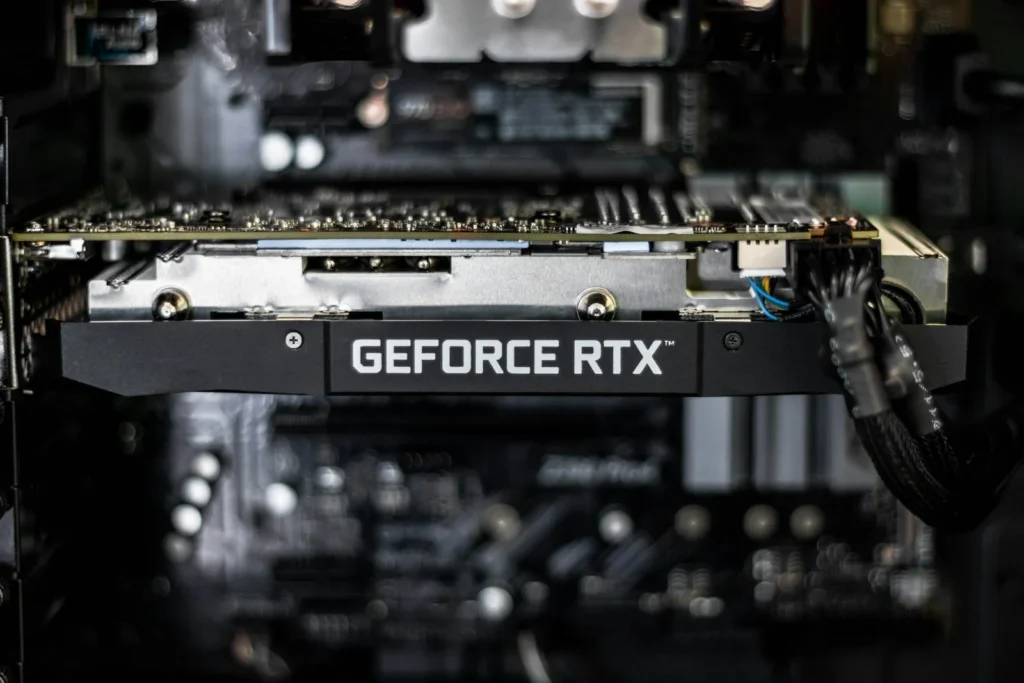
In January 2026, ASUS briefly told a hardware review channel that the GeForce RTX 5070 Ti had reached end of life, then reversed course within a day and said the card was not discontinued at all. Nine months later, the bigger story is not the mixed messaging but the reason behind it: a memory shortage driven by AI data centers that has pushed graphics card prices far above launch levels. Here is what ASUS and Nvidia actually said, where prices stand in October 2026 and how to shop right now.
What ASUS and Nvidia said
The confusion played out over two days. On January 15, 2026, an ASUS representative told a reviewer requesting samples that the RTX 5070 Ti was in short supply and had been moved to end of life status, with production shifting to other cards. The same message suggested the RTX 5060 Ti 16GB was also finished. Retailers contacted at the time reported little or no stock, which made the claim look credible.
Within a day, ASUS issued a correction. The company said neither card is discontinued or end of life, that it has no plans to stop selling them, and that memory supply fluctuations had reduced availability and delayed restocks. ASUS added that it was working to stabilize supply as conditions improve.
Nvidia’s position matched the correction. The company said demand for GeForce RTX GPUs is strong and memory supply is constrained, that it continues to ship all GeForce SKUs, and that it is working closely with suppliers to get as much memory as possible. In other words, the card was never cancelled. It simply became hard to find.
Why memory is the bottleneck
Graphics cards depend on fast video memory. Most RTX 50 series cards use GDDR7, and the same handful of companies that make it, Samsung, SK hynix and Micron, also make the DRAM and high bandwidth memory (HBM) that AI servers consume in huge volumes. AI customers sign large, long term contracts and pay premium prices, so factory capacity flows to them first. Consumer products get what is left.
- Capacity shifted to AI. HBM for data center accelerators takes priority over memory for gaming PCs, laptops and consoles.
- Consumer brands are retreating. Micron announced in December 2025 that it would exit its Crucial consumer business to focus on data center and other strategic customers.
- No quick fix. On its July 30, 2026 earnings call, Samsung said supply constraints are expected to be even more severe in 2027 than in 2026.
- More memory, more exposure. A 16GB card needs twice as many memory chips as an 8GB version, which is why 16GB models like the RTX 5070 Ti and RTX 5060 Ti 16GB were hit hardest.
The same shortage has also raised prices for system RAM and SSDs, so a full PC build costs more in 2026 than it did a year earlier, not just the graphics card.
GPU prices in October 2026
Price trackers in early October 2026 showed most current cards selling well above their launch prices. The RTX 5070 Ti dipped near $920 in late July, climbed past $1,300 in late August and settled around $1,190 by early October. Here is how popular cards compare:
| Card | Launch price | Lowest new price, early Oct 2026 |
|---|---|---|
| RTX 5070 Ti | $749 | about $1,180 |
| RTX 5070 | $549 | about $800 |
| RTX 5080 | $999 | about $1,600 |
| RTX 5060 Ti 16GB | $429 | about $790 |
| Radeon RX 9070 XT | $599 | about $830 |
Prices move week to week, so treat these as a snapshot rather than a quote. The pattern is what matters: cards with more memory carry the biggest markups, and nothing in the current lineup sells at launch price.
Buying advice for gamers
There is no perfect move in a shortage, but there are smarter ones.
- Decide if you need to upgrade now. If your current card still runs your games at settings you are happy with, holding off costs nothing. Just do not count on prices falling soon, given what memory makers are saying about 2027.
- Set a budget in dollars, not a model name. At current prices, compare what each card costs against the resolution you play at. An RX 9070 XT around $830 and a 16GB RTX 5060 Ti around $790 are both far cheaper than an RTX 5070 Ti while still offering 16GB of memory.
- Prioritize 16GB for 1440p and 4K. Newer games use more video memory, and 8GB cards are increasingly limiting at higher settings.
- Weigh features. Nvidia cards are the usual pick for heavy ray tracing and DLSS. AMD cards often deliver more raw performance per dollar at today’s prices.
- Buy from the retailer, not a reseller. Third party marketplace listings carry the highest markups. Check the seller and the warranty terms before you pay.
FAQ
Is the RTX 5070 Ti discontinued?
No. ASUS withdrew its end of life claim on January 16, 2026, and Nvidia said it continues to ship all GeForce models. The card is still sold, just in limited quantities.
Why are graphics cards so expensive in 2026?
Memory makers are sending most of their capacity to AI data centers. With less GDDR7 for gaming cards, supply is tight and prices rise, especially for models with 16GB or more.
Will GPU prices drop soon?
Probably not quickly. Samsung said in July 2026 that it expects memory constraints to get worse in 2027 before they ease.
Should I buy an RX 9070 XT instead?
If you care most about price to performance, it is worth a look, since it sells for hundreds of dollars less than an RTX 5070 Ti. If ray tracing and DLSS matter more to you, the Nvidia card still has the edge.
The verdict
ASUS is not dropping the RTX 5070 Ti, and neither is Nvidia. The real problem is a memory market that now serves AI first and gamers second, which has pushed the card well past $1,100. If you need a GPU today, set a firm budget, look hard at 16GB alternatives and buy from trusted retailers. If you can wait, wait, but do not expect a quick return to launch prices.
Updated October 2026: rewritten to explain the ASUS RTX 5070 Ti statements, the AI driven memory shortage, current GPU prices and buying advice.
Featured photo: Christian Wiediger on Unsplash.
About this article: GeekBlog covers U.S. technology news, AI, phones, smartwatches and gaming. Every story is written and checked under our Editorial Policy. Spotted a mistake or have a story tip? Contact our editors.
