

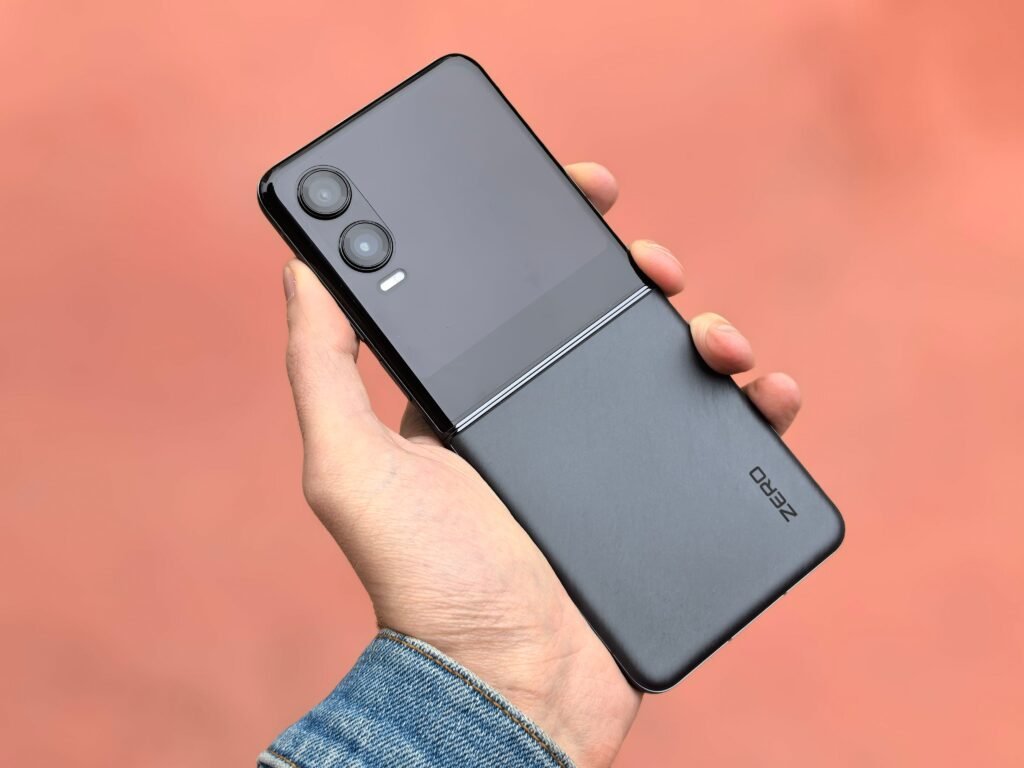
Every foldable phone review for the last five years has contained the same small complaint, usually buried near the end. The magnets are in the case, not the phone.
That complaint is about to become an Apple advantage. Ahead of the September 9 event, Bloomberg’s Mark Gurman has indicated that the folding iPhone Ultra will support MagSafe charging, with the magnet array built into the device itself. Samsung has shipped eight generations of folding phones without ever doing that.
It sounds like a footnote. For anyone who has actually lived with a foldable, it is not.
🧲 The short version
- The iPhone Ultra is expected to include MagSafe, with magnets built into the phone rather than an accessory.
- Samsung foldables have never had built-in magnets. The Galaxy Z Fold 8 supports Qi2 charging speeds, but the magnets live in a case you buy separately.
- Gurman’s reasoning is the iPhone Air. Apple fit a full magnet array into a 5.6mm phone, which removes the usual thickness excuse.
- The iPhone Ultra is tipped for a 5.5-inch cover screen and a 7.8-inch inner display, in a book-style design.
- Apple is reportedly using a liquid metal hinge to reduce the display crease rather than eliminate it entirely.
- Expect a price above $2,000. None of this is confirmed until Apple says it on stage on September 9.
What Gurman Actually Said
The claim is narrower than some of the coverage suggests, so it is worth being precise about it.
Gurman’s position is that the iPhone Ultra will “likely” support MagSafe, and his stated reason is the iPhone Air. Apple shipped that phone at 5.6mm thick with a working magnet array inside it. If a magnet ring fits in a phone that thin, the argument that a foldable is too thin to carry one gets considerably weaker.
That is an inference rather than a leak from the production line. It is a good inference, and Gurman’s record on Apple hardware is strong, but it belongs in the rumor column until September 9. Apple has already confirmed the event date, and the iPhone 18 Pro and 18 Pro Max are the other expected headliners. We covered the scheduling in detail when Apple moved the pre-order date on purpose.
Why Samsung Owners Have Been Waiting for This
Here is the situation that has quietly annoyed foldable buyers for years.
Samsung’s current foldables do support Qi2, and they charge at the full 20W the standard allows. What they do not have is magnets. The Wireless Power Consortium’s Qi2 specification covers both the power delivery and the magnetic alignment, and Samsung has implemented the first half in the phone and left the second half to accessory makers. Buy a compatible case, and the magnets in that case give you the snapping, aligning, accessory-holding behavior that iPhone owners have had since 2020.
The industry has a slightly awkward name for this arrangement: Qi2 Ready. It means the phone is capable of the charging speed but cannot align itself to anything without help.
| Device | Magnets in the phone | To get magnetic charging |
|---|---|---|
| iPhone 17 and 18 Pro | Yes, MagSafe | Nothing. It works bare. |
| iPhone Air | Yes, at 5.6mm thick | Nothing. |
| iPhone Ultra (expected) | Reportedly yes | Nothing, if the reports hold. |
| Google Pixel 10 and 11 Pro | Yes, Pixelsnap | Nothing. |
| Galaxy Z Fold 8 | No | A Qi2 magnetic case, bought separately. |
| Galaxy Z Fold 7 | No | A Qi2 magnetic case. |
| Galaxy Z Flip 8 | No | A Qi2 magnetic case. |
The pattern is clean. Every slab phone at the top of the market now has magnets in the hardware. Every folding phone at the top of the market does not.
The Engineering Reason Foldables Skipped Magnets
Samsung is not being lazy here, and it helps to understand why the problem is genuinely harder on a folding phone.
On an ordinary phone, the magnet ring sits in the back panel, centered behind the wireless charging coil, with the battery and boards stacked in front of it. There is one continuous back surface and the designer can put the ring wherever the coil needs it to be.
A book-style foldable does not have one back surface. It has two, joined by a hinge, and each of them is roughly half as thick as a normal phone because the two halves have to add up to something pocketable when closed. The magnet ring has to fit inside one of those halves, alongside that half’s share of the battery, and it has to do it without warping the display panel sitting a couple of millimeters above it or interfering with the hinge mechanism.
So the constraint is real. What Gurman’s argument does is point out that Apple has already solved a version of it. The iPhone Air is not a foldable, but 5.6mm is thinner than one half of most folding phones, and the magnets went in anyway.
What You Actually Lose Without Built-In Magnets
It would be easy to write this off as a charging preference. It is broader than that, because the magnet ring stopped being about charging several years ago.
The magnet ring is an accessory mount now
Wallets, car vents, tripod mounts, battery packs, grips, kickstands and dashboard holders all attach through that ring. An entire accessory category assumes it exists. On a phone without it, every one of those products requires you to first commit to a specific case, and then hope that case is still being made next year.
There is a second cost that gets less attention. A magnetic case adds thickness and weight to a device that is already thick and heavy when folded, which is exactly the wrong trade to make on a foldable.
That last point is the one foldable owners tend to raise. A folding phone closed is already about as thick as two phones. Adding a case with a magnet array inside it makes the thing you put in your pocket noticeably chunkier, and the whole appeal of the recent generation of foldables has been that they finally stopped feeling like bricks.
The Rest of the iPhone Ultra Picture
MagSafe is not the reason anyone will spend this kind of money, so it is worth putting it in context with what else is expected.
The reported design is book-style, with a 5.5-inch cover display and a 7.8-inch inner screen that opens to something close to an iPad mini. That is a similar footprint to Samsung’s current Fold line, which is where most of the direct comparisons are going to come from. We looked at how the two devices approach the same problems when the Galaxy Z Fold 8 and iPhone Ultra both started fixing what was wrong with foldables.
On the crease, Apple is said to be using a liquid metal hinge, and the reporting has been consistent that the goal is to make it less visible rather than to make it disappear. Anyone expecting a genuinely flat inner display should temper that. Samsung has made real progress on its own crease with newer hinge materials, and the gap between the two may be smaller in person than the marketing will suggest.
Then there is the price. Gurman has stayed with a figure above $2,000, and the knock-on effect of that number is its own story. A new price ceiling gives every other manufacturer room to raise theirs, which is the argument we made when the iPhone Ultra’s price tag looked set to make every foldable more expensive.
Where to Stay Skeptical
A few things are worth holding loosely until Apple confirms them.
First, “supports MagSafe” covers a range of outcomes. A full-strength magnet array that holds a battery pack is one thing. A weaker array tuned only for alignment on a charging puck is another, and on a device with this little internal room, the second is a plausible compromise. Apple has never shipped a deliberately weak MagSafe implementation, but it has also never shipped a foldable.
Second, none of the display or hinge specifications are confirmed. They come from supply chain reporting, which is usually directionally right and frequently wrong on the details.
Third, and most simply, Apple has not announced this phone. The September 9 event is confirmed and the iPhone 18 Pro line is expected, but a folding iPhone has been six months away for most of a decade.
The Bottom Line
If the reports are accurate, Apple is about to ship a folding phone that does something no folding phone has done at the top of the market: put the magnets where they belong, inside the hardware.
It is not a headline feature and it will not sell a single unit on its own. What it does is remove one of the small, permanent frictions that made foldables feel like a compromise even after the screens got good and the creases got shallow. You would stop shopping for a case that has to be magnetic, stop buying accessories twice, and stop carrying extra millimeters to get a feature your $999 phone already has.
Samsung has had eight generations to do this and has chosen the case every time. If Apple gets it right on the first attempt, that decision is going to look a lot harder to defend on September 9.
