

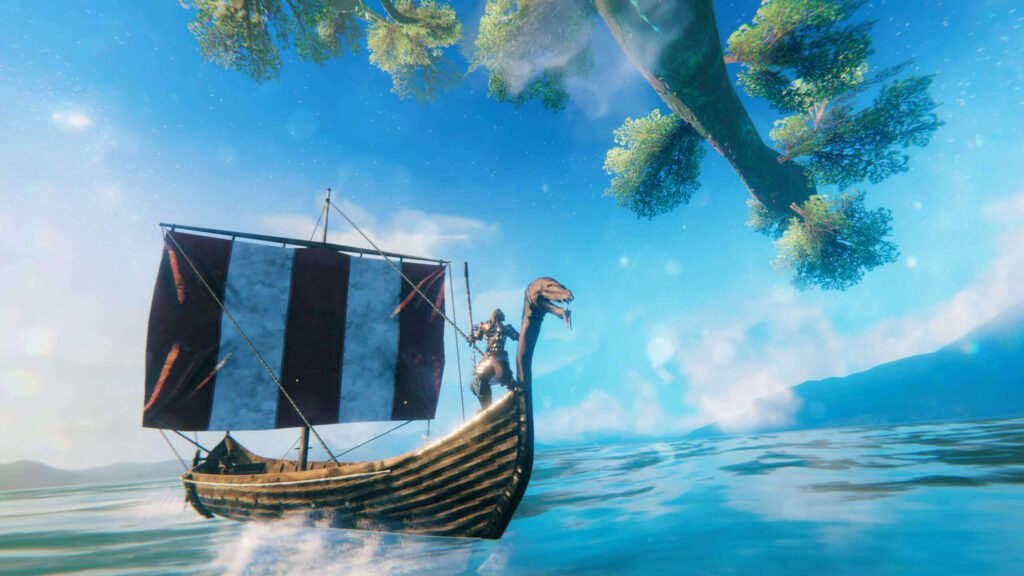
Valheim stopped being an Early Access game today. After five and a half years, thirteen major free updates, and a player base that grew from a few thousand curious Vikings to more than 17 million owners, Iron Gate Studio has shipped version 1.0. The update arrived globally at the same instant everywhere, 6 AM Pacific time on September 9, 2026, and it brought along the one thing longtime players had been asking for since before some of them could legally buy the game: the Deep North, Valheim’s eighth and final biome.
Image: Iron Gate AB / Coffee Stain Publishing, via valheimgame.com/press
This is not a small patch dressed up as a milestone. Iron Gate confirmed the date back on June 7, 2026, ending months of speculation, and the studio used the moment to also push Valheim onto two brand new platforms. It is, in every practical sense, a relaunch dressed up as a graduation ceremony.
Fast Facts
- Valheim exits Early Access and hits version 1.0 on September 9, 2026, worldwide at once.
- The update adds the Deep North, the game’s eighth and final biome.
- PlayStation 5 and Nintendo Switch 2 join the lineup on day one, with full crossplay.
- Existing save files carry over. The download is a modest 4.3 GB.
- Over 17 million people now own the game, up from roughly 5 million in its first month back in 2021.
Five years is a long time to stay in Early Access
Iron Gate is a small Swedish studio, a team that started this project with well under twenty people, working with publisher Coffee Stain Publishing. When Valheim launched into Steam Early Access on February 2, 2021, nobody involved seemed to expect what happened next. The game sold roughly five million copies in its first month alone, an Early Access debut on a scale that put it in the same conversation as titles backed by studios ten times the size.
What followed was a slow, deliberate build-out rather than a rush to the finish line. Iron Gate added biomes one at a time as free updates: the Mistlands brought a fog-choked, ruin-covered wasteland; the Ashlands turned the southern edge of the map into an active volcanic warzone. Each release reset community conversation and pulled lapsed players back in, and each one pushed the eventual full launch further down the calendar. Five and a half years of that cadence is unusual for any studio, let alone one this size, and it is a large part of why Valheim’s Early Access run became a case study other indie teams point to.
The biome progression, from Meadows to Deep North
| Order | Biome | Character |
|---|---|---|
| 1 | Meadows | The starting zone, gentle and green |
| 2 | Black Forest | Dense woods, early ruins and crypts |
| 3 | Swamp | Waterlogged, draugr-infested crypts |
| 4 | Mountains | Snow, wolves, and the first real cold mechanic |
| 5 | Plains | Open grassland guarded by heavily armored foes |
| 6 | Mistlands | Fog, ancient ruins, and the Dvergr |
| 7 | Ashlands | Volcanic warzone on the southern edge |
| 8 | Deep North | Frozen far north, the closing chapter |
What actually changes for people already playing
The good news for existing players is that nothing about 1.0 asks you to start over. Old worlds load normally and keep every building, every stockpile, every boss trophy nailed to the wall. Iron Gate does suggest starting a fresh world if you care about the new in-game achievement system, since it only begins tracking statistics from the moment version 1.0 is installed. Kill a creature the update wants you to log before you upgrade, and the system will not retroactively credit it. You would need to find and defeat it again on your existing save.
Mod support is not going away either, which matters for a community that has built an enormous library of tools and content add-ons over the years. The one wrinkle is crossplay. Console clients cannot install BepInEx-style mods, so a modded server and a crossplay-enabled server cannot be the same server. Anyone running a heavily modified world with PC-only friends can keep doing exactly that. Anyone who wants to include a friend on Switch 2 or PlayStation needs to run vanilla.
A platform launch hiding inside a content update
Valheim was already available on PC through Steam, the Mac App Store, and the Humble Store, plus Linux and Xbox, where it has been part of Game Pass. With 1.0, PlayStation 5 and Nintendo Switch 2 join on day one, and Iron Gate has confirmed full crossplay across every one of those platforms, PC, Xbox, PlayStation, and Switch 2 players can all share the same server. GeekBlog first reported that a PS5 version was coming last year, and it has now arrived exactly as promised, timed to the biggest update the game has ever received rather than shipping quietly on its own.
| Platform | Status at 1.0 |
|---|---|
| PC (Steam), Mac, Linux | Already available, updated to 1.0 |
| Xbox One, Series X|S, Game Pass | Already available, updated to 1.0 |
| PlayStation 5 | New at launch |
| Nintendo Switch 2 | New at launch |
The timing is not an accident. Xbox players heading into the Deep North this week are doing so right as their platform tightens the belt elsewhere. Microsoft just put a time limit on Xbox Cloud Gaming, tying available hours to subscription tier. Valheim on Xbox is a straightforward download and install rather than a streamed session, so none of that applies here, but it is a reminder of how differently the big platform holders are treating their online services this year.
Inside the Deep North
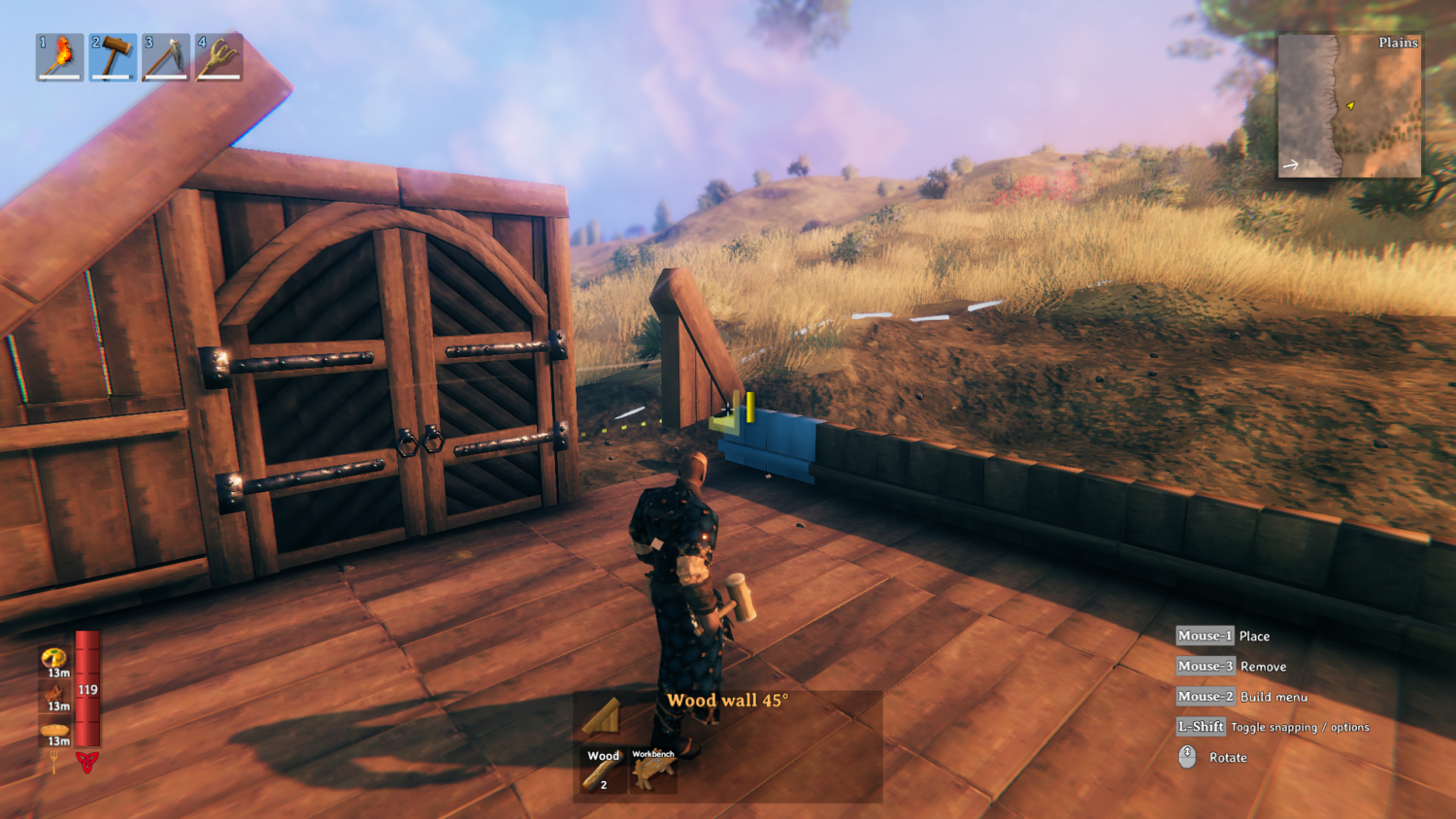
Iron Gate describes the Deep North as holding more content than two ordinary biomes combined, and after five years of watching the studio’s pacing, that is a claim worth taking seriously. The region sits at the northern edge of the map: dense frozen forest, deep snowdrifts that need to be cleared by hand, and abandoned villages where the ghosts of former residents still wander between the houses.
Two dungeon types anchor the exploration. Winding Tunnels are reached through openings inside the larger village houses. Gates of Mörkhalla sit inside fortress-style structures and require a key before you can even step through the door. Both are built around the biome’s new enemy roster: ancient tree-throwing Gammeltrolls, the underground-dwelling Elakingar, the unsettling Eyeless Ones, and something Iron Gate is simply calling the Shapeless Pulp. On the friendlier side, the update adds tamable Seals and, for the first time, a rideable Moose.
Getting there is its own small ritual. There is no fast travel into the Deep North on your first visit. You sail, and when you reach the coastline you will find it sealed behind sheets of ice that only break apart when hit with Ember Charges. Bring a longship, stock up before you leave, and expect the approach itself to feel like part of the content rather than a loading screen with extra steps.
New gear worth grinding for
- Bloodgold, the Deep North’s signature metal, smelted from a material called Petrified Tissue.
- Timberwood, the biome’s new wood tier, used alongside Bloodgold in crafting.
- A full Nord-tier weapon set covering every combat style, crafted using moulds found inside the Winding Tunnels.
- A Grappling Hook, previously tied to the Mistlands, now available for traversing the new terrain.
- A dedicated Shovel for clearing the deep snow that blocks paths and building sites.
Beyond raw content, Iron Gate used the 1.0 release to clean up several long-standing quality of life complaints: expanded inventory space, a reworked crafting menu, new cinematics bookending the update, and performance tuning aimed specifically at large player-built bases and the stutter that used to hit when crossing between loading zones.
An ending the studio is keeping to itself
Valheim has always had a light narrative thread running underneath the survival mechanics, tied to a Valkyrie-like guide named Hervor Bloodtooth and the Norse mythology the game borrows its bestiary from. The Deep North closes that thread out with a final boss encounter and, with it, a brand-new top-tier piece of equipment. Iron Gate has kept the boss itself under wraps, though art director Robin Eyre has publicly ruled out one obvious guess: it is not Loki. Beyond that denial, the studio is letting players find out for themselves, which fits a marketing approach that has favored slow drips of screenshots over full reveals for most of this update cycle.
Why this matters beyond the Valheim community
Live-service support has become one of the more contentious topics in gaming this year, and Valheim’s exit from Early Access lands squarely in the middle of that conversation, just from the opposite direction of most recent headlines. Barely a week ago, Splitgate’s servers went dark as part of a wave of shutdowns hitting PlayStation owners this September, a blunt reminder that plenty of online games get quietly wound down rather than finished. Iron Gate is doing the opposite: closing out a five-year development arc with its biggest update yet, adding two new platforms instead of cutting support for old ones, and treating a finished 1.0 label as a beginning for cross-platform play rather than an end to updates altogether.
The base game’s price has held at 19.99 dollars on Steam for the entire Early Access run, and there is no indication that leaving Early Access is being used as an excuse to charge existing owners anything extra. For 17 million people who already own it, the Deep North and the new platforms arrive exactly the way every other Valheim update has: free, and waiting the moment you next sail into port.
