

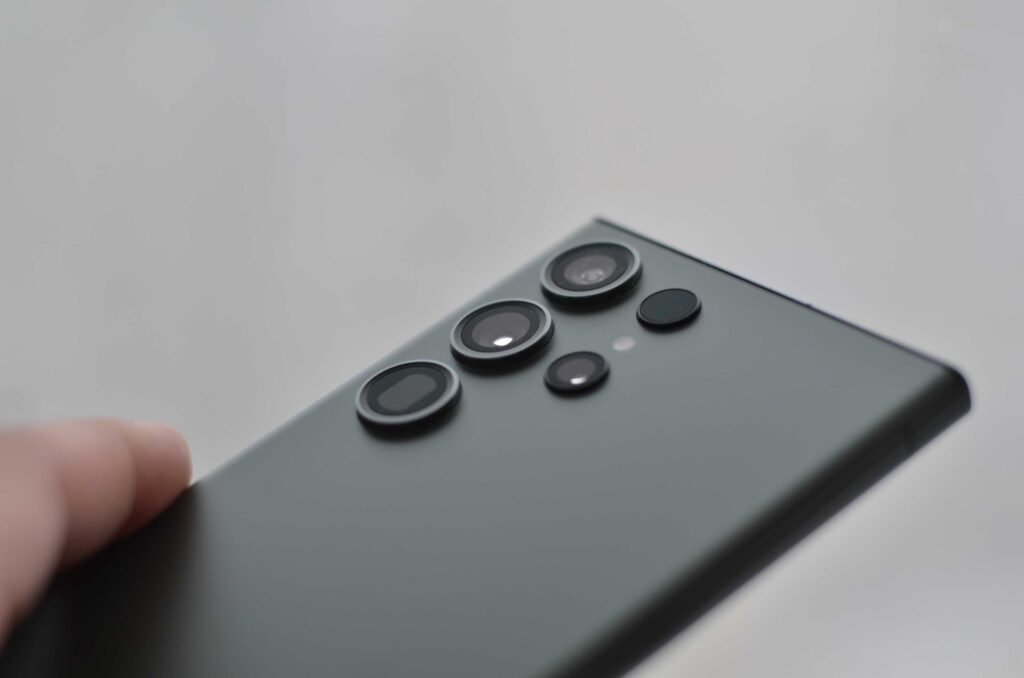
Google has spent a few years making its cheaper Pixel harder to dismiss, and with the Pixel 11 it may have gone too far for its own good. The base model and the Pixel 11 Pro share a chip, a charging brick requirement, a screen size, a software promise and, as it turns out, almost exactly the same battery life. On paper the Pro’s case for existing has narrowed to a short list.
That short list happens to be expensive. Both phones arrived on August 20, 2026, $200 apart, and the money goes almost entirely into two things you can see rather than anything you can feel in day to day speed.
Here is what the gap actually buys, and who should pay it.
The full comparison
| Pixel 11 | Pixel 11 Pro | |
|---|---|---|
| Launch price | $899 (256GB) | $1,099 (256GB) |
| Display | 6.3in OLED, 1080×2424, 422ppi, 120Hz, 3000 nits peak | 6.3in LTPO OLED, 1280×2856, 497ppi, 120Hz, 3600 nits peak |
| Measured brightness | 2,134 nits | 2,333 nits |
| Chipset | Tensor G6 (3nm) | Tensor G6 (3nm), identical |
| Memory | 12GB, 256GB or 512GB | 12GB/256GB, 16GB with 512GB or 1TB |
| Main camera | 48MP f/1.7, 1/1.56in, OIS | 50MP f/1.7, 1/1.3in, dual pixel PDAF, OIS |
| Telephoto | 10.8MP f/3.1, 1/3.2in, 5x | 48MP f/2.8, 1/1.95in periscope, 5x |
| Ultrawide | 13MP f/2.2, 1/3.1in, fixed focus | 48MP f/1.7, 1/2.51in, PDAF |
| Selfie camera | 10.5MP f/2.2 | 42MP f/2.2, dual pixel PDAF |
| Max video | 4K 60fps | 8K 30fps |
| Battery | 4,985mAh | 4,850mAh |
| Charging | 30W wired, 25W Qi2.2 | 30W wired, 25W Qi2.2, identical |
| Connectivity | Wi-Fi 6e, no UWB | Wi-Fi 7, UWB |
| Weight | 197g, 8.6mm | 204g, 8.4mm |
| Software support | Android 17, 7 OS updates | Android 17, 7 OS updates, identical |
Count the green cells in the Pixel 11 column. Chip, charging, battery capacity and support promise are not compromises on the cheaper phone, they are the same product.
Where the two phones are genuinely identical
This is the part that makes the Pixel 11 awkward for Google’s own lineup.
Both phones run the same Tensor G6 on a 3nm process, same seven core layout, same GPU. Google did not bin a lesser version for the cheaper phone, and the benchmark numbers reflect that with a flatness you rarely see across a price tier.
Charging is identical too: 30W wired reaching 55 percent in half an hour, and 25W wireless on the Qi2.2 standard with magnets built in. That last detail is worth pausing on, because magnetic wireless charging has been inconsistently implemented across Android. Google put real Qi2 magnets in both phones rather than pushing the job onto a case, which puts it in a small group of Android makers that bothered to do this properly.
Software support matches as well. Seven OS updates from Android 17 on both, which takes either phone to 2033. If you have watched what happens when that clock runs out, as Pixel 6 owners did with their final security patch, you will know that the support window is one of the few spec numbers that reliably matters years later. Google is not charging extra for it.
The chip itself is also not exclusive to this tier for long. The Tensor G6 is expected to carry over into the cheaper A series, where the more consequential change is the modem rather than the processor.
What the $200 actually buys: the camera
Google’s split is unusually honest. It did not make the cheap phone slow. It made the cheap phone’s cameras smaller, and it did so in a way that shows up most at zoom.
The headline spec looks close. Both phones have a 5x optical telephoto. The sensors behind those lenses are not in the same category.
The Pro’s telephoto sits on roughly 2.7 times the sensor area and sits behind a slightly faster f/2.8 lens against f/3.1. Put those together and the Pro’s zoom camera is working with something in the region of three times the light. Reviewers have been consistent about what that looks like in practice: the base model’s 5x shots are usable and noticeably softer, while the Pro’s hold up as genuinely good photos.
There is a counterintuitive detail worth knowing. The base model’s telephoto has larger individual pixels, 1.22µm against the Pro’s 0.8µm, which sounds like an advantage until you account for binning. The Pro’s 48MP sensor combines groups of pixels, giving it an effective pitch around 1.6µm along with far more resolution to crop into. Bigger pixels on a much smaller sensor is not the same thing as a bigger sensor.
Video tells a similar story. The base model caps at 4K 60fps, the Pro records 8K. For most people 8K is a specification rather than a workflow, but the Pro’s advantage in video stabilization and low light comes from the same larger sensors that help its stills.
The display difference is real but subtle
Both panels are 6.3 inches at 120Hz. The Pro’s is sharper, at 1280×2856 and 497ppi against 1080×2424 and 422ppi, and it is brighter, measuring 2,333 nits in lab testing against the base model’s 2,134.
The more meaningful difference is LTPO. The Pro’s panel can scale its refresh rate down much further for static content, which is the technology behind a smoothly running always on display and a small but genuine power saving. The base model switches between 60Hz and 120Hz instead.
In practice, a 75ppi difference at normal viewing distance is hard to see, and a 200 nit difference matters only in direct sun. If you have never looked at the two side by side, you are unlikely to feel short changed by the cheaper panel.
Which one should you buy
| Pick the Pixel 11 if | Pick the Pixel 11 Pro if |
|---|---|
| Your zoom shots are occasional and mostly in daylight | You shoot at 5x and beyond regularly, or in poor light |
| You want the fastest Pixel chip for the least money | You shoot a lot of selfie video and want autofocus on the front camera |
| Battery life and charging speed are your priorities | You want macro shots, which need the Pro’s autofocusing ultrawide |
| You are keeping the phone until the update window closes | You need 1TB of storage or 16GB of RAM |
| You would rather put the $200 toward something else | You want Wi-Fi 7, UWB or 8K video |
Frequently asked questions
Is the Pixel 11 slower than the Pixel 11 Pro?
No, in any way you could notice. They use the same Tensor G6 and land within a fraction of a percent of each other in GeekBench and 3DMark. The Pro is about 3 percent ahead in AnTuTu, which is inside the range of normal test variation. The larger Pro XL does score higher on sustained workloads because it has more room to shed heat.
Does the Pixel 11 have a telephoto camera?
Yes. It has a 10.8MP 5x optical telephoto with OIS. Some early comparisons claimed the base model had no telephoto at all, which was wrong. It does have one, it is simply a much smaller sensor behind a slower lens than the Pro’s 48MP periscope.
Which one has better battery life?
They are effectively tied, and the cheaper phone has the larger battery. The Pixel 11 carries 4,985mAh against the Pro’s 4,850mAh, and measured active use scores came in at 15 hours 40 minutes and 15 hours 39 minutes respectively. If battery life is your deciding factor, look at the Pro XL instead, which posted 16 hours 45 minutes.
Do both phones get the same number of Android updates?
Yes. Both ship with Android 17 and are promised seven OS upgrades, putting their support windows in 2033. There is no software support penalty for buying the cheaper phone.
Is the LTPO display worth the upgrade on its own?
For most people, no. LTPO brings a smoother always on display and a modest power benefit, and the Pro’s panel is sharper and brighter. None of that is dramatic at normal viewing distances. If the display were the only difference, the base model would be the easy call. The cameras are what justify the Pro.
What about the Pixel 11 Pro XL?
The XL shares the Pro’s camera system and adds a 6.8 inch 1344×2992 panel, a 5,115mAh battery and faster 45W wired charging reaching 75 percent in half an hour. It is the one to buy if you want maximum battery life and do not mind a 226g phone. It is a size decision more than a capability one.
The bottom line
Google has made the honest version of a two tier lineup. It did not slow the cheap phone down, shorten its support, cripple its charging or give it a worse chip. It gave it smaller cameras and a lower resolution screen, told you the price difference, and left the choice genuinely open.
That makes this an unusually easy decision. If you care about zoom, close up photography or front facing video, the Pro’s camera system is not a marginal upgrade and the $200 is well spent. If your photography is mostly the main camera in reasonable light, the Pixel 11 gives you the same speed, the same battery life, the same seven years of updates and the same magnetic wireless charging for less, and you will spend the next several years not noticing what you skipped.
Just check the price on the day. The moment the Pro drops to within $100 of the base model, which has already happened more than once, the calculus tips and the better cameras become hard to argue against.
Sources and further reading
- TechRadar: The Google Pixel 11 might seem like a boring upgrade, but I’d still pick it over the Pixel 11 Pro
- GSMArena: Google Pixel 11 full phone specifications
- GSMArena: Google Pixel 11 Pro full phone specifications
- GSMArena: Pixel 11 Pro review, camera quality
- GSMArena: Pixel 11 review, camera quality
- Google Store: Pixel 11 Pro and 11 Pro XL technical specifications
- 9to5Google: Pixel 11 vs Pixel 11 Pro, more similar than ever before
- Android Authority: I spent 3 days with the Pixel 11 and Pixel 11 Pro
- Tom’s Guide: I checked out the Pixel 11, 11 Pro and 11 Pro XL
- T-Mobile: Google Pixel 11 series specs, sizes and features
About this article: GeekBlog covers U.S. technology news, AI, phones, smartwatches and gaming. Every story is written and checked under our Editorial Policy. Spotted a mistake or have a story tip? Contact our editors.
