

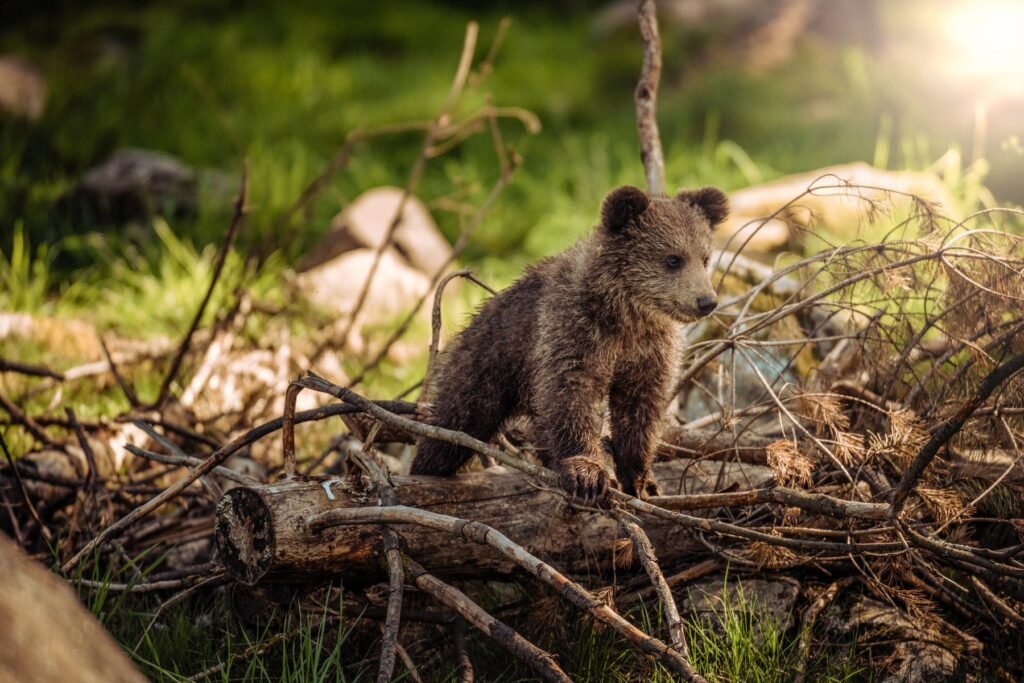
In September, a woman in the small Russian settlement of Magdagachi took a photo of her own street, asked ChatGPT to add a brown bear to it, and sent the result to a friend as a joke. Within hours the picture was moving through local messaging chats. People called the emergency dispatcher. Police were told, the district head was informed, and hunters were sent out to look for an animal that never existed.
On October 13, a court in Russia’s Amur region fined her 15,000 roubles, about $178. It sounds like a quirky story, and it has been shared like one. But it lands in the middle of a real crisis: Russia has recorded 26 deaths from bear attacks since spring, and fake bear photos are now turning up across the country fast enough that courts are treating them as a public safety problem.
The short version
- A Magdagachi resident used ChatGPT to put a bear on a photo of Krasnoarmeyskaya Street and sent it to a friend. It spread, residents called police, and hunters were dispatched.
- She later called police herself and admitted the image was AI generated. A magistrate fined her 15,000 roubles (about $178) under Article 13.15, Part 9 of Russia’s administrative code.
- The normal minimum fine under that article is 30,000 roubles. The court went lower after looking at her finances and mitigating circumstances.
- It is at least the fifth AI bear hoax reported in Russia since September. Russia’s brown bear population is officially about 307,900.
- Japan saw the same thing during its record bear year, when a town posted an official warning based on an AI image.
How one fake photo set off a real search
According to Russian court news agency RAPSI and the regional outlet Amurskaya Pravda, the chain of events went like this. The woman generated the picture in a browser version of ChatGPT, using a real photo she had taken on Krasnoarmeyskaya Street. She sent it to one friend. The friend shared it, and so did others.
Once it reached the settlement’s group chats, the local emergency dispatch service contacted police. Two residents then reported a bear near Lazo Street, which is a good example of how a fake image can create “confirmations” of itself: once people expect a bear, they start seeing one. The head of the district was notified, and hunting officials and equipment were sent to the area.
“The joke quickly got out of control,” the Amur court press service said, according to Reuters. “The photograph of the bear spread through messaging apps, and police began receiving alarmed calls from residents.”
The woman then did something many hoaxers do not: she called police and told them the photo was made with AI. That confession likely helped her. The case went to the magistrate of court district No. 2 in the Magdagachi district.
The law she was fined under
Russia does not have a dedicated law on AI generated images. The State Duma rejected a bill to require labels on AI video in April 2026, calling it excessive, and a new labeling bill filed in August is still pending. Instead, courts are using an existing rule: Article 13.15, Part 9 of the Code of Administrative Offenses. It covers spreading knowingly false, socially significant information presented as reliable when it creates a threat to people’s life or health.
| Detail | Magdagachi case |
|---|---|
| Tool used | ChatGPT, editing her own street photo |
| Legal basis | Administrative Code Art. 13.15, Part 9 (false information threatening life or health) |
| Standard minimum fine for a citizen | 30,000 roubles |
| Fine imposed | 15,000 roubles (about $178) |
| Why lower | Her financial situation and mitigating circumstances, including her own confession |
| Decision date | Reported October 13, 2026 |
This matters because the rule is about the consequences of a fake, not the tool. Making an AI picture of a bear is not illegal. Making one that pulls emergency services out on a search, in a region where bears really do kill people, is.
Not the first fake bear this fall
Magdagachi is only the latest case. Russian regional media have reported a run of AI bear hoaxes since early September.
Fake bears reported in Russia, fall 2026
Sept 10, Zabaikalsky Krai
A fake bear photo spreads in Duldurga village chats and even reaches a regional ministry channel. Hunters find nothing. The woman behind it is later fined 30,000 roubles and her iPhone 11 is confiscated.
Sept 18, Irkutsk region
Officials in the Ekhirit-Bulagatsky district say a viral bear photo was AI generated, reportedly by local children.
Sept 21, Kuzbass
Police in Tashtagol determine a “bear in town” photo was made with AI.
Oct 13, Amur region
The Magdagachi resident is fined 15,000 roubles.
Oct 15, Sverdlovsk region
A 12 year old in Butka sends an AI bear picture to her grandmother, who forwards it to the whole village. The girl apologizes.
The pattern is the same each time: an image that looks just plausible enough, a closed group chat where people trust each other, and a real fear that makes everyone share first and check later.
Why a fake bear is not funny in Russia right now
Russia is having a terrible year for bear attacks. RIA Novosti counted 26 people killed since spring as of October 12, with Krasnoyarsk region alone accounting for seven deaths. Reuters, citing TASS, reported that more than 3,440 bears have been killed this year after being judged a threat to people. Some Telegram channels put the figure above 4,000, so treat the national number as approximate.
The population is the root of it. Russia’s Ministry of Natural Resources puts the brown bear count at about 307,900 in 2026, which it says is 2.3 times higher than 36 years ago. The figure has hovered around 300,000 for five years. Some experts argue the official count is too low.
On September 30, Deputy Prime Minister Dmitry Patrushev said “systemic measures” were needed so that people and animals could coexist safely, and that the government was preparing priority steps. Options reported by Reuters and The Moscow Times include removing the brown bear from the list of limited hunting species, letting regions set their own limits, and giving extra federal money to the worst hit areas.
Japan went through the same thing
Russia is not the only country where a bear crisis and cheap AI images collided. Japan had its worst bear year on record in fiscal 2025, which ran from April 2025 to March 2026.
That record year came with its own wave of fakes. Fake clips of bears wrecking solar panels or snatching a dog spread on TikTok and YouTube, and there were false sighting reports in Osaka’s Yodogawa Ward. In November 2025, the town of Onagawa in Miyagi Prefecture posted an official bear warning based on an AI image and then had to retract it. A former Japanese prosecutor warned that people making these clips could face charges for obstructing business.
Fake animals, real emergencies
Bears are just the most common version of a broader problem. When an image claims a dangerous animal is loose nearby, people do not stop to zoom in on the fur.
| Where | The fake | What happened |
|---|---|---|
| Daejeon, South Korea (2026) | AI image of Neukgu, a wolf that escaped from a zoo | The city sent an emergency text. Police said the fake delayed the capture by up to nine days, and a man in his 40s was arrested. |
| India (July 2025) | AI leopard sighting | Two people were detained after the scare. |
| Newark, New Jersey (Oct 2025) | Likely AI photos of loose monkeys | Police searched for animals that were not there. |
| Onagawa, Japan (Nov 2025) | AI bear image | The town issued, then retracted, an official warning. |
| Washington, DC (May 2023) | AI image of an explosion near the Pentagon | The S&P 500 briefly dipped about 0.3% before the Pentagon confirmed it was false. |
Would a label have stopped it?
Probably not, at least not in a chat between friends. Rules on AI labels are spreading, but they mostly target the companies that make the tools and the platforms that host the output.
- China has required visible labels and hidden metadata labels on AI generated content since September 1, 2025.
- The European Union requires deepfakes to be disclosed under Article 50 of the AI Act, which has applied since August 2, 2026. We covered what that means in our piece on the EU AI Act becoming enforceable.
- Russia has no AI labeling law and relies on its general false information rules instead.
- The United States has no federal law on AI hoaxes like this one. The TAKE IT DOWN Act of 2025 covers non-consensual intimate images, not fake wildlife.
Invisible watermarks can help investigators after the fact, but they do not help a worried grandmother looking at a forwarded picture on her phone. And as we saw with OpenAI’s text watermark in the EU, these marks are often easy to weaken once content gets copied and edited.
How to check a “dangerous animal nearby” photo
- Ask where it came from. If nobody in the chat knows who took it, treat it as unconfirmed.
- Look at the edges. AI composites often get shadows, paws, fences and reflections slightly wrong.
- Check official channels. Local police, wildlife services or the town administration will usually post real warnings.
- Do not forward it “just in case.” Report it to the authorities instead and let them decide whether to warn people.
The Magdagachi fine was small. The lesson is bigger. A prank that takes ten seconds to generate can now cost a town an afternoon of police and hunters, and it costs a little of the trust that real warnings depend on.
Sources and further reading
- UNILAD Tech: Woman fined after generating ChatGPT image that triggered panic in Russia
- Reuters via US News: Russia cracks down on AI bears as real attacks spread fear
- RAPSI (in Russian): Magdagachi resident fined over AI bear photo
- Vedomosti (in Russian): Fine for a generated bear photo
- RAPSI (in Russian): Zabaikalsky Krai fine and phone confiscation
- RIA Novosti (in Russian): Bear attack deaths in 2026
- The Moscow Times: Russia draws up measures to control bear population
- The Japan Times: Town retracts AI bear image
- Xinhua: Japan records worst year for bear attacks
- Macau Business: South Korea arrests man over AI image of escaped wolf
About this article: GeekBlog covers U.S. technology news, AI, phones, smartwatches and gaming. Every story is written and checked under our Editorial Policy. Spotted a mistake or have a story tip? Contact our editors.
