

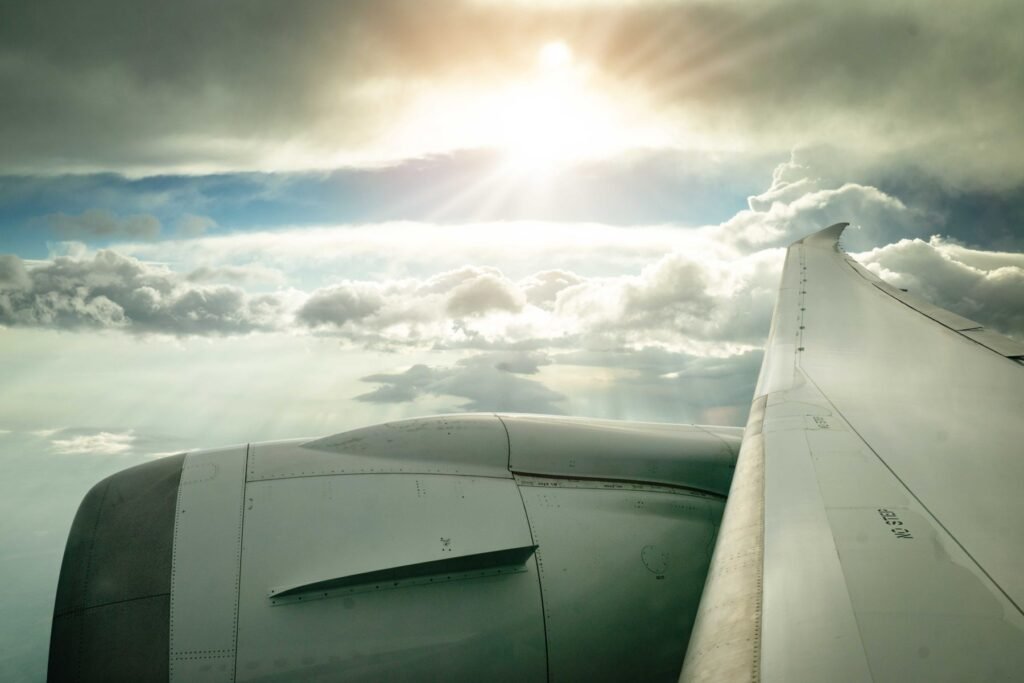
In the space of about five weeks, three passenger jets in three countries turned back because of cracked or shattered glass. A SunExpress 737 returned to Izmir with a cracked cockpit windshield. A United Express jet climbing out of Houston had its first officer’s windshield break so badly that glass fell into the flight deck. And on Tuesday, a British Airways flight to Faro turned around over France and flew back to Gatwick after a passenger window cracked.
Put together, it looks like a pattern, and plenty of people online are asking whether planes are suddenly falling apart. Aviation experts say no. The more interesting answer is why a crack in an airplane window is usually not the disaster it looks like, and the rare cases when it is.
The short version
- Three window or windshield incidents between September 6 and October 13, 2026, involved SunExpress, United Express (operated by Mesa Airlines) and British Airways. All three flights landed safely and no injuries were reported.
- Passenger windows have three layers. The outer pane carries the pressure, the middle pane is a backup, and the inner pane just protects against scratches.
- Cockpit windshields are thick laminated glass with built in heaters. Electrical arcing in those heaters is a known cause of cracks.
- Experts say three incidents in six weeks across different airlines can be coincidence. Older fleets flying longer because of delivery delays may also play a part.
The three incidents
| Date | Flight | Aircraft | What cracked | Outcome |
|---|---|---|---|---|
| Sept 6 | SunExpress XQ980, Izmir to Vienna | Boeing 737-800 | Cockpit windshield (as reported by Turkish media) | Returned to Izmir and landed safely |
| Sept 27 | United Express UA6309, Houston to El Paso (Mesa Airlines) | Embraer E175 | First officer’s windshield; multiple layers failed | Stopped climbing near 13,000 ft, returned to Houston in about 35 minutes, 72 on board, no injuries |
| Oct 13 | British Airways BA2660, Gatwick to Faro (BA Euroflyer) | Airbus A321 | Passenger window, reportedly near row 3 | Declared an emergency over northwest France and returned to Gatwick |
A few details are still thin. SunExpress has not issued a detailed statement, and the windshield crack is based on Turkish media and aviation news reports. British Airways described its incident as a “minor technical issue” and has not publicly confirmed the window damage. Mesa said there was no loss of cabin pressure on the Houston flight, and the FAA is looking into it.
What the experts say
Justin Crabbe, an FAA licensed commercial pilot and CEO of private aviation marketplace Jettly, told UNILAD Tech there is “no evidence yet” that window failures are becoming more frequent. “Windows are multi-pane by design,” he said. “The outer pane carries cabin pressure, and a crack in one layer doesn’t mean failure.” He added that turning back is a precaution, not a sign that the plane’s structure was compromised.
Monica Badra, founder and CEO of the aviation platform Aero NextGen, agreed that three incidents across different carriers “could be coincidental.” But she pointed to a bigger trend: “What it may reflect is the broader industry reality of aging fleets operating longer than originally planned, partly due to delayed new aircraft deliveries.”
How a passenger window is built
That little oval next to your seat is not one piece of plastic. It is three, and they have very different jobs.
- The outer pane is the structural one. In normal flight it holds back the difference between cabin pressure and the thin air outside.
- The middle pane is a backup. GKN Aerospace, the biggest maker of cabin windows, has described it as “only present as a fail-safe if the outer pane fails.” It also has the tiny hole you may have noticed near the bottom of your window.
- The inner scratch pane is the one you can touch. It is not structural at all. It just keeps passengers from scratching or damaging the real windows.
That small breather hole is clever. It lets air pass between the cabin and the gap between the panes, so the full pressure load sits on the outer pane while the middle pane stays relaxed and ready. It also vents moisture so the window does not fog up or frost over. If the outer pane cracks, the middle pane takes over, and the only leak is through that tiny hole, which the plane’s pressurization system can easily handle. “The system worked as intended in all three of the recent incidents,” Badra said.
The panes are made of stretched acrylic, which is acrylic that has been stretched during manufacturing. According to GKN, that gives better resistance to crazing, slower crack growth and better impact resistance than regular acrylic.
Cockpit windshields are a different beast
The pilots’ windshields are built from several layers of strengthened glass with tough plastic interlayers in between, a bit like a car windshield but far thicker. They must survive a bird strike at high speed without letting the bird through. They also have heaters built into them, either a thin conductive film or fine wires, to keep the glass from icing or fogging and to keep the layers flexible.
Those heaters are behind a lot of windshield cracks. Investigators in the US and Australia have described the same chain of events: a worn seal lets moisture in, the electrical connection to the heating film degrades, and the connection starts to arc. That creates hot spots that can crack the outer glass layer. In most designs, the outer layer is not the structural one, so a crack is alarming to look at but not immediately dangerous. Pilots usually still descend and land, because nobody wants to find out how the remaining layers will hold up.
Why the force on a window is so large
At cruise altitude, the cabin is kept at a pressure similar to being 6,000 to 8,000 feet up a mountain. The difference between inside and outside is about 8 pounds per square inch. That does not sound like much until you multiply it out. A typical passenger window of roughly 10 by 14 inches has about 140 square inches of surface, so the cabin pushes on it with more than 1,100 pounds of force. That is roughly half a ton, constantly, on every flight, and windows go through that load cycle thousands of times over their life.
When it does go wrong
Serious window or windshield failures are rare, which is why the few that happened are so well known.
| Flight | What happened | Cause |
|---|---|---|
| British Airways 5390, June 1990 | A cockpit windscreen blew out at about 17,000 ft. Captain Tim Lancaster was partly sucked out and held by the crew until landing. He survived. | The windscreen had been fitted with the wrong bolts the day before. |
| Southwest 1380, April 2018 | A window at row 14 was knocked out and passenger Jennifer Riordan died. | Not a window fault. A fan blade broke in the engine and debris hit the window. |
| Sichuan Airlines 8633, May 2018 | The right windshield blew out at about 32,000 ft. The co-pilot was partly pulled out, held by his seatbelt, and survived. | A damaged seal let moisture in, which led to electrical arcing that broke both glass layers. |
| Alaska Airlines 1282, January 2024 | A door plug, not a window, blew out shortly after takeoff. Seven people had minor injuries. | Four securing bolts were missing after factory rework, the NTSB found. |
Notice that none of the deadly or near deadly cases was a window simply giving up on its own. They came from installation errors, maintenance problems, or something else hitting the plane. That is the same story we saw when a laptop caught fire mid cabin on American Airlines 2398: the scary headline was real, but the root cause was something specific that investigators could trace.
Are aging planes part of the story?
Badra’s point about fleet age is backed by the numbers. Airlines are flying their planes longer because Airbus and Boeing cannot deliver new ones fast enough. Engine supply problems are a big part of the bottleneck.
The industry backlog is now above 17,000 aircraft, and IATA does not expect supply to fully catch up until early next decade. Older planes are not unsafe, since they follow strict maintenance schedules and parts like windows are inspected and replaced. But older planes do mean more pressurization cycles on every component, and more chances for wear and tear to show up as the occasional crack.
What to do if you notice a crack
- Tell a flight attendant right away, even if it looks small. Crew members cannot always see every window, and they would much rather check than not know.
- Do not press on it or try to inspect it closely. You will most likely only be looking at the inner scratch pane anyway.
- Keep your seatbelt fastened whenever you are seated, which protects you in any sudden cabin pressure change.
- Do not panic if the plane turns back. A return is the standard, careful response, not a sign that something is about to fail.
Three cracked windows in a few weeks makes for an unsettling run of headlines. But in all three cases, the layered design did exactly what it was built to do, the crews followed the cautious playbook, and everyone got off the plane safely.
Sources and further reading
- UNILAD Tech: Aviation experts explain why plane windows crack during flight
- CNN: Mesa Airlines flight returns after windshield cracks
- Simple Flying: United Express windshield shatters after Houston departure
- Aviation24.be: BA Euroflyer Faro flight returns to Gatwick after reported window crack
- AviationFile: SunExpress XQ980 returns to Izmir
- The Points Guy: What are airplane windows made of?
- ATSB: Windshield heater arcing investigation report
- Aviation Safety Network: Sichuan Airlines 8633
- AirlineGeeks: NTSB final report on Alaska 1282
- IATA: The global commercial aircraft fleet
About this article: GeekBlog covers U.S. technology news, AI, phones, smartwatches and gaming. Every story is written and checked under our Editorial Policy. Spotted a mistake or have a story tip? Contact our editors.
