

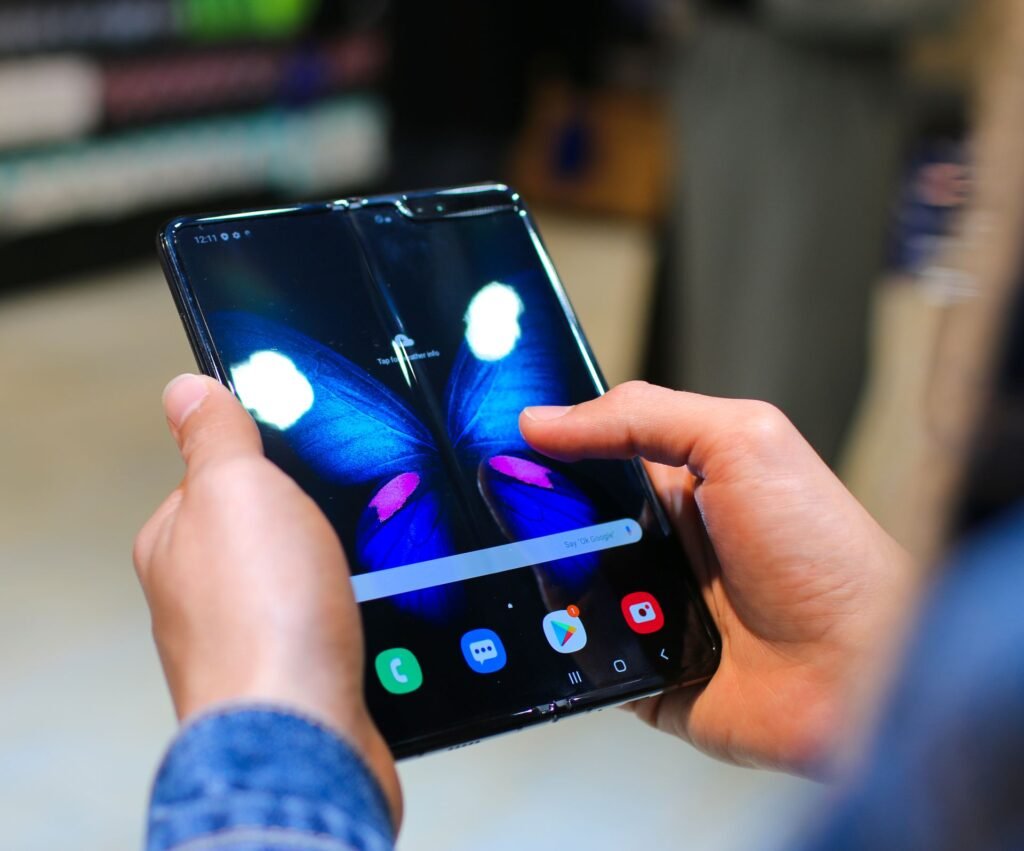
The review embargo for Apple’s first foldable lifted on Wednesday, two days before the iPhone Duo reaches the first buyers on October 23. Most of the big outlets had the phone for about a week. That is not long enough to know how a hinge holds up after a year in a jeans pocket, but it is long enough to find out what living with a $1,999 iPhone that opens like a book actually feels like.
The short version: critics like it a lot more than they expected to. TechRadar’s Lance Ulanoff called it “a fantastic entry into the folding phone space.” Engadget scored it 8.8 out of 10. PCMag said it delivers “the best hardware, performance, and battery life of any foldable phone on the market.” The Verge was the cold shower, calling it “expensive,” “full of compromises” and “incredibly frustrating to use,” while admitting it was also a lot of fun.
Reading the reviews side by side, the praise lines up neatly. The complaints line up too. The one area where reviewers flatly contradict each other is battery life, and that disagreement is worth unpacking before you spend two grand.
What reviewers agree on
When eight or nine outlets independently land on the same observation, it is usually safe to treat it as fact. Here is the consensus, pulled from TechRadar, Engadget, Tom’s Guide, PCMag, CNET, Wired, Gizmodo, 9to5Mac and The Verge.
The hinge is the star
Nobody had a bad word for the mechanism. Engadget’s Sam Rutherford called it “one of the nicest hinges I’ve used on any foldable” and noted that the resistance changes the further you open it. PCMag said it “feels utterly fantastic.” TechRadar compared the Duo to a fidget spinner, because reviewers kept folding and unfolding it for no reason at all. That is a strange compliment for a phone, and also exactly the kind of tactile delight Apple sells better than anyone.
It also folds flat, survives water, and carries an IP68 rating. Engadget pointed out that the only other foldables sold in the US with that rating are Google’s Pixel 11 Pro Fold models.
The crease mostly disappears
The inner 7.6-inch screen uses a matte nano-texture finish, and it is the single feature reviewers mention most. Wired said the crease is “hardly visible.” The Verge called the inner display “a big step up from foldables with glossy, seemingly soft screens.” The caveat comes from PCMag and Engadget: the crease is still there. You can see it when the screen is off and feel it with a fingertip. Head on, during normal use, it fades out.
Engadget added one warning worth repeating. The top layer can be lifted if you pick at it, and Apple does not show any setup warning telling you not to peel it. Replacing it costs $49 according to Engadget. We covered the details of how Apple made that crease layer replaceable and what AppleCare does to the price.
Performance is not a question
The Duo runs the same 2nm A20 Pro chip as the iPhone 18 Pro, with 12GB of RAM. TechRadar’s Future Labs measured 4,007 single core and 11,363 multi core in Geekbench 7.1, ahead of the Galaxy Z Fold 8’s Snapdragon 8 Elite Gen 5 for Galaxy. CNET’s benchmarks also put it above the Z Fold 8, the Z Fold 8 Ultra and the Pixel 11 Pro Fold. PCMag found it a touch behind the iPhone 18 Pro models despite the identical chip, which is normal for a thinner chassis with less room to shed heat. The Verge said it gets “warm, and sometimes hot.”
What reviewers did not like
It is heavy, and you will notice
At 254g the Duo is heavier than the iPhone 18 Pro Max (249g) and a full 53g heavier than the Galaxy Z Fold 8 (201g). Folded, it is 11.3mm thick against the Fold 8’s 9.7mm. Gizmodo said it made a front pants pocket sag badly enough that the reviewer had to start wearing a belt again. 9to5Mac took the other side, saying the shorter, wider shape makes it “surprisingly comfortable” to carry. Both can be true. It fits in a small pocket, and you will feel it there.
Touch ID is back, and people miss Face ID
Apple put Touch ID into the long side button and dropped Face ID entirely. Almost every reviewer brought it up. PCMag wrote that you can “toss all that muscle memory out the window.” TechRadar caught itself staring at the cover screen waiting for it to unlock. Engadget was more sympathetic, arguing that a fingerprint sensor makes sense on a device you hold in so many positions. If you wear an Apple Watch, unlocking with the watch softens the blow.
The cover screen layout splits opinion
The 5.4-inch outer screen is closer to 4:3 than a normal iPhone, and Apple moved the status area and the dock to a vertical strip on the right side. CNET found the cover screen roomy enough for comfortable typing. TechRadar said the strip makes websites in Safari and apps like TikTok feel squeezed. The Verge noted that buttons have moved, including the back button in Mail, which now sits on the right. “A lot of using the Duo is just figuring out how to use an iPhone again,” it wrote.
Third-party apps are not ready
This is the most consistent complaint, and the one most likely to fade quickly. Tom’s Guide saw big black bars on both sides of Disney Plus and The Weather Channel, and found unoptimized games filling only about three quarters of the screen. TechRadar said Gmail and LinkedIn looked off, and that tilt steering in Asphalt Legends broke on the inner display while working fine on the cover. Wired explained the reason: developers need to build against the iOS 27.1 SDK for full Duo support, and that takes time.
The flip side is that Apple’s own apps, Netflix and a handful of games built specifically for the fold already look great. TechRadar’s favorite was a grilled cheese game called Toastie, where you fold the phone shut to “cook” the sandwich.
The battery question nobody agrees on
Here is where the reviews stop lining up. Depending on which one you read, the Duo is either the longest lasting foldable on the market or a phone that might need a top up before dinner.
Line up every number that was published and the spread is wide:
| Source | Test | Result |
|---|---|---|
| Apple | Video playback claim | Up to 44 hours on the cover screen, 31 hours on the inner screen |
| PCMag | YouTube streaming, inner screen, max brightness | 18h 15m, best of any foldable it tested |
| CNET | Real day, heavy mixed use, 8:15 a.m. to 11 p.m. | Ended the day at 29% |
| TechRadar | Real-world use | About 14 hours |
| TechRadar Future Labs | Standardized lab test | 13 hours, behind the Z Fold 8’s 14h 20m |
| The Verge | Heavy daily use | “Doesn’t seem ready to last a full day” |
These are not contradictions so much as different questions. A video streaming test is mostly a measure of how efficiently a phone decodes video and lights its screen. Apple’s chips are very good at that, which is why iPhones tend to look great in streaming rundowns. A mixed workload with camera use, 5G, navigation, gaming and lots of screen wakes stresses the modem and the processor much more, and that is where a thin phone driving two big displays gives some of it back.
So the honest summary is this. If your day is mostly reading, messaging and video, the Duo should get you to bedtime with room to spare. If you are a heavy user who shoots a lot of photos, plays games and lives on cellular data, plan on a charger or a MagSafe battery pack. We tested the gap between foldable battery claims and reality in more depth in our look at how Apple’s 44-hour promise compares with six Android foldables.
Charging is quick but not class leading. TechRadar hit 60% in 30 minutes with a 45W charger. PetaPixel measured about 50% in roughly 20 minutes with a 60W or larger adapter, slightly slower than the iPhone 18 Pro. There is no charger in the box, only a cable.
Cameras: good, with one big gap
The Duo has two 48MP rear cameras, a main f/1.6 and an ultra-wide f/2.2, plus a Center Stage selfie camera on the cover screen and a 4MP camera inside for FaceTime. Reviewers were happier than they expected. TechRadar praised the detail and low light handling and said the setup matches the iPhone 17 Pro’s standard. PCMag called the photos “superb in most scenes.”
Three caveats came up more than once:
- No telephoto. The 2x option is a crop of the main sensor. Tom’s Guide called that “a big deal” at this price.
- More processing. The Verge found fine detail “a little crunchier” than on the iPhone 18 Pro because of heavier sharpening, and slightly less color detail in low light.
- No pro formats. CNET noted there is no ProRAW photo capture and no ProRes video.
Duo Preview → shoot with the main rear camera while using the cover screen as the viewfinder for high quality selfies
Apple Pencil → USB-C Pencil support on the inner screen arrives after launch, not on day one
Price, and how it compares with the Galaxy Z Fold 8
The Duo is the most expensive iPhone Apple has ever sold. Reviewers were surprisingly relaxed about that, mostly because Samsung charges nearly the same.
| Storage | iPhone Duo (US) |
|---|---|
| 256GB | $1,999 |
| 512GB | $2,199 |
| 1TB | $2,599 |
| 2TB | $3,199 |
| Spec | iPhone Duo | Galaxy Z Fold 8 |
|---|---|---|
| Starting price | $1,999 | $1,899.99 |
| Screens | 7.6-inch inner, 5.4-inch cover | 7.6-inch inner, 5.5-inch cover |
| Weight | 254g | 201g |
| Folded thickness | 11.3mm | 9.7mm |
| Chip and RAM | A20 Pro, 12GB | Snapdragon 8 Elite Gen 5, 12GB |
| Rear cameras | 48MP main, 48MP ultra-wide | 50MP main, 50MP ultra-wide |
| Charging | 60W wired, 35W wireless | 45W wired, 20W wireless |
| Unlock | Touch ID | Fingerprint plus face unlock |
| Stylus on inner screen | Apple Pencil (USB-C), coming after launch | No |
Tom’s Guide put it bluntly: the Duo is worth $2,000 because it is “only $100 more than the Galaxy Z Fold 8” and gives you better durability, performance and battery life. Wired called the pricing “surprisingly on par with its competitors.” Both are fair, as long as you remember that the Fold 8 is lighter, thinner and lets you run three apps at once, while the Duo tops out at two plus a floating video.
Can you actually get one?
This is the practical problem. Pre-orders sold through almost instantly, Apple’s own shipping estimates for new orders have slipped into 2027, and store staff have reportedly been told not to expect walk-in stock on launch day. If you want a Duo this year, carrier channels are your best bet. We broke down where launch-day stock is most likely to show up and which carriers can beat Apple’s dates.
- Buy it if you have wanted an iPhone that turns into a small tablet, you read and watch a lot, and you are fine paying early adopter money.
- Buy it if you hate visible creases. Reviewers agree no foldable hides it better.
- Skip it if zoom photos matter to you. There is no telephoto lens.
- Skip it if weight bothers you, or if Face ID is non-negotiable.
- Wait if your must-have apps are third-party and you can’t stand black bars. Give developers a few weeks after launch.
FAQ
What score did the iPhone Duo get in reviews?
Engadget gave it 8.8 out of 10. TechRadar rated it 4.5 out of 5 in most categories, with 5 out of 5 for performance and 4 out of 5 for value. Most other outlets were positive, with The Verge the most critical.
Does the iPhone Duo have a visible crease?
Barely. The matte nano-texture coating on the inner screen hides it in normal use, but reviewers could still see it with the screen off and feel it with a finger.
How long does the iPhone Duo battery last?
Results vary by test. PCMag measured 18 hours 15 minutes of video streaming, CNET finished a heavy day at 29%, TechRadar’s lab test measured 13 hours, and The Verge said it may not last a full day of heavy use.
Does the iPhone Duo have Face ID?
No. It uses Touch ID built into the side button. You can also unlock it with an Apple Watch.
Is the iPhone Duo better than the Galaxy Z Fold 8?
Reviewers give the Duo the edge on performance, crease, charging speed and polish. The Fold 8 is $100 cheaper, 53g lighter, thinner when folded and better at multitasking.
About this article: GeekBlog covers U.S. technology news, AI, phones, smartwatches and gaming. Every story is written and checked under our Editorial Policy. Spotted a mistake or have a story tip? Contact our editors.
