

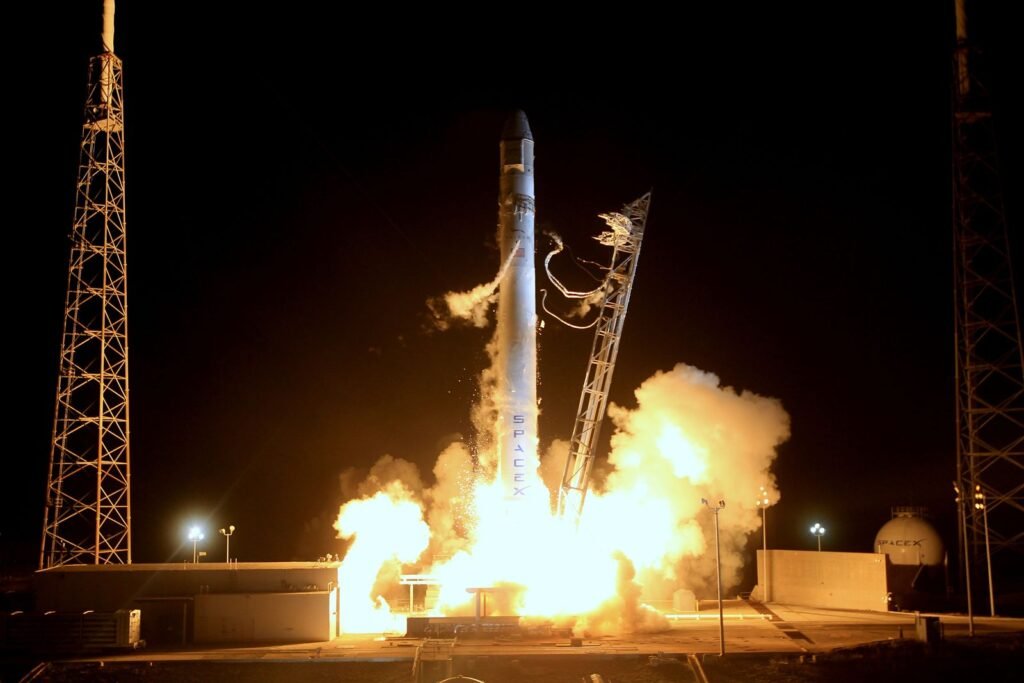
NASA is hiring, and this time the job description includes the Moon. The agency opened applications for its next class of astronaut candidates on November 7, and the people it picks could be among the first to live and work at a permanent lunar base. As UNILAD Tech reported, the pay is generous too: $164,395 a year.
Before you start writing your cover letter, though, it helps to know what NASA actually asks for. We went through the official USAJOBS posting line by line. Some of the requirements are tougher than the ones you’ll find in older guides, and a few are surprisingly flexible.
The short version
- Deadline: 11:59 p.m. ET on Thursday, December 3, 2026, on USAJOBS (announcement NASA-13093568-27-AS).
- Pay: $164,395 a year, a single rate on NASA’s AD pay scale, with raises tied to training and mission milestones.
- Must have: US citizenship, an advanced STEM or medical qualification (or test pilot school), and 3 years of relevant experience.
- Training: about two years in Houston before you’re eligible for a flight.
- Odds: the last round drew more than 8,000 applicants for 10 spots, roughly 1 in 800.
Why this class is different
Every astronaut class gets a pitch about exploration. This one comes with a specific destination. NASA Administrator Jared Isaacman has framed the new hires as the crew who will build out a sustained human presence on the lunar surface.
“By Artemis IV, when our astronauts land on the surface of the Moon, they’re already going to have some of the infrastructure and rovers there waiting for them.”
Jared Isaacman, NASA Administrator
NASA’s recruitment message is just as direct: “The window is open. The mission is waiting.” The official duties list in the posting backs it up. It covers operations “in Low Earth Orbit, the Moon, and beyond,” spacewalks on “planetary surfaces,” and testing future spacecraft and habitats.
The timing lines up. Selection is expected in late 2027, training starts in early 2028, and NASA’s current plan puts the first Artemis landing in early 2028, with yearly landings after that to build up a base near the lunar south pole. Someone hired from this round could realistically be assigned to one of those surface missions in the early 2030s.
Artemis has already moved fast this year. Artemis II carried four astronauts around the Moon in April 2026 and splashed down in the Pacific on April 10. In February, NASA restructured the rest of the program, turning Artemis III into a crewed test in Earth orbit with the SpaceX and Blue Origin landers and moving the first landing to Artemis IV. We covered how those landers set the pace in our look at NASA’s Artemis acceleration plan.
The requirements, straight from the posting
You need to meet one education route and the matching experience requirement by the closing date. A bachelor’s degree alone isn’t enough, and NASA asks for every STEM transcript you have.
| Route | Education | Experience |
|---|---|---|
| Master’s | Master’s in engineering, biological or physical science, computer science or math | 3 years of professional experience after the degree |
| Doctoral | At least 2 years (36 semester hours) of a PhD program in those fields | 3 years of professional experience |
| Medical | MD, DO, PA, DNP, FNP or related medical degree | 3 years in a medical field; residency counts if done by July 2027 |
| Test pilot | Test pilot school done by July 2027, plus a STEM bachelor’s | Pilot flight hours (below) or 3 years of flight test work |
Pilots have their own thresholds, and they’ve changed from the old “1,000 hours of jet time” rule you’ll still see quoted online:
- High-performance jets: 750 hours as pilot in command.
- Other fixed-wing aircraft: 1,500 hours total, with 750 as pilot in command.
- Helicopters: 1,000 hours total, with 300 as pilot in command.
Initial flight training doesn’t count, and neither does time flying drones. A few other details from the fine print: you can apply under only one discipline, K-12 teaching in a technical field can count as experience, and degrees in engineering technology, aviation, social sciences or exercise physiology don’t qualify. Everyone must also pass NASA’s long-duration spaceflight physical, a background check and a drug test.
US citizens only
The posting is open only to US citizens. If you’re outside the US, your route to space runs through your own country’s agency, such as ESA, JAXA or the Canadian Space Agency.
About that salary
The $164,395 figure is real, but it’s not a range. The posting lists it as a single rate on NASA’s “AD” (administratively determined) scale, based on 2026 pay tables and adjusted for raises in 2027 and 2028. That’s a change from the old system, which placed astronaut candidates on the General Schedule. The previous call in 2024 listed about $152,258.
New hires start on a 30-month term appointment and become permanent once they finish training. The job is based at Johnson Space Center in Houston, relocation costs can be reimbursed, and you should expect to travel a lot. The posting literally says 76% or more of the time.
Your real odds
Here’s the part NASA’s recruiting video skips. The last round, which opened in March 2024, drew more than 8,000 applicants. Ten were selected in September 2025. That class later nicknamed itself “The Platypi.”
The record was the 2017 class, which drew more than 18,300 applicants for 12 spots. With a Moon base now in the pitch and a pay figure making headlines, it wouldn’t be surprising if this round beat that. If NASA picks around 10 people again, every extra 1,000 applicants makes it a little harder.
Still, the odds aren’t the whole story. A large share of applicants don’t meet the basic requirements, so a qualified candidate’s real chances are better than the raw numbers suggest. And NASA has a long track record of hiring people who applied more than once.
What the job is actually like
The roughly two-year training program covers spacewalking, robotics, flying T-38 jets, survival training and countless hours in simulators. After that, you join the active astronaut corps, but a flight assignment can take years. In the meantime, astronauts work as capsule communicators in Mission Control, test spacecraft designs and travel to talk about NASA’s work.
Life in space is less glamorous than the recruiting video, too. If you want a taste of the daily engineering problems crews deal with, our piece on what happens when astronauts fart on the ISS is a surprisingly good primer on how much thought goes into the basics.
If you qualify, though, there may never be a better window. The people NASA picks from this round won’t just ride to the International Space Station. They’re being hired to help build humanity’s first permanent outpost on another world. Applications close December 3.
About this article: GeekBlog covers U.S. technology news, AI, phones, smartwatches and gaming. Every story is written and checked under our Editorial Policy. Spotted a mistake or have a story tip? Contact our editors.
