

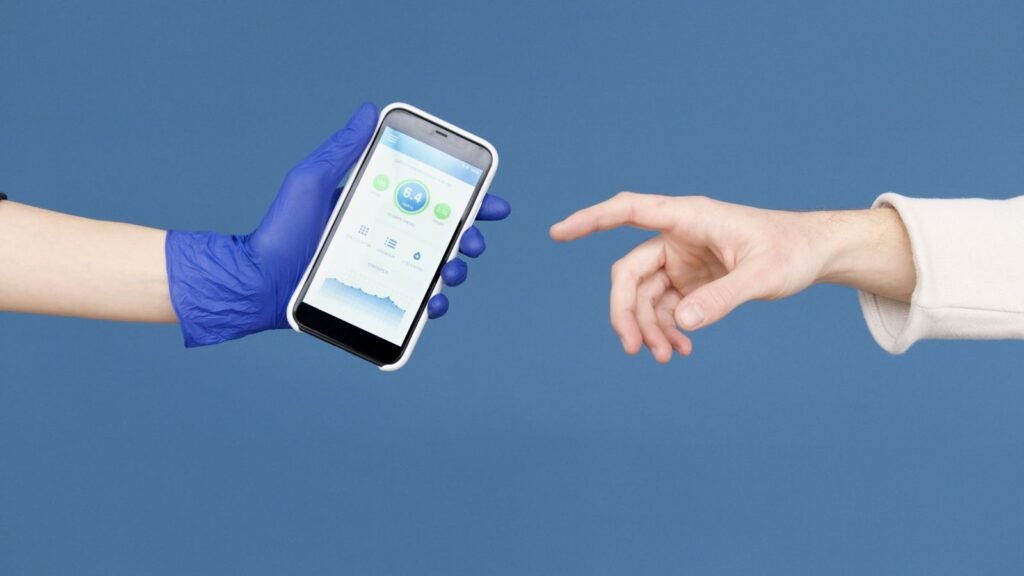
Apple has finally put a health chatbot on the iPhone. There is a catch, though, and it is a deliberate one. You cannot just ask Siri. You have to download a separate research app, meet a short list of requirements, and agree to be part of a study that Apple says will run for more than a year.
The Apple Health AI Usage Study, announced on November 15 and built with clinical AI company OpenEvidence, is looking for up to 200,000 people in the United States. Participants ask everyday health questions, get answers grounded in medical journals, and then rate those answers. Apple is collecting something its rivals mostly skipped: hard data on whether people actually trust, understand and act on what a health AI tells them.
The short version
- Up to 200,000 US participants, age 21 and older, for 12+ months
- Requires an Apple Intelligence iPhone (iPhone 15 Pro or later) on iOS 26 or newer
- Answers come from OpenEvidence and cite sources like NEJM, JAMA and Nature
- Sharing HealthKit data (heart rate, sleep, activity, labs) is optional
- Apple says study data will not train AI models, and OpenEvidence deletes queries and answers after 24 hours
What the study app actually does
On the surface it works like any chatbot. You type a question such as “why is my resting heart rate higher this week?” or “what does a high LDL number mean?” and get an answer in plain language. The difference is in where the answer comes from. OpenEvidence is a tool built for doctors, and its responses are drawn from peer reviewed literature. In the Apple app each answer links to the clinical citations behind it, so you can see exactly which study or guideline the claim rests on.
After each response, you are asked to score it on accuracy, detail and relevance. Once a month there is a longer survey. That feedback loop is the real product here. Apple is not trying to win a feature race this year. It is trying to learn what makes an answer useful to a regular person, as opposed to a physician.
Apple also says the app has safety guardrails that detect “certain concerning questions” and nudge people toward a provider or other resources. And it is pitching the tool as a way to prepare for a doctor’s appointment rather than replace one, which is a theme UCSF’s chair of medicine, Dr. Robert Wachter, picked up in Apple’s announcement.
“Patients and clinicians are both turning to AI, but the tools they use are being built and tested in separate worlds. When patients and doctors draw on versions of the same trustworthy tools, patients arrive prepared, conversations improve, and next steps happen seamlessly.”
Robert M. Wachter, M.D., UCSF Department of Medicine
Can you join? Check this first
Some early coverage said any iPhone 15 qualifies. Apple’s own announcement is more specific: you need an iPhone that supports Apple Intelligence, which means an iPhone 15 Pro, iPhone 15 Pro Max or any iPhone 16 or later model. A standard iPhone 15 or iPhone 15 Plus will not make the cut, because those models do not run Apple Intelligence.
If you are on the fence about whether your phone counts, open Settings and look for Apple Intelligence & Siri. If that menu exists and the toggle is on, you are good to go.
Your data: what is shared and what is not
Health data is about as personal as data gets, so it is worth reading the fine print before you tap enroll. Here is how Apple describes the setup.
| Question | What Apple says |
|---|---|
| Do I have to share HealthKit data? | No. Resting heart rate, activity, sleep and lab results are opt in, data type by data type |
| Will my questions train AI? | No. Apple says study data will not be used to train AI models |
| Where do my questions go? | They are anonymized and sent to a secure third party cloud provider |
| How long does OpenEvidence keep them? | Queries and responses are deleted after 24 hours |
| Are survey answers required? | You control whether to share survey responses |
One thing to keep in mind: this is a research study, not a regular App Store product. That cuts both ways. You get more formal privacy commitments than most consumer chatbots offer, but you are also signing up to have your behavior studied. Read the consent screens, because that is where the specifics live.
Why OpenEvidence, and not Apple’s own model?
OpenEvidence is often described as “ChatGPT for doctors,” and its growth has been one of the bigger stories in health tech. It is free for verified clinicians and pulls answers from licensed medical content. Investors have noticed. The company’s valuation has climbed roughly fourfold in about 15 months.
For Apple, the partnership solves two problems at once. First, it gets a system already used heavily by medical professionals, which means the answers have been stress tested by people who know when an answer is wrong. Second, it keeps Apple at arm’s length from the content itself. If an answer is off, it came from a clinical AI grounded in journals, inside a clearly labeled study. That is a much safer position than having Siri freelance medical advice to a billion users.
Why Apple is moving slower than OpenAI
The demand is not in question. TechCrunch notes that OpenAI said earlier this year that people send ChatGPT more than 300 million health related questions every week. OpenAI responded by launching ChatGPT Health in January, and Anthropic has pushed Claude into healthcare as well. Apple, which has spent a decade turning the iPhone and Apple Watch into health devices, has been conspicuously absent from the chatbot side of that race.
| Apple study app | General chatbots | |
|---|---|---|
| Availability | Up to 200,000 enrolled US users | Anyone with an account |
| Answer source | Clinical literature with linked citations | General model, sometimes with web search |
| Goal | Measure trust, comprehension and actions | Ship features to as many users as possible |
| Personal data | Optional HealthKit sharing inside a study | Varies by product and settings |
There is a good reason for the caution. General chatbots have already landed in court over health advice, including a lawsuit claiming ChatGPT talked a young woman off her seizure medication. Apple is famously allergic to that kind of headline. A 12 month study gives it evidence, and a paper trail, before anything reaches Siri or the Health app.
Apple also has a track record here. The Apple Heart Study it ran with Stanford enrolled more than 400,000 participants and helped validate the Apple Watch’s irregular rhythm notifications before they became a selling point. That pattern of study first, feature later shows up in a lot of wearable health tech, as we saw when we looked at what the studies really show about smartwatch ECG AI.
Worth remembering: Even Apple admits in its announcement that LLM health tools “may at times offer responses that are incomplete or unclear.” A cited answer is a better starting point than an uncited one, but it is still not a diagnosis. If something feels urgent, call your doctor or 911, not a chatbot.
What this probably means for Siri and the Health app
Apple has not said whether any of this will end up in Siri or the redesigned Health app, and it is careful not to promise anything. But it is hard to read a 200,000 person study as anything other than groundwork. The questions Apple is asking are exactly the ones it would need answered before shipping a health assistant at iPhone scale: Which answers do people trust? Which ones do they misread? Does pulling in your sleep or lab data make answers more useful, or just more unsettling?
If you qualify and you are curious, the app is live now in the US. You get a free, citation backed health chatbot, and Apple gets a year of data on how you use it. Whether that is a fair trade is up to you, but it is a far more transparent deal than most AI products offer.
About this article: GeekBlog covers U.S. technology news, AI, phones, smartwatches and gaming. Every story is written and checked under our Editorial Policy. Spotted a mistake or have a story tip? Contact our editors.
