

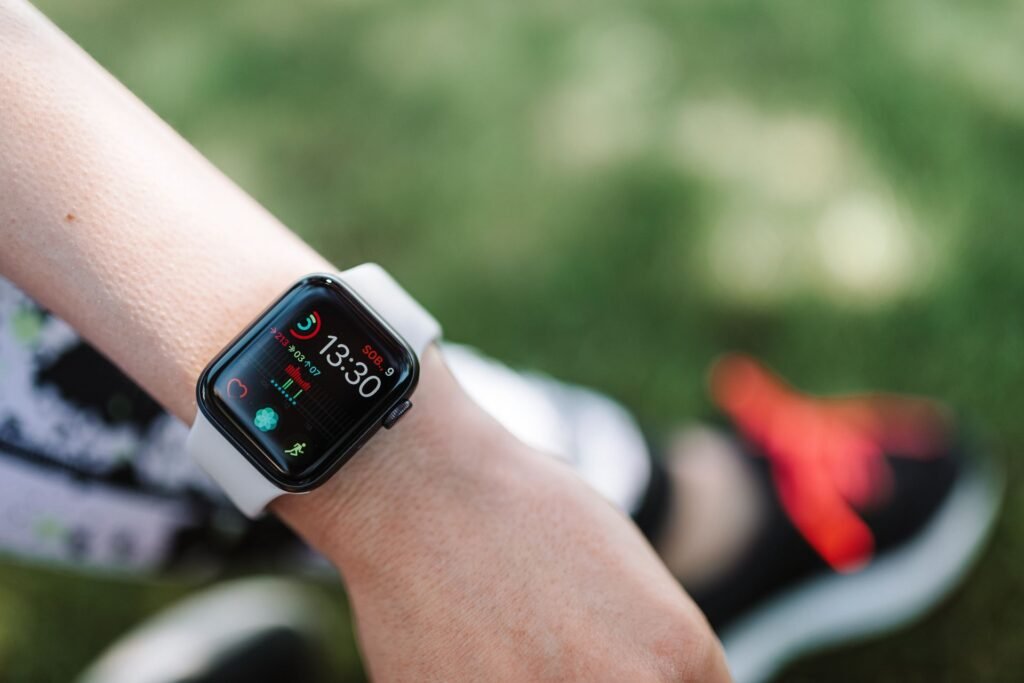
Your smartwatch can already tell you when your heartbeat looks irregular. The next idea is bolder: let an AI read the same 30-second ECG and flag a weak heart pump before you ever feel short of breath. That is the promise behind a wave of smartwatch ECG AI research, and the American Heart Association’s Scientific Sessions in Chicago (November 6 to 9, 2026) put it back in the spotlight, with a late-breaking AI session that lists a smartwatch AI-ECG study for left ventricular dysfunction called WATCH-LV.
I could not find published numbers for WATCH-LV at the time of writing, so this article does not guess at them. Instead, it walks through the two best-documented studies behind the idea, a Mayo Clinic study of Apple Watch recordings and a Yale study presented at the AHA meeting in 2025, and explains what the results mean for anyone who wears a watch with an ECG sensor.
Quick answer
Early studies suggest that AI can pick up signs of a weak heart pump, and some other structural heart problems, from a single-lead smartwatch ECG. Results look promising, with roughly 81% to 86% of true cases caught in the two studies below, but the samples are small and no consumer watch offers this feature today. A normal result would not clear you, and an abnormal one would not be a diagnosis.
Why Researchers Want to Read Your Heart Pump From Your Wrist
Left ventricular systolic dysfunction (LVSD) means the heart’s main pumping chamber is not squeezing as hard as it should. It is a common route to heart failure, and it can stay quiet for a long time. Doctors usually find it with an echocardiogram, an ultrasound of the heart, which means a hospital or clinic visit and a technician.
Hospitals have already shown that AI can spot LVSD in a standard 12-lead ECG, a test with ten electrodes and twelve views of the heart. The obvious next question is whether the same trick works on the far simpler signal from a watch. A smartwatch gives you one lead, recorded in 30 seconds, from a device millions of people already own. If it works, screening could reach people who would never book a cardiology appointment.
Study 1: Mayo Clinic and the Apple Watch
The proof of concept came from Mayo Clinic researchers in Nature Medicine in 2022. They adapted an AI model built for 12-lead ECGs so it could read a single-lead Apple Watch recording. Participants joined remotely through the Mayo Clinic app, which let the team collect data from 2,454 patients across 46 U.S. states and 11 countries.
The sample that could actually be tested was much smaller. Only 421 participants had a sinus rhythm watch ECG within 30 days of a clinical ECG, and just 16 of them (3.8%) had a low ejection fraction of 40% or less. The watch AI flagged 13 of those 16.
Study 2: Yale and a Larger Dataset
The second study was presented at the American Heart Association’s Scientific Sessions in November 2025. The Yale team trained its model on 266,054 ECGs from 110,006 patients treated at Yale New Haven Hospital between 2015 and 2023. They used only one of the twelve leads, to mimic a watch, and added realistic noise so the model could cope with messy wrist recordings.
The prospective test then used 600 patients who wore a smartwatch with a single-lead ECG sensor for 30 seconds on the same day as a heart ultrasound. The target here was broader than LVSD. It was a composite of three structural problems: an ejection fraction below 40%, moderate or severe left-sided valve disease, and severe thickening of the heart muscle (left ventricular hypertrophy).
| Detail | Mayo Clinic (2022) | Yale (AHA 2025) |
|---|---|---|
| What it looked for | Low ejection fraction (40% or less) | Low ejection fraction, valve disease, thick heart muscle |
| Training data | Adapted from a 12-lead model | 266,054 ECGs, 110,006 patients |
| Watch test group | 421 usable participants, 16 with a low ejection fraction | 600 prospective patients |
| Headline result | AUC 0.875, 81.2% sensitivity, 81.3% specificity | 88% overall, 86% of cases caught, 99% of negatives correct |
Reporting on the Yale numbers is not perfectly consistent. The 88% figure is described as accuracy in some coverage, and it is most likely a discrimination score. The 86% matches sensitivity and the 99% matches negative predictive value, meaning a negative result was right 99 times out of 100 in that group. I could not find the confidence intervals, so treat these as headline figures until the paper is published.
What 86% Really Means in Real Life
An 86% sensitivity sounds strong, but it also means roughly one in seven people with real structural heart disease would still get a negative result. The 99% negative predictive value is more reassuring, yet it depends on how common the disease is in the group tested. A hospital cohort, where many people are already being checked for heart trouble, is not the same as healthy adults wearing a watch for fitness.
Good to know
When a condition is rare, even an accurate test produces many false alarms in the general population. That is why screening tools are usually aimed at people with a higher risk first, such as older adults or those with symptoms or relevant family history.
The Mayo numbers show the same caution from another angle. Sixteen cases is a tiny base for a result, and one or two different calls would move the percentages noticeably.
The Catches Researchers Are Flagging
- Small positive samples. Both studies had relatively few people with the actual disease, so the estimates carry wide uncertainty.
- Watch-specific signals matter. A 2025 study in the European Heart Journal tested a model trained on standard Lead I recordings against real smartwatch Lead I data and found weaker agreement, with a correlation of 0.54 for Apple Watch data. Models seem to need training on watch recordings to hold up.
- One lead is limited. The Yale team has been clear that a single-lead ECG cannot replace a 12-lead test, and it says nothing about problems such as a heart attack in progress.
- Not a product yet. None of these models is a cleared feature on a consumer watch, so you cannot switch this on today.
What You Can Do Today With a Watch ECG
Current watches use the ECG sensor for rhythm checks, mostly atrial fibrillation. If you want to know which models carry that sensor, our guide to the best smartwatch with ECG lays out what each one can and cannot do. For a deeper look at rhythm detection and its limits, read our piece on the best smartwatch for AFib.
Heart-related signals are only as good as the sensor behind them, which is a theme in our look at smartwatch blood oxygen accuracy as well. Whatever your watch tells you, save the ECG PDF and bring it to your appointment if something feels off.
Frequently Asked Questions
Can a smartwatch detect heart failure?
Not on its own, and not as a consumer feature. Research shows AI can flag a weak heart pump from single-lead watch ECGs in study settings, but a doctor still needs an echocardiogram to confirm it.
What is WATCH-LV?
WATCH-LV is a smartwatch AI-ECG study for left ventricular dysfunction listed in a late-breaking AI session at AHA 2026. I could not confirm its results, so check the AHA program or the published paper for the numbers.
Which smartwatch was used in the studies?
The Mayo Clinic study used the Apple Watch. The Yale team used a smartwatch with a single-lead ECG sensor, and coverage I found does not name a single brand as the only one that works.
Is a smartwatch ECG the same as a hospital ECG?
No. A watch records one lead, while a hospital ECG records twelve. That is why a watch is useful for rhythm checks but limited for other conditions.
Should I worry if my watch ECG looks normal?
A normal result does not rule out heart disease. If you have symptoms such as breathlessness, swelling in your legs, unusual fatigue or fainting, see a doctor whatever your watch says.
Final Verdict
The Bottom Line
Smartwatch ECG AI is one of the most interesting ideas in wearable health, and the early numbers are good enough to justify bigger trials. It is still research. Until large studies and regulators catch up, use your watch for what it does well today, and let a doctor handle the rest.
This article is for general information and is not medical advice. Talk to your doctor about symptoms, test results and treatment.
Sources and Further Reading
- Nature Medicine: Prospective validation of smartwatch-enabled deep learning ECG for left ventricular dysfunction (Mayo Clinic, 2022)
- EurekAlert: American Heart Association research highlights on smartwatch ECG and AI
- News-Medical: AI algorithm paired with ECG sensors can accurately detect structural heart diseases
- European Heart Journal abstract on smartwatch Lead I generalizability
- MarketScale: AI at AHA 2026 preview
Featured image: Pexels.
About this article: GeekBlog covers U.S. technology news, AI, phones, smartwatches and gaming. Every story is written and checked under our Editorial Policy. Spotted a mistake or have a story tip? Contact our editors.
