

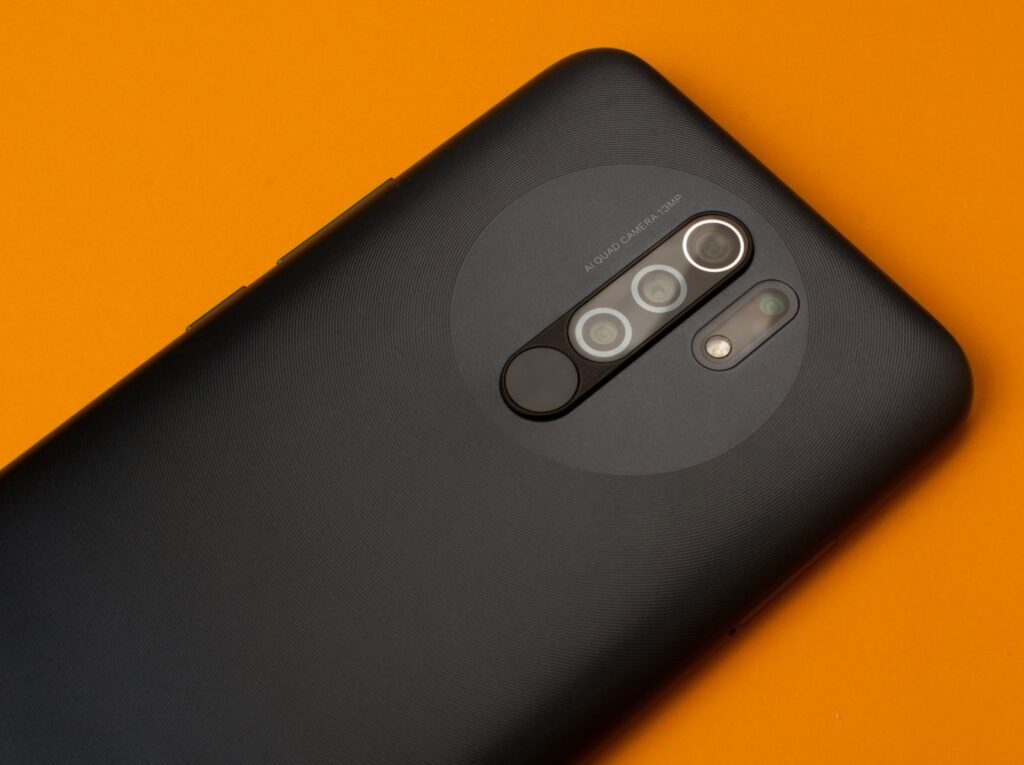
Most phone “innovations” this year have been about memory prices and AI subscriptions. Xiaomi went another way. The Xiaomi 18 Pro Max, which launched outside China at an event in Paris on November 17, has a second OLED screen built into its camera bump. Xiaomi calls it the Back Display, and after a week of early reviews, it’s clear this isn’t the throwaway gimmick it looks like in press photos.
TechRadar’s phones editor called it “the coolest smartphone gimmick I’ve tested this year,” and its full review called the phone “a content creator’s dream.” Both are fair. But there’s a catch in the fine print that most launch coverage skipped: the phone you can buy in London or Sydney isn’t quite the phone Xiaomi sells in Beijing. It has a noticeably smaller battery, and it costs a lot more.
We dug through the reviews, Xiaomi’s spec sheets, EU energy label filings and Chinese launch pricing to work out what the Back Display actually does, how the AI app builder is locked down, and what global buyers give up.
- Back Display: 2.9-inch OLED, 4,000 nits peak, 1Hz to 120Hz, Gorilla Glass Victus 2
- What it does: rear camera viewfinder, notifications, live activities, widgets and AI-generated mini apps
- Global battery: 7,050mAh, down from 8,500mAh on the Chinese model
- Price: from £1,399 / AU$1,999 for 12GB and 256GB
- US availability: none, Xiaomi doesn’t sell flagships officially in the US
What the Back Display actually is
The rear screen sits on the raised camera plateau, with large circular cutouts for the main and telephoto lenses. It uses the same panel technology as the front display, so it gets the same 4,000-nit peak brightness and an adaptive refresh rate that drops to 1Hz when nothing moves. Xiaomi tops it with Gorilla Glass Victus 2 and ships the phone with factory-fitted protectors on both screens.
This isn’t Xiaomi’s first attempt. A rear screen debuted on the China-only Xiaomi 17 Pro in 2025, and Xiaomi has a history with the idea going back to the Mi 11 Ultra’s tiny rear panel in 2021. The difference now is size, software and, for the first time, global availability. The smaller Xiaomi 18 Pro gets a slightly smaller rear screen, reported at around 2.7 inches.
We covered the hardware when the series launched in China in September, including the Privacy Display Xiaomi built into the front glass. What’s new this week is how the software behaves day to day, now that reviewers have lived with it.
The selfie trick is the real reason to care
When it’s idle, the Back Display behaves more like a smartwatch face than a second phone. It shows the time, your notifications when the phone is lying face-down and live activities from supported apps like Google Maps, Spotify and YouTube Music. You can pick animated themes, many featuring cute 3D animal mascots, or use any photo as the wallpaper. A swipe to the right jumps into the camera, and another gesture brings up your calendar.
Honestly, the notification part is a bit pointless. If your phone is face-down, flipping it over takes half a second. The viewfinder is a different story. With the rear screen showing a live preview, you can shoot selfies and vlogs with the 200MP main camera, the 200MP 3.2x periscope or the 50MP ultra-wide, instead of the 50MP front camera. Owners of book-style foldables already know how much better that looks. It also means the person you’re photographing can see the framing before you press the shutter, which is surprisingly useful with kids and group shots.
TechRadar’s reviewer, who films himself for work, found he used the main camera far more often than usual for exactly this reason. The front camera ended up handling only video calls and face unlock.
GenAI Apps: vibe coding for a 2.9-inch screen
The feature that turns the Back Display from a novelty into something you’ll actually play with is GenAI Apps. You type what you want in natural language, and the phone builds a small app or game for the rear screen. TechRadar says it runs on Google’s Gemini 4 Argon model.
Xiaomi preloads suggestions like Fruit Slice, Colourful Piano and Retro Bowling. Reviewers went further. One generated a coin flipper and a basic first-person shooter in the style of Doom and Wolfenstein. Another built a dice roller for Dungeons & Dragons, then a playable Doom-style shooter that worked “within a couple of tries.” Results vary each time you prompt, even with similar wording, which is part of the fun.
> Build a dice roller for D&D with d4, d6, d8, d10, d12 and d20
> Make a coin flip game with a score counter
> Create a retro first-person shooter like Doom
So how safe is it to let an AI write code that runs on your phone? Xiaomi’s answer is a tight sandbox. Terrence Xiao, Xiaomi’s senior product marketing manager, told TechRadar that Back Display apps currently can’t access the internet, can’t touch third-party apps and can’t reach most first-party apps either. He added that Xiaomi is “monitoring very closely” and that the rules “may change in the future.”
Generated code is unpredictable by nature. Cutting off network access means a mini app can’t phone home with your data, and blocking access to other apps means a buggy or malicious build can’t read your messages or photos. The trade-off is that you can’t build anything that needs live data, like a weather widget or a stock ticker. Not yet, anyway.
The global model has a smaller battery
Here’s the part that matters if you’re thinking of buying one. The Xiaomi 18 Pro Max sold in China has an 8,500mAh battery. The version on sale in the UK, Europe and Australia has 7,050mAh. That’s 1,450mAh less, or a 17% cut. The smaller Xiaomi 18 Pro drops from 7,000mAh to 6,000mAh.
The lower figures first surfaced in EU EPREL energy label filings, which every phone sold in the EU now needs, and they match the spec sheet in TechRadar’s review. Xiaomi hasn’t explained the change, though reports point to stricter shipping and safety rules for large batteries in Europe. Xiaomi isn’t alone here, as several Chinese brands have trimmed global batteries this year. We saw the same pattern with the Motorola Signature 27 in Germany.
Does it matter in practice? Less than you’d think. 7,050mAh is still far more than the iPhone 18 Pro Max or Galaxy S26 Ultra, and TechRadar found the Pro Max lasted all day even with heavy gaming. But the rear screen is an extra panel to power, and if you use it constantly as a viewfinder or a game console, you’re spending battery the Chinese version has in reserve. Charging stays fast at a reported 100W wired and 50W wireless on the Pro Max.
Specs: Xiaomi 18 Pro Max (global)
| Spec | Xiaomi 18 Pro Max |
|---|---|
| Main display | 6.9-inch LTPO AMOLED, 1208 x 2624, 120Hz, 4,000 nits, 2160Hz PWM dimming, Privacy Display |
| Rear display | 2.9-inch OLED, 1Hz to 120Hz, Gorilla Glass Victus 2 |
| Chip | Snapdragon 8 Elite Extreme Gen 6 (2nm) |
| Memory | 12GB RAM, 256GB or 512GB (China also gets 16GB and 1TB) |
| Rear cameras | 200MP f/1.67 main, 200MP 3.2x periscope (75mm, focuses from 10cm), 50MP ultra-wide (17mm) |
| Selfie camera | 50MP f/2.2 with autofocus |
| Battery | 7,050mAh (8,500mAh in China) |
| Software | HyperOS 4, based on Android 17 |
| Build | Aluminum frame, glass back, IP68, 163.4 x 77.6 x 8.4mm, 229g |
| Colors | Black, White, Velvet Red, Cosmic Blue |
A few things stand out beyond the rear screen. The 200MP telephoto can focus from 10cm away, which makes it a genuinely good macro lens. The ultra-wide is the weak link: at a 17mm equivalent, it’s noticeably less wide than the 13mm lenses on most rivals, and its small sensor struggles in the dark. And the new “AI Button” on the left side is oddly locked down. It can toggle silent mode, the Privacy Display, voice notes or AI Translate, but you can’t map it to the flashlight or Google Wallet.
Price: more than an iPhone 18 Pro Max
| Model | UK | Australia | China |
|---|---|---|---|
| 18 Pro, 12GB/256GB | £1,199 | AU$1,799 | Lower, varies by config |
| 18 Pro Max, 12GB/256GB | £1,399 | AU$1,999 | ¥6,999 (roughly $1,000) |
| 18 Pro Max, 12GB/512GB | £1,599 | AU$2,299 | ¥7,999 |
| US | Not sold. Import only, with no US warranty and patchy carrier band support. | ||
UK prices include 20% VAT, so a straight currency conversion overstates the gap a little. Even so, the global Pro Max costs far more than the Chinese one while shipping with less battery and less memory choice. TechRadar pointed out that in the UK it’s now pricier than both the iPhone 18 Pro Max and the Galaxy S26 Ultra, and gave it just 3 out of 5 for value. Xiaomi’s counterargument is that you get a bigger battery than either rival, arguably better cameras and a feature neither has. If you’re curious how Apple’s pricing compares tier by tier, our iPhone 18 Pro Max price breakdown has the full list.
Should you buy one?
If you film yourself, shoot a lot of portraits of other people or just love having the best camera hardware available, the Back Display solves a real problem that no iPhone or Galaxy slab phone does. GenAI Apps is a fun bonus, and the sandbox suggests Xiaomi has thought harder about safety than you might expect from a feature that writes code on demand.
If you mainly want a big-battery Android flagship, the math is harder. You’re paying more than iPhone and Samsung money for a phone that was trimmed for export, with an ultra-wide that trails rivals and some HyperOS bloat, including ads in the Themes app. And if you live in the US, the question is mostly academic. Without official sales, warranty or full carrier certification, importing a $1,800-plus phone is a gamble most people shouldn’t take.
Still, credit where it’s due. In a year of incremental upgrades, Xiaomi shipped something that changes how you use a phone, and then made it more useful than it had any right to be. That’s rarer than it should be.
About this article: GeekBlog covers U.S. technology news, AI, phones, smartwatches and gaming. Every story is written and checked under our Editorial Policy. Spotted a mistake or have a story tip? Contact our editors.
