

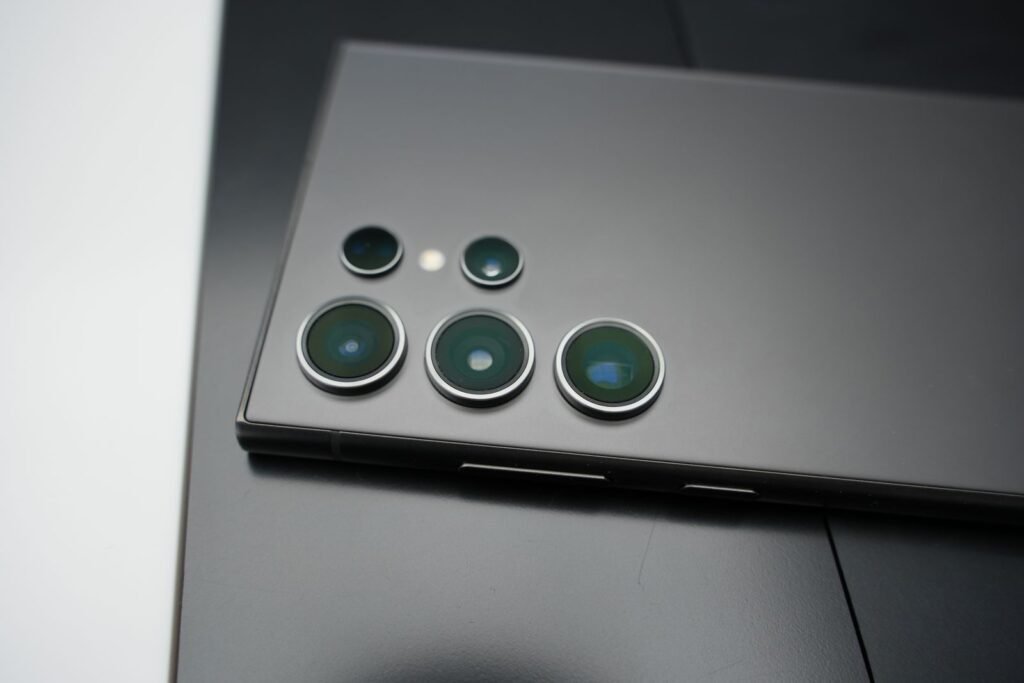
Every fall the phone makers ship new cameras, and every fall the same question comes back: which one actually takes the best pictures? This year the answer at the very top changed hands. TechRadar’s updated camera phone rankings, rebuilt after testing the iPhone 18 Pro Max and Pixel 11 Pro, put Apple’s biggest phone in first place and moved the Galaxy S26 Ultra to the top Android slot. A $499 Pixel still holds the budget crown.
We went through those rankings, the full reviews behind them and the spec sheets from Apple, Samsung and Google to work out what each phone really does better, where the differences are mostly taste, and how much Black Friday pricing changes the math. If you are buying a phone mainly for photos this holiday season, this is the shortlist worth your time.
- Best overall: iPhone 18 Pro Max ($1,299), thanks to a variable aperture main camera and the best video of any phone
- Best for Android: Galaxy S26 Ultra ($1,299.99), the most flexible zoom system you can buy in the US
- Best AI camera: Pixel 11 Pro ($1,099), with Magic Capture and 120x Pro Res Zoom
- Best foldable: Galaxy Z Fold 8 Ultra ($2,099.99), Samsung’s best image processing to date
- Best budget: Pixel 10a ($499), whose photos look remarkably close to Google’s Pro phones
The five picks at a glance
Before getting into each phone, here is how the hardware lines up. Prices are US list prices for the base storage tier.
| Phone | Best for | Main camera | Optical zoom | List price |
|---|---|---|---|---|
| iPhone 18 Pro Max | Overall, video | 48MP, 1/1.28″, f/1.48 to f/4.0 | 4x (8x optical quality) | $1,299 |
| Galaxy S26 Ultra | Android, zoom | 200MP, 1/1.3″, f/1.4 | 3x and 5x | $1,299.99 |
| Pixel 11 Pro | AI features, night shots | 50MP, 1/1.3″, f/1.68 | 5x | $1,099 |
| Galaxy Z Fold 8 Ultra | Foldables, editing on the go | 200MP, 1/1.3″, f/1.7 | 3x | $2,099.99 |
| Pixel 10a | Budget | 48MP, 1/2.0″, f/1.7 | None | $499 |
Two things jump out. First, the three big flagships use main sensors of almost exactly the same size, so the gap between them comes down to lenses, processing and features rather than raw light gathering. Second, the Pixel 10a’s sensor is a lot smaller, which is why its results are so impressive for the price and also why it falls behind in dim rooms.
1. iPhone 18 Pro Max: the best camera phone overall
Apple’s headline change this year is a mechanically variable aperture on the 48MP main camera. Six laser-cut blades let the lens step between f/1.48, f/1.8, f/2.8 and f/4.0, which is something phones mostly abandoned after a few experiments years ago. Wide open you get more light and softer backgrounds. Stopped down you get more of a scene in focus and cleaner sunstars from streetlights. Combined with native manual controls for ISO, shutter speed and white balance, it is the closest an iPhone has come to behaving like a dedicated camera.
Reviewers are not fully united on how much that matters. Some found the aperture more useful than they expected, while Digital Camera World’s tester struggled to find practical uses for it in everyday shooting. What nobody disputes is the video. Across reviews the iPhone remains the phone to beat for footage, and that is the main reason it edges out Samsung for the top spot.
The rest of the system is a 48MP ultra-wide at 13mm and a 48MP 4x telephoto at 100mm that crops to an 8x “optical quality” view. Detail and low-light results are a step up from the iPhone 17 Pro Max, but not a dramatic one, so owners of last year’s model can comfortably skip it.
2. Galaxy S26 Ultra: the best for Android users
If the iPhone wins on video, the Galaxy S26 Ultra wins on range. It is the only phone here with two real telephoto lenses: a 10MP 3x at 67mm and a 50MP 5x at 111mm, alongside a 200MP main sensor and a 50MP ultra-wide. That means usable shots at more focal lengths than anything else sold in the US, and zoomed photos that hold together far better than digital crops.
Samsung has also kept dialing back its famously punchy color. Images are still vivid, but less cartoonish than they were a few generations ago, with good dynamic range. The catch is that the S26 Ultra is very close to the S25 Ultra in camera hardware. TechRadar’s Lance Ulanoff found it pulls slightly ahead when you zoom into details, which is a reason to buy it over an older Galaxy, not a reason to replace last year’s Ultra.
3. Pixel 11 Pro: the best AI camera
Google’s approach is less about hardware and more about what software can do after the shutter fires. The Pixel 11 Pro uses a 50MP 1/1.3-inch main camera (with a slightly changed f/1.68 aperture), a 48MP 5x telephoto, a 48MP ultra-wide and a 42MP selfie camera. On paper that is nearly identical to the Pixel 10 Pro.
The two features that set it apart are AI driven. Magic Capture pulls well-timed stills and short clips out of video, which turned out to be genuinely useful for fast action like kids’ sports. Pro Res Zoom reaches up to 120x with generative help, and results are hit and miss at the extreme end. Night shots remain a Pixel strength.
The Pixel 11 Pro also went up $100 to $1,099, though Google now starts it at 256GB. Black Friday has already knocked it down hard; we tracked those cuts in our guide to whether to buy the Pixel 11 now or wait for Cyber Monday.
4. Galaxy Z Fold 8 Ultra: the best foldable for photos
Foldables used to mean accepting worse cameras for a bigger screen. The Fold 8 Ultra mostly ends that trade. It carries a 200MP main camera, a new 50MP ultra-wide (a real upgrade from the old 12MP unit) and a 10MP 3x telephoto. Ulanoff called its image processing the best he has seen on any Samsung phone, and said that in side-by-side shots it matched and sometimes beat the iPhone 17 Pro Max.
It still trails the S26 Ultra on zoom, since there is no 5x lens, and at $2,099.99 it is the most expensive phone on this list by a wide margin. The reason to buy it is the inner screen: editing and reviewing photos on a tablet-sized display is a better experience than on any slab phone. If you are deciding between big foldables, our iPhone Duo vs Galaxy Z Fold 8 comparison covers the wider tradeoffs.
5. Pixel 10a: the best budget camera phone
The Pixel 10a has two cameras, a 48MP main and a 13MP ultra-wide, and no telephoto at all. Its main sensor has less than half the area of the flagships. And yet its daylight photos look strikingly similar to what Google’s Pro phones produce, with natural color and the wide dynamic range Pixels are known for. That is Google’s processing at work.
New for this generation is Camera Coach, which uses AI and haptic nudges to guide your framing, and the camera module now sits flush with the back. Compared with the Pixel 9a there is little new on the imaging side, so 9a owners should hold on. Everyone else on an older budget phone gets the best photos available for $499.
What Black Friday does to the prices
We are in the middle of the holiday sales, with the biggest drops expected on Black Friday (November 27) and Cyber Monday (November 30). Android phones are getting real discounts. Apple’s are not, at least not directly from Apple.
The interesting result is what the sales do to the middle of the market. At around $970, the Galaxy S26 Ultra costs about the same as an iPhone 18 Pro would with a modest carrier deal, and the Pixel 11 Pro at under $800 becomes a very different value proposition than it was at $1,099. If you have been waiting to buy an Android flagship for its camera, this is the week to watch prices closely.
Which one should you actually buy?
If none of those fit, the next tier down is strong too. The regular Galaxy S26 and S26 Plus keep three rear cameras and Samsung’s processing at a lower price, and the iPhone 17 matches the older Pro models on everything except telephoto.
Three habits that matter more than the phone
Whatever you buy, a few habits will improve your photos more than an upgrade cycle:
- Stop tapping the screen to shoot. Use a volume button or the iPhone’s Camera Control. It cuts the shake that softens low-light shots.
- Use the right lens instead of pinching. Jump straight to the 3x, 4x or 5x button. Pinch zoom between lenses is usually a digital crop.
- Edit after you shoot. Every phone here has excellent built-in editing, from reframing to object removal. Two minutes of editing beats most hardware differences.
Is the iPhone 18 Pro camera different from the Pro Max? No. Both use the same camera system, including the variable aperture. The Max adds a bigger screen and battery.
Which Android phone has the best camera in the US? The Galaxy S26 Ultra. Phones like the Xiaomi and Huawei Ultra models compete well abroad but are not officially sold or supported in the US.
Is a real camera still better? A good dedicated camera with a large sensor still wins on raw image quality, especially with interchangeable lenses. Phones win on convenience, computational tricks and editing.
The short answer for most people is simpler than the spec sheets suggest: all five of these phones take excellent photos, and the right one depends on whether you care most about video, zoom, AI tricks, a big screen or your budget. Pick the strength that matches how you shoot, and use Black Friday to make the flagship you want a lot less painful.
About this article: GeekBlog covers U.S. technology news, AI, phones, smartwatches and gaming. Every story is written and checked under our Editorial Policy. Spotted a mistake or have a story tip? Contact our editors.
