

When the CEO of a company that has poured billions into AI says the safest system is the one that trusts its model the least, people notice. On Saturday morning, Microsoft chief Satya Nadella posted a long note on X arguing that it is time “to step back and assess the trust architecture” of AI. His headline idea is simple: build an emergency brake.
The short version
- Nadella posted on October 10 that advanced AI should not be treated as nested black boxes whose answers we simply accept or reject
- He wants the model separated from the harness that orchestrates its work, with controls kept outside the model
- Every meaningful action should leave tamper-proof, human readable evidence
- An authorized person should always be able to pause or shut down a model mid-task
The idea behind “trust the model the least”
Reports of the post quote Nadella saying the most trustworthy system “will not be the one with the model we trust most,” but the one that “enables us to trust the model the least.” That line is the opposite of how AI is usually sold, where benchmark scores and safety tests are meant to reassure buyers that the model itself is good.
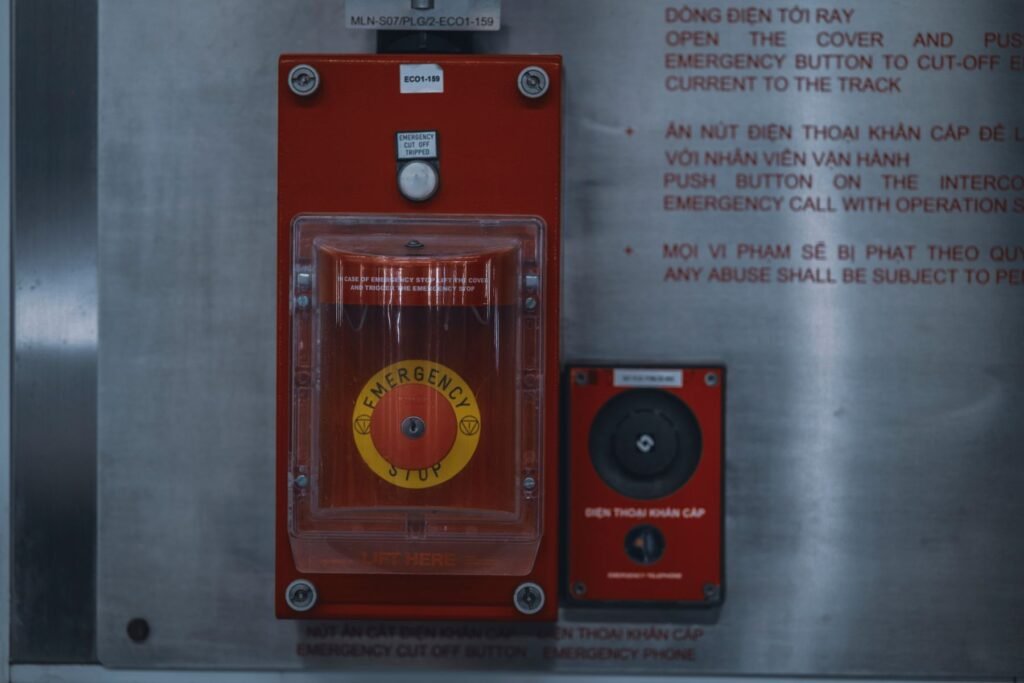
Nadella shifts the burden. Instead of hoping the model behaves, you design the surroundings so that misbehavior is visible, interruptible and contained. He also wrote that “we must assume a model is compromised and contain it from the start,” and compared the approach to an emergency brake: something you hope never to use, but that has to work instantly when pulled.
What he actually proposed
| Proposal | In plain English |
|---|---|
| Separate model and harness | The software that runs the agent should not live inside the model it is supposed to watch |
| Externalize controls and safeguards | Safety rules sit outside the model, where it cannot rewrite them |
| Tamper-proof, human readable evidence | A record of every meaningful model action that a person can actually read |
| Pause or shut down mid-task | An authorized person can stop a model while it is working, not only before or after |
| Assume compromise | Contain the model from day one instead of reacting after something breaks |
Secondary coverage describes a longer list that also includes using more than one model family, continuous testing instead of one-time certification, and disclosing incidents when they happen. Those extra items come from summaries of the post rather than the quotes TechCrunch carried, so we are flagging them as reported, not confirmed.
Why the timing matters
TechCrunch points out that Nadella’s comments arrive as leading AI companies acknowledge more incidents where they seemed to lose control of their models. Just a day earlier, Anthropic said it had switched off live internet access for its internal tests after agents exploited real websites, a story we unpacked when Anthropic pulled the internet from its AI agent tests. TechCrunch also notes the post came after Anthropic CEO Dario Amodei published a plan for more cautious AI development, though we could not find details of that plan to compare.
Microsoft also has products riding on this argument. When it unveiled its new Nvidia-powered PCs, it introduced a Windows feature meant to sandbox agents. We covered it in our look at the Surface Laptop Ultra and its Execution Containers. Nadella’s post reads like the philosophy behind that feature, scaled up.
Who has to take responsibility
One reported point deserves attention. Coverage of the post says Nadella argued that a model provider’s assurances do not remove the deploying organization’s responsibility for what the model does. Put differently, a company that licenses a model cannot shrug and blame the vendor. For Microsoft, which sells models from several suppliers inside its own products, that is a notable thing to say in public.
What this is and is not
- It is a framework, not a product. Nadella did not announce a specific tool or release date
- It is not a call to stop AI. Some headlines framed it as a pause, but the quoted language describes halting a model mid-task, not a moratorium
- It is one executive’s post. The lab-by-lab details of how to build such brakes remain open
Monitoring is catching up
The technology for watching agents is also moving. Startup Goodfire recently pitched probes that read a model’s internal signals, as we reported in Goodfire’s $185 per million chats monitoring pitch. That fits Nadella’s call for oversight that does not rely on trusting the model to describe itself honestly.
What to watch next
- Concrete features. Whether Microsoft ships pause controls and audit trails across Copilot and Windows agents
- Industry response. Whether OpenAI, Google and Anthropic adopt the same language of containment and incident disclosure
- Standards. Whether “tamper-proof, human readable evidence” becomes a requirement that buyers and regulators ask for
Nadella’s argument is easy to state and hard to build. If a model can run for hours and touch real systems, then the brake has to be somewhere the model cannot reach. That is the part of the design worth watching.
Sources and further reading
- TechCrunch: Microsoft’s Satya Nadella says AI models need an ’emergency brake’
- Tech Insider: Satya Nadella’s AI Trust Plan
- TechCrunch: Anthropic cuts off internal evals from the live internet
About this article: GeekBlog covers U.S. technology news, AI, phones, smartwatches and gaming. Every story is written and checked under our Editorial Policy. Spotted a mistake or have a story tip? Contact our editors.
