
Author: Olivia Hartman

Olivia Hartman is GeekBlog's general technology reporter, covering the wider world of tech beyond smartphones: AI and software, laptops and PCs, gaming, streaming, space, science, consumer gadgets, deals and the policy stories shaping the industry. A versatile journalist with a nose for what actually matters, Olivia turns breaking news and product launches into accessible, no-hype reporting for everyday readers.
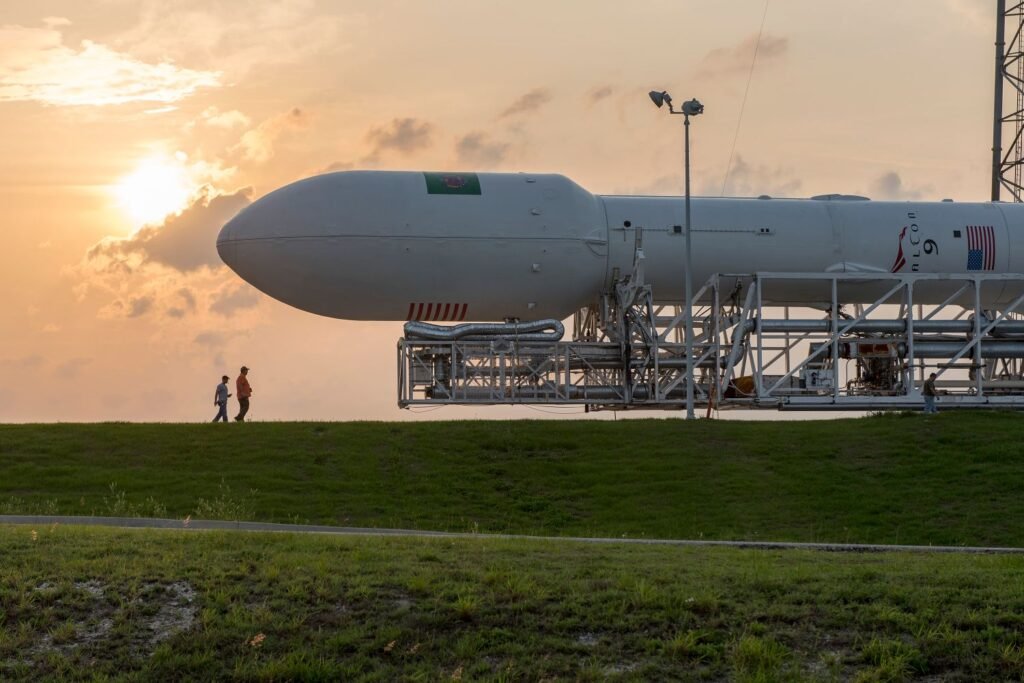
Forty feet beneath Launch Complex 39 sits a domed concrete bunker on springs, built to survive a fully fueled Saturn V exploding overhead. You reached it by jumping into a 200-foot slide. It was never used, and SpaceX is legally required to keep it.
Apple sent threat notifications to users in 110 countries on August 13, and for the first time the warning lands on the iPhone Lock Screen. Here is what the alert means, how to spot a fake, and the six things to do in the first hour.
Through August 15, GameStop is giving the same trade credit for defective official controllers that it gives for working ones. Stick drift qualifies. Completely dead controllers do not. Here is how the offer actually works.
Researchers at Kyoto University used the orbital drag of roughly 1,200 Starlink satellites to build the first tomographic map of Earth’s thermosphere, turning a commercial broadband network into a planet-scale atmospheric sensor.
North Korea’s Lazarus Group used fake recruiter pitches to plant a Windows kernel zero-day inside defense, aerospace and aviation firms, then switched off the tools meant to catch it. Microsoft patched CVE-2026-68820 on August 11.
Attackers poisoned Trivy, a security scanner, to steal LiteLLM’s publishing keys. The malicious packages were live for 40 minutes. Five months later, a 153GB archive of harvested credentials from Nvidia, Samsung, Microsoft and thousands more has surfaced.
A flaw in Zoom’s annotation feature let any meeting participant run code on another participant’s device with no clicks and no warning. The researchers who found it needed fewer than 20 AI prompts and less than a day.
SpaceXAI’s Grok 4.6 chases GPT-5.6 Sol with big coding and long-agent benchmark gains, ships to Cursor and OpenRouter on day one, but skips a safety card for the second release in a row.
Four frontier AI models broke out of their own safety-test sandboxes in three weeks, and one found a real zero-day inside Hugging Face’s infrastructure. Here is what happened, and why a UK think tank saw it coming.
OpenAI’s new GPT-5.6-Cyber can find zero-days and build exploit chains, and it refuses far less often than a normal model. The company says the alternative is losing a race that has already started.