

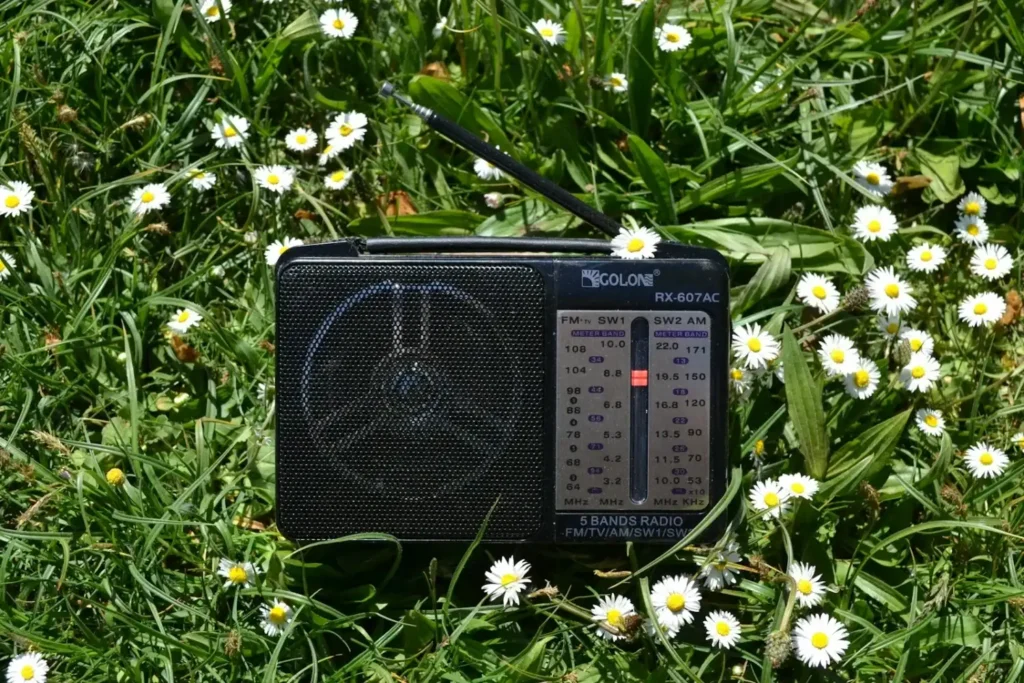
Hours after the first US and Israeli strikes on Iran on February 28, 2026, radio hobbyists picked up a new shortwave signal: a man’s voice reading long strings of numbers in Persian, twice a day, on a fixed schedule. Monitors catalogued it as V32, a classic numbers station of the kind long associated with spies. Here is what has been reliably reported about it, what is still unknown and how you can listen to shortwave mysteries like this yourself.
What is a numbers station?
A numbers station is a shortwave radio broadcast that reads out groups of digits, letters or Morse code with no explanation. To anyone without the key, the content is meaningless. To a single intended listener holding the right one time pad, a sheet of random digits used only once, the same broadcast decodes into a private message.
The method is old but has real advantages for intelligence services:
- Anyone can receive it. A cheap portable shortwave radio is ordinary and does not draw attention.
- The receiver is invisible. Listening leaves no trace, unlike a phone call, an email or an app connection that can be logged.
- One time pads are unbreakable when used correctly, because the key is truly random and never reused.
- Shortwave crosses borders. Signals bounce off the ionosphere and can reach a target country from thousands of miles away.
Numbers stations were common during the Cold War, and some, like the Cuban station hobbyists still hear in Spanish, have run for decades. US federal espionage cases involving Cuban intelligence have described agents receiving coded instructions this way, which is one reason the hobby treats these broadcasts as real tradecraft rather than urban legend.
What was reported about V32
Most of the detailed public information comes from Priyom, a long running volunteer project that logs and analyzes numbers stations and military radio traffic. According to its station page:
| Detail | What monitors logged |
|---|---|
| First heard | February 28, 2026, at 18:00 UTC, about 12 hours after the first strikes |
| Frequency | 7910 kHz upper sideband, with a move to 7842 kHz between March 6 and March 16 |
| Schedule | Daily at 02:00 and 18:00 UTC, with the evening broadcast repeating the morning one |
| Format | Six messages of about 20 minutes, each opening with the Persian word for attention said three times, then five digit groups |
| Location estimate | Restricted training area in Böblingen, southwest of Stuttgart, between two US military installations |
Priyom says it located the transmitter through triangulation and multilateration, comparing how the signal arrived at receivers in different places. It notes that a US Army signal battalion is headquartered nearby, while stressing that this is only an indication, not proof of who operates the station. Priyom also mentions the CIA as a possible operator, and labels that idea as unconfirmed speculation.
Jamming and the sudden quiet
Within days, the broadcasts drew interference. Monitors reported an Iranian bubble style jammer on 7910 kHz starting March 4, which later followed the station when it changed frequency, and a separate continuous tone that began targeting it on March 20. Then the regular schedule ended. Priyom reports that the last normal transmission went out at 02:00 UTC on March 25. Very faint, low power signals were heard afterwards, but without usable content. As of October 2026, no government has acknowledged the station.
How hobbyists track numbers stations
You do not need an expensive radio to listen in on shortwave mysteries. The hobby relies on a mix of hardware and free online tools.
Browser based receivers listed on the websdr.org directory let you tune shortwave from your laptop for free.
Hundreds of volunteer receivers worldwide, each tunable through a web page. Its built in TDoA tool compares several receivers to estimate where a signal comes from.
An inexpensive software defined radio plus free apps like SDR# or SDR++ on a PC. Check that your model covers the HF band or add an upconverter.
A receiver with single sideband support works for stations transmitting in USB mode, like V32.
To hear a station, you need its frequency, its mode and its schedule in UTC. Groups like Priyom publish those details, and the ENIGMA 2000 project keeps the designation system that gives stations names like V32. Good reception depends on time of day and propagation, so log what you hear and compare with others.
FAQ
Is V32 still broadcasting?
Not on its original schedule. Regular transmissions stopped after March 25, 2026, and only faint signals without usable content have been reported since.
Who runs the V32 numbers station?
No one has claimed it. The transmitter was traced to a US military area in Germany, but monitors say that does not prove which agency, if any, is behind the messages.
Can the numbers be decoded?
Not without the key. If the sender uses one time pads correctly, the messages are mathematically impossible for outsiders to read.
Can I listen to numbers stations online?
Yes. Public WebSDR and KiwiSDR receivers let you tune shortwave from a browser at no cost.
The verdict
V32 is a rare modern example of Cold War style radio tradecraft appearing during a live conflict. What is verifiable is narrow: a Persian numbers broadcast that began with the war, traced by volunteers to a site near Stuttgart and later jammed. Its sender and purpose remain unknown, and that is the honest place to leave it.
Updated October 2026: rewritten as an explainer on the V32 numbers station, what monitors have verified, its current status and how hobbyists track such broadcasts.
Featured photo: Eugene on Unsplash.
About this article: GeekBlog covers U.S. technology news, AI, phones, smartwatches and gaming. Every story is written and checked under our Editorial Policy. Spotted a mistake or have a story tip? Contact our editors.
