

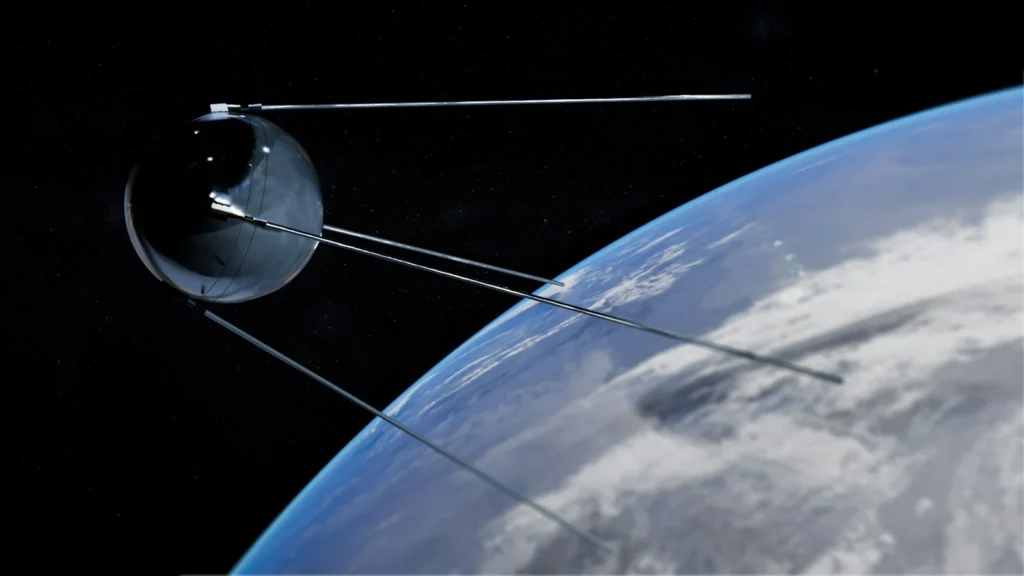
NASA’s Neil Gehrels Swift Observatory, a space telescope that has spent more than two decades chasing gamma ray bursts, is losing altitude and will soon burn up in the atmosphere. A first of its kind commercial rescue by Katalyst Space Technologies launched in July 2026 to grab Swift and push it higher, but the capture was called off in August after the rescue craft developed control problems. As of mid October 2026, Swift is back doing science for its final weeks, and NASA expects it to reenter before the end of the year.
What Swift is and why scientists care
Swift launched on November 20, 2004, on a Delta II rocket from Cape Canaveral. In 2018 NASA renamed it in honor of Neil Gehrels, the mission’s principal investigator, who died in 2017. Its job is speed. When a gamma ray burst flashes somewhere in the sky, Swift detects it, swings around within minutes and starts watching the fading afterglow, then alerts telescopes around the world so they can follow up.
That rapid response role made Swift a workhorse for studying exploding stars, colliding neutron stars, comets and asteroids. It carries three instruments:
Scans a wide patch of sky and pinpoints new gamma ray bursts.
Images and measures the X ray afterglow of each event.
Tracks the afterglow in visible and UV light with very precise positions.
Why Swift is falling out of orbit
Swift began its mission close to 600 kilometers (about 370 miles) up. Even at that height there is a thin trace of atmosphere, and every pass through it steals a little speed. Swift has no engine of its own to make up the loss, so its orbit has been shrinking slowly for years.
The slow decline turned into a race once the Sun entered its current active phase. Higher solar activity heats and puffs up the upper atmosphere, which means more drag at a given altitude. NASA says the decay ran faster than expected, and projections showed Swift would drop to roughly 300 kilometers (185 miles) by fall 2026. Below that line the descent speeds up, operations get difficult and a rescue is no longer realistic.
To buy time, flight controllers at Penn State began pointing Swift in low drag orientations in late 2025. In February 2026 they switched off the X ray and optical telescopes, and in April they paused the Burst Alert Telescope so the solar arrays could be angled to cut drag even further.
The rescue plan and how the mission unfolded
In September 2025 NASA awarded Katalyst Space Technologies, an Arizona company, a contract worth about $30 million to attempt a reboost. The idea was bold. Swift was never built to be serviced, so it has no docking fixtures. Katalyst’s LINK spacecraft would have to approach, find spots where at least one of its three grippers could hold on, and then fire its own thrusters to lift the pair back toward Swift’s original orbit over two to three months. The company had roughly nine months to build, test and launch, a schedule that normally takes years.
| Date | What happened |
|---|---|
| September 2025 | NASA picks Katalyst for the Swift boost mission |
| February 2026 | Swift pauses most science to reduce drag |
| July 3, 2026 | LINK launches on a Pegasus XL rocket dropped from Northrop Grumman’s Stargazer aircraft near Kwajalein Atoll |
| July 28, 2026 | Katalyst reports LINK has been tumbling for about 72 hours |
| August 19, 2026 | NASA and Katalyst cancel the capture and reboost |
| August 26, 2026 | Swift turns its X ray and optical telescopes back on |
| September 25, 2026 | LINK reenters the atmosphere |
What went wrong with LINK
After launch and initial checkouts, LINK ran into attitude control problems, meaning it could not reliably hold or change its orientation. By late July it was spinning on several axes. The team slowed the spin from about 9 degrees per second to around 1.5 degrees per second by early August and uploaded new control software on August 11, but that was not enough to make a safe capture possible. Wire reports later said two of LINK’s three reaction wheels had failed and a faulty valve contributed to the spin, which also burned through fuel.
The mission was scaled back to a technology demonstration. Controllers still steered LINK to within roughly 12 to 15 kilometers (7.5 to 9 miles) of Swift and captured images of it, gathering data for future servicing work. NASA wrapped up its part of the effort on September 3, and LINK reentered on September 25. NASA leadership described the attempt as a high risk, high reward bet that was still worth making.
Where Swift stands in October 2026
With no rescue coming, the team decided science was worth more than a few extra weeks in orbit. On August 26 NASA switched the X ray and optical telescopes back on, and work began to bring the Burst Alert Telescope back as well. Pointing at science targets adds drag, so this choice trades a little lifetime for real data.
By early October Swift was down to about 200 miles. NASA’s official line is that it will likely reenter later in 2026, and recent forecasts range from mid October to early November or later. The spacecraft weighs about 3,200 pounds, so most of it should burn up. Any pieces that survive will almost certainly land in the ocean or on empty land.
FAQ
Is falling debris from Swift a danger to people?
The risk is very small. Most of the spacecraft should vaporize, and the bulk of Earth’s surface under its path is ocean or sparsely populated land.
Can NASA try another rescue?
No. Swift is now too low and dropping too fast for a new mission to be built, launched and docked in time.
Why didn’t Swift have its own engine?
Swift was designed without onboard propulsion to raise its orbit, which was a common tradeoff for a science satellite planned around a limited lifetime. It ended up working for more than 20 years.
Who will do Swift’s job now?
NASA says it will lean on its existing fleet of missions to respond to sudden cosmic events while it studies longer term options.
The verdict
Swift’s rescue failed, but the attempt was a genuine first: a commercial spacecraft built in under a year to service a satellite never meant to be touched. Swift is spending its last weeks doing science, and the lessons from LINK will shape how future satellites are designed for repair and reboost.
Updated October 2026: rewritten to cover the full Swift rescue attempt, why it was cancelled, LINK’s reentry and Swift’s expected fall later this year.
Featured photo: Mara F on Unsplash.
About this article: GeekBlog covers U.S. technology news, AI, phones, smartwatches and gaming. Every story is written and checked under our Editorial Policy. Spotted a mistake or have a story tip? Contact our editors.
