

Tennessee is the better state to visit for most first trips: it combines live music, Southern food, civil rights history and the most visited national park in the country, and it works in almost every month of the year. Minnesota is the better pick if you want lakes, canoe country and a cool summer, and it is the only one of the two where winter itself can be the reason to go.
Both states reward a road trip, and both are bigger than they look. Below you will find what each state is good for, when to go, what things cost, and the rules that catch visitors out. Fees and rules were checked against the National Park Service, the U.S. Forest Service and state agencies in September 2026.
What each state is actually for
Minnesota is a lake and forest state with one big metro area. The Twin Cities of Minneapolis and St. Paul give you museums, theater, good restaurants and city lakes ringed with paths. North of Duluth the landscape turns to granite shoreline, spruce and birch forest, and Lake Superior, the largest of the Great Lakes. Farther north is canoe country, where the roads run out.
Tennessee is a music and history state with mountains on its eastern edge. Nashville and Memphis are two of the most important cities in American popular music, Memphis is central to the story of the civil rights movement, and Chattanooga makes a great small city weekend. The east end rises into the Great Smoky Mountains, shared with North Carolina, which the National Park Service ranks as the most visited national park, with 11,527,939 recreation visits in 2025.
Side by side
| Measure | Minnesota | Tennessee |
|---|---|---|
| Best months | June to early October; January and February for winter sports | April to June and September to November |
| National park cost | Voyageurs: no entrance pass required | Great Smoky Mountains: no entrance fee; parking tag $5 a day, $15 a week, $40 a year |
| State park entry | Vehicle permit $7 a day or $35 a year | Free |
| State sales tax | 6.875% plus local; most clothing exempt | 7% plus local, capped at 2.75% |
| Main airports | Minneapolis Saint Paul (MSP) | Nashville (BNA), Memphis (MEM), Knoxville (TYS) |
| Car needed? | Not in the Twin Cities; yes elsewhere | Yes, almost everywhere |
| Busiest time | Summer weekends up north | October in the Smokies |
Minnesota: where to spend your days
Start in the Twin Cities. Minneapolis has the Chain of Lakes, the Walker Art Center and its sculpture garden, the Guthrie Theater and the Mill City Museum on the Mississippi. St. Paul is older and calmer, with the mansions of Summit Avenue and the Cathedral of Saint Paul. The Mall of America in Bloomington is a genuine attraction, and because Minnesota exempts most clothing from sales tax, shopping there can cost less than at home.
The North Shore is the drive most visitors remember. Highway 61 runs northeast from Duluth along Lake Superior toward Grand Marais, past waterfalls, cliffs and state parks including Gooseberry Falls, Split Rock Lighthouse and Tettegouche. Duluth is roughly two and a half hours north of the Twin Cities. Give the shore two or three nights.
The Boundary Waters Canoe Area Wilderness, inside Superior National Forest, is a roadless maze of lakes and portages. From May 1 to September 30, every overnight trip and every motorized day trip needs a quota permit. The U.S. Forest Service releases the season’s permits on Recreation.gov at 9 a.m. Central on the last Wednesday of January, first come first served, and caps groups at nine people and four watercraft. First timers should use an outfitter in Ely or along the Gunflint Trail.
Voyageurs National Park sits on the Canadian border near International Falls, and most of it is water. No entrance pass is required, but you need a boat, a rental or a seat on a ranger led boat tour to see the best of it. In 2026 its four visitor centers, Rainy Lake, Kabetogama Lake, Ash River and Crane Lake, opened Memorial Day weekend and run daily through September, and boat tour reservations opened on Recreation.gov on April 15.
Tennessee: where to spend your days
Nashville is the obvious start. The Ryman Auditorium, the Country Music Hall of Fame and Museum, and a show at the Grand Ole Opry cover the history, and the honky tonks on Lower Broadway cover the rest, loudly.
Memphis, about three hours west, feels like a different state. Graceland, Sun Studio and Beale Street tell the music story. The National Civil Rights Museum, built around the Lorraine Motel where Dr. Martin Luther King Jr. was assassinated in 1968, is the essential stop in the state and deserves at least half a day. Eat barbecue here.
Chattanooga, about two hours southeast of Nashville, adds the Tennessee Aquarium, the Incline Railway up Lookout Mountain and Ruby Falls, and it breaks up the drive to the mountains.
Great Smoky Mountains National Park charges no entrance fee, but since March 1, 2023 every vehicle parked for more than 15 minutes needs a parking tag: $5 for a day, $15 for a week or $40 for a year, per the National Park Service. Tags are tied to your license plate. On the Tennessee side, Cades Cove is the highlight, a one way loop road of 11 miles through a valley of old farmsteads where deer and black bears are common. The park says to allow two to four hours.
When each state is at its best
Minnesota’s summer is the payoff: long days, warm weather that rarely turns oppressive, and a lake around every corner. Late September and early October bring fall color, starting in the north. Winter is long and properly cold, which rules out casual sightseeing but suits cross country skiing, ice fishing or the Saint Paul Winter Carnival. Spring is the weak season, with ice lingering on northern lakes.
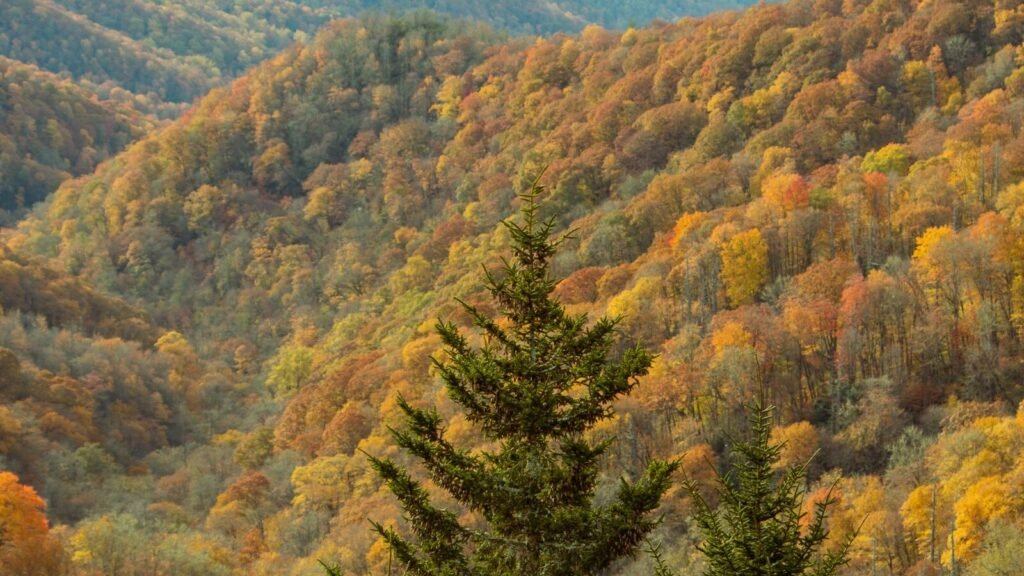
Tennessee’s best months are spring and fall. April brings wildflowers to the Smokies. The park says fall color develops above 4,000 feet in early to the middle of October and reaches lower elevations between the middle of October and early November. October is also the park’s busiest month, so expect full lots and slow roads. Summer is hot and humid in Nashville and Memphis, while winter is mild in the cities and quiet in the mountains.
What it costs and how to get around
Neither state is expensive by national standards, but costs land in different places. The Minnesota Department of Natural Resources charges $7 for a one day state park vehicle permit or $35 for a year, so buy the annual permit if you will use parks on five or more days. Tennessee’s state parks are free to enter. State sales tax is 6.875 percent in Minnesota and 7 percent in Tennessee, and both add local taxes.
Lodging is where the big swings happen. Downtown Nashville on a weekend and the Smokies gateway towns of Gatlinburg and Pigeon Forge in October tend to be the priciest nights in either state. In northern Minnesota the issue is supply: cabins and resorts near the North Shore and the Boundary Waters fill up for summer weekends, so reserve early.
The Twin Cities are the only place in either state where you can skip a car. According to Metro Transit, the METRO Blue Line light rail leaves the airport every 15 minutes, reaches downtown Minneapolis in under 30 minutes and the Mall of America in about 12. Everywhere else you drive. Tennessee is long and narrow, so fly into one end and out of the other if fares allow.
Which traveler should pick which
Pick Tennessee if this is your first trip to either state, you care about music, food or civil rights history, you are traveling in spring or fall, or you want mountain scenery and easy hikes without backcountry skills.
Pick Minnesota if you want to paddle, fish or camp by a lake, escape summer heat, or find nature that is quiet and a little remote. It is also the rare choice for a deliberate winter trip.
If you are weighing other pairs, our look at Connecticut or Indiana as a trip and our Georgia or Illinois travel comparison use the same approach. If the real question is moving rather than visiting, our comparison of Michigan and Illinois covers living costs instead.
Planning tips and mistakes to avoid
Buying your Smokies tag on the spot in October. Tags are sold online through Recreation.gov and the Great Smoky Mountains Association, and at machines in the park. Buy before you arrive so you are not hunting for a machine while lots fill.
Waiting on Boundary Waters permits. Popular entry points for July and August go quickly after the January release, so choose backup entry points and dates in advance.
Treating Voyageurs as a scenic drive. The visitor centers are reachable by road, but the park itself is not. Book a boat tour or rent a boat, or you will mostly see shoreline from a parking lot.
Underestimating distances. Minneapolis to the Voyageurs area is a long drive, and Memphis to the Smokies takes most of a day. Build the trip around two or three bases instead of moving every night.
Frequently asked questions
Is Minnesota or Tennessee cheaper to visit?
They are close, and your route matters more than the state. Tennessee’s state parks are free and its national park charges only for parking, while Minnesota charges $7 a day or $35 a year for state park vehicle permits. Nashville weekends and October in the Smokies are the most expensive nights in either state.
Do you have to pay to enter Great Smoky Mountains National Park?
There is no entrance fee, but any vehicle parked for more than 15 minutes needs a parking tag: $5 for a day, $15 for a week or $40 for a year. Tags are tied to your license plate and must be displayed on the dashboard or windshield. America the Beautiful passes, including the Senior Pass, do not count.
When is the best time to visit Minnesota?
June through early October for most travelers. Summer brings long days and warm lake weather, and September adds fall color and thinner crowds up north. Choose January or February only if you want snow sports or winter festivals, and pack for real cold. Spring is the weakest season, with ice lingering on northern lakes.
How many days do you need in Tennessee?
Plan on a week to see Memphis, Nashville and the Smokies without rushing, because the state is long and each stop deserves two days or more. With four or five days, pick Nashville plus either Memphis or the mountains. Fly into one end of the state and out of the other if fares allow.
Do you need a permit for the Boundary Waters?
Yes. From May 1 to September 30, every overnight trip and every motorized day trip needs a quota permit, released on Recreation.gov on the last Wednesday of January. Paddling and hiking day trips need a self issued permit all year, as do overnight trips outside that window. Groups are capped at nine people.
The bottom line
Tennessee is the stronger general trip: two great music cities, a moving civil rights museum and the country’s most visited national park, all workable in spring, fall and even winter. Plan around October crowds in the Smokies and buy your parking tag before you arrive.
Minnesota is the better choice for a summer built around water, whether that means the North Shore, a Boundary Waters canoe trip or a boat day in Voyageurs, with the Twin Cities as an easy start. Pick by season first and by the kind of days you want second.
About this article: GeekBlog covers U.S. technology news, AI, phones, smartwatches and gaming. Every story is written and checked under our Editorial Policy. Spotted a mistake or have a story tip? Contact our editors.
