

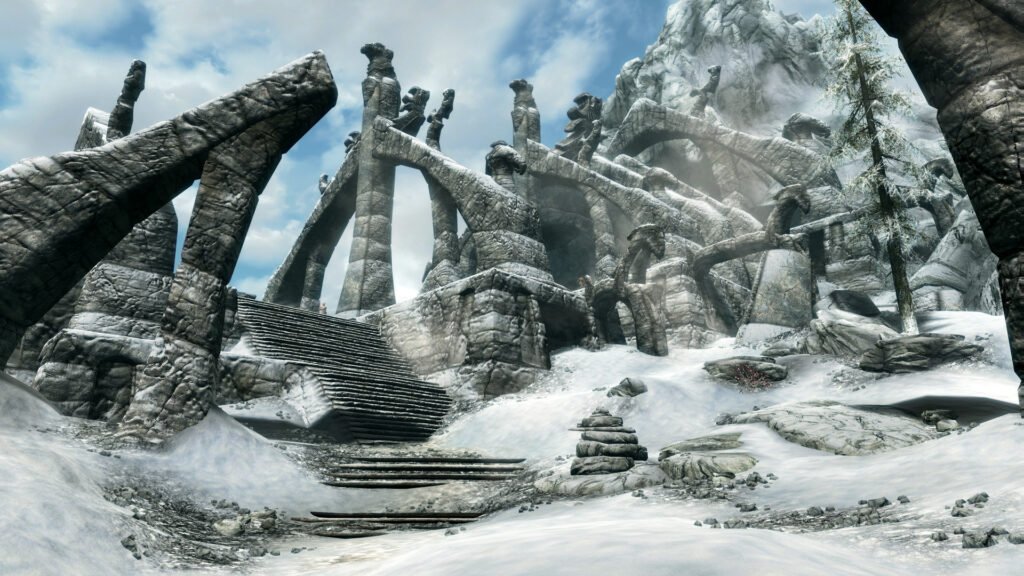
Featured image: official Skyrim Special Edition screenshot by Bethesda Game Studios via Steam
Almost everyone who spent real time in Skyrim has had the same thought at some point: this would be incredible with other people in it. Modders have chased that idea for years, usually with small co-op sessions between friends. A mod called Aurbis is going much further. It is trying to turn Skyrim into a persistent online roleplay server, one shared province with a shared clock, a player economy and player-run factions. PC Gamer calls it a Skyrim MMO in all but name, and it went into early access on November 7.
Here is what Aurbis actually is, what it changes about Skyrim, what you need to try it, and why a project this ambitious deserves a healthy dose of curiosity and caution.
The short version
- What it is: a persistent multiplayer roleplay server built on Skyrim Special Edition
- Status: early access, with an invite-only open beta that starts text-only and roleplay heavy
- Social layer: player groups called Cohorts, plus ten ported Skyrim factions
- You need: a legitimate copy of Skyrim downgraded to version 1.6.1170 and the custom Aurbis launcher
- Roleplay is optional: the creators say you can focus on co-op dungeons or PvP instead
One province, one clock, no reset button
The core promise is persistence. According to the project’s own About page, the team has synced the entire province of Skyrim to a shared world clock that started on Morndas, the 17th of Last Seed, in the year 4E 201. When one player does something, it stays done for everyone else. The tagline PC Gamer quotes says it plainly: “a persistent world where player actions create lasting consequences.”
That is a very different proposition from classic Skyrim multiplayer mods. Instead of dropping a friend into your save file, Aurbis runs a server with its own rules. The team says nearly all vanilla gameplay is already synced, with custom features and algorithms added where needed to make combat, skills, survival, professions, economy, factions, families, NPCs, animals, mounts, enemies and quests work for every player at once.
What changes compared with normal Skyrim
Aurbis is not just Skyrim with a network cable plugged in. PC Gamer’s rundown of the feature list shows how deep the changes go, starting at character creation.
| System | What Aurbis does with it |
|---|---|
| Character creation | Characters are meant to develop over time instead of becoming powerful immediately. You can even start as a vampire or werewolf for roleplay. |
| Birthsigns | Your Birthsign heavily shapes your role by changing how efficiently skills develop. |
| Economy | A player-driven economy with bank accounts, property ownership and player-created quests, supporting crafting professions. |
| Combat | Built to be dangerous, rewarding preparation, equipment, specialisation and teamwork, with an MMO style death penalty. |
| Language and literacy | Players do not automatically understand every conversation or know every location, so language skills become a real advantage. |
| Survival and mounts | More nuanced survival systems and complex horse management. |
The language system is the one that stands out. Most multiplayer mods copy familiar MMO ideas. Making players earn the ability to read signs and follow conversations is a genuinely roleplay-first design choice, and it fits the way the creators describe the project.
Cohorts and factions: the social engine
The multiplayer layer is built around Cohorts, a public House, Clan and Family system open to everyone. Any group of three or more players can create one in game. Faction and holding leadership will often be decided at the Cohort level rather than by individuals, which is meant to produce real, functional blocs instead of lone power players.
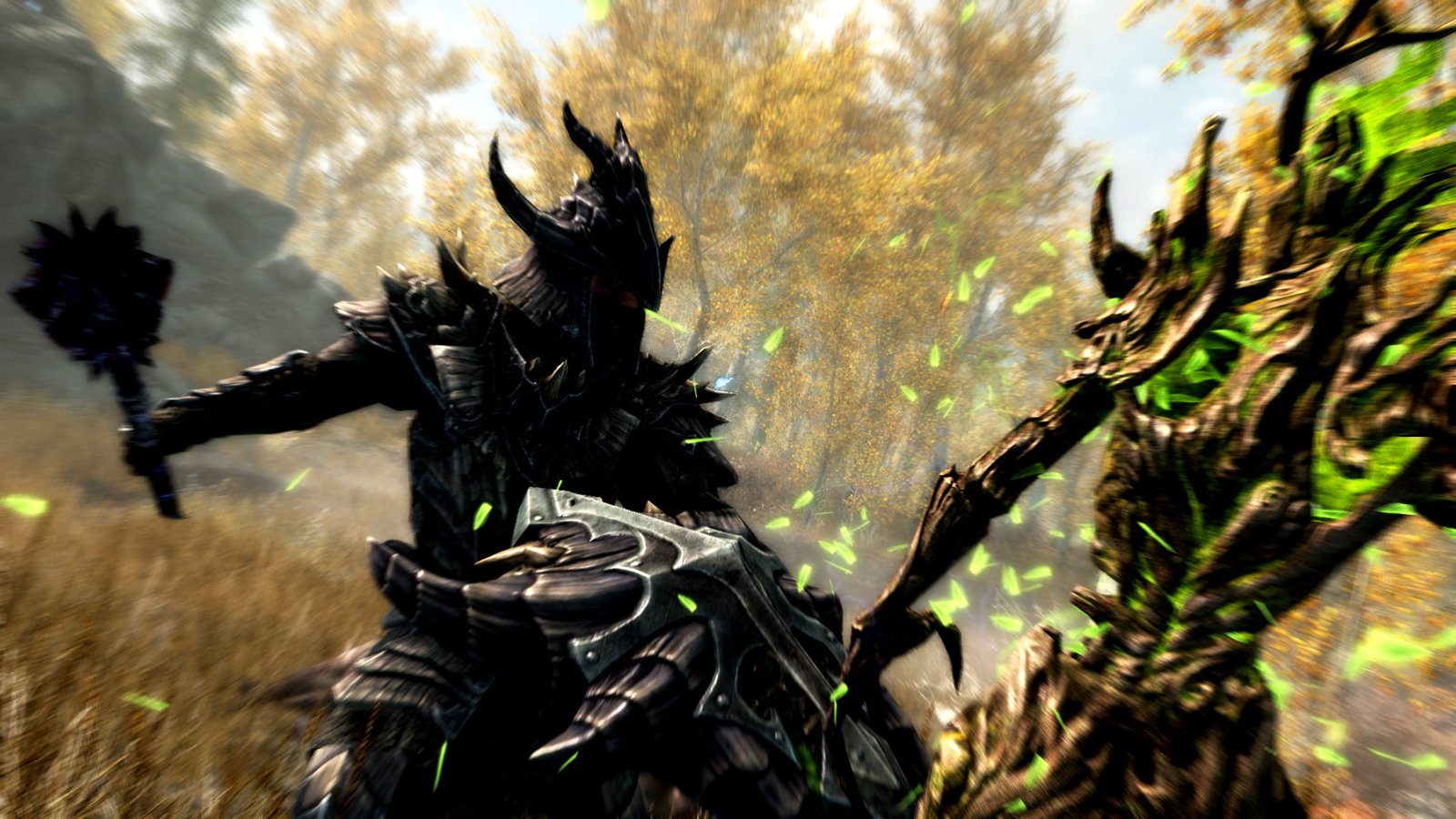
On top of Cohorts sit ten canonical Skyrim factions that the team has ported with their vanilla features plus custom ones: the Companions, College of Winterhold, Thieves Guild, Dark Brotherhood, Bards College, Imperial Legion, Stormcloaks, Thalmor, the Blades and the Vampire Lords. There are also public factions for temples, stables, holdings and city guards, and the guards can detain, arrest and place bounties.
Aurbis by the numbers
Figures from the project’s own About page. Source: aurbis.world.
Leadership is also designed to churn. The team describes five base succession systems with an automatic cadence for disbandment, so a faction cannot simply sit forever on a throne of inactive players. If you want a sense of how another game handles faction warfare and castle control, our look at Path of Exile 2’s castle league shows how mainstream developers are leaning into the same idea.
Who runs the world
One of the more unusual choices is how staff will operate. Rather than speaking as admins, the team says server administration will run through in-character institutions: the Greybeards, the East Empire Company, the College of Winterhold and The Grand Moot. They stress that admins will not be “playing” these characters, since they act as the team’s version of admin duty. Existing player groups can also apply to join the world as “Lore Artifacts,” and the community is meant to help decide how the major factions and holdings get seeded.
The creators are frank about the scale of the challenge. In their words, the technology is not the hard part, the world itself is. Skyrim offers thousands of potential roles, from warriors and mages to thieves and lords, and they say they will not dictate how that plays out. The name even reflects that uncertainty. They call it “The Gray Maybe,” because nobody knows if it will stand the test of time.
How to try it
This is not a one-click install. Based on PC Gamer’s coverage and the project’s own pages, the requirements look like this:
| Requirement | Details |
|---|---|
| Game | A legitimate copy of Skyrim Special Edition, which costs $39.99 on Steam |
| Game version | Downgraded to version 1.6.1170 |
| Mod setup | A custom launcher that downloads and maintains all required mods |
| Access | Invite-only beta using an access code, starting text-only, with a whitelist process planned as the gamemode nears release |
| Voice | A premium voice chat server is planned to follow soon after |
When we checked the official site on November 8, the live status showed 8 players online out of 1,000 slots. That is a tiny number, and it is worth remembering that an MMO-style world only feels alive when enough people are in it. Early access always starts quiet.
Is it worth the hassle?
It depends on what you want from Skyrim. If your best memories are of playing a character and living in the world rather than racing through the main quest, Aurbis is aimed squarely at you. If you mostly want fast co-op dungeon runs, the creators say that works too, but the heavy roleplay focus of the early beta may feel slow.
There are sensible cautions. Downgrading your game version can affect your other mods, so back up your install first. Treat any custom launcher the way you would treat any third-party installer, and download it only from the official Aurbis pages. The project is also an experiment by a small team, and the open beta is text only for now.
The timing is interesting, too. With The Elder Scrolls 6 officially titled Sentinel and still a long way off, fans are clearly willing to build the Elder Scrolls experience they want themselves.
My take
Aurbis is the most serious attempt in a while to answer the “what if Skyrim were an MMO” question, and the design choices show real thought. Cohorts, rotating succession, in-character administration and a language system all point at a community-driven world rather than a theme park. Whether it holds together at scale is the open question, and the creators openly admit they do not know. For now it is a fascinating early access experiment, and worth bookmarking if you have a Skyrim install and a taste for roleplay.
Sources: PC Gamer, Aurbis coverage, Aurbis, About page, Steam, Skyrim Special Edition.
About this article: GeekBlog covers U.S. technology news, AI, phones, smartwatches and gaming. Every story is written and checked under our Editorial Policy. Spotted a mistake or have a story tip? Contact our editors.
