

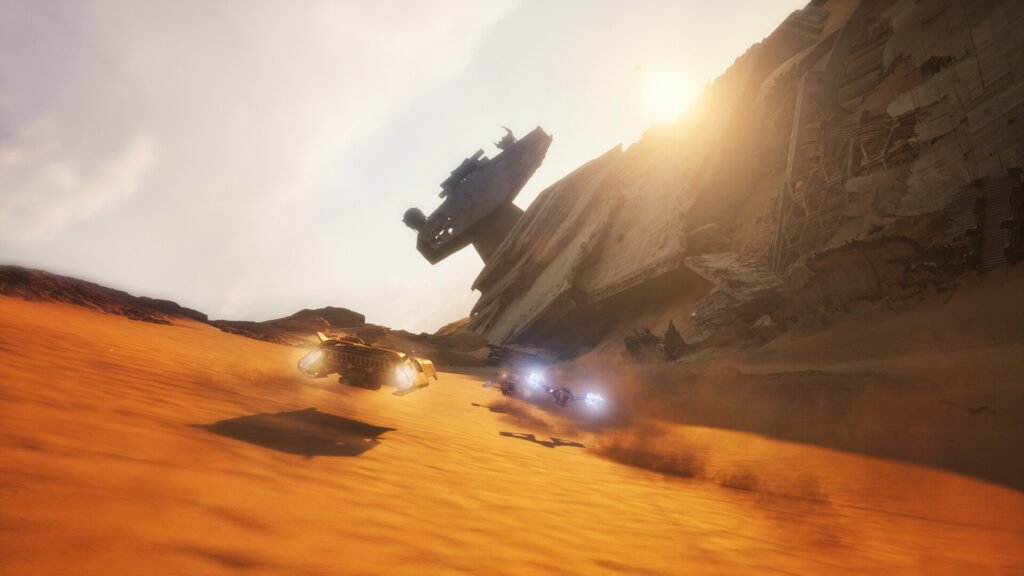
Featured image: in-game screenshot via Fuse Games / Secret Mode / Steam
Star Wars has a long, complicated history with racing games. Podracing gave us one of the most memorable sequences of the prequel era, and a handful of decent games, but nothing in the last two decades has made anyone say “this is the one.” Then Star Wars: Galactic Racer arrived on October 6, and critics are saying something close to exactly that.
The game sits at an 88 on Metacritic for PS5, which, going by several review roundups, makes it the best-rated Star Wars game in over twenty years. It is also a roguelite, it has a betting system, and it lets you take down rival racers Burnout-style. That is a lot of ideas for a licensed racer, so let’s look at what the critics actually liked, where the cracks show, and whether it is worth $59.99.
The short version
- Release date: October 6, 2026, on PC, PS5 and Xbox Series X|S
- Developer and publisher: Fuse Games, published by Secret Mode under Lucasfilm Games
- Price: $59.99 Standard, $79.99 Deluxe
- Critic scores: about 88 on Metacritic (PS5) and 87 on OpenCritic, with 9/10 from GameSpot and 5/5 from Eurogamer
- Catch: it uses Denuvo on PC, and early players report some multiplayer friction
What kind of racing game is this?
Galactic Racer is not a straight sequel to the old podracing games. According to the official Steam page, it is a “runs-based, high-stakes reinvention of racing” set after the fall of the Empire. With the galaxy rebuilding, a new obsession takes over: speed. Out of that comes the Galactic League, an unsanctioned circuit where syndicates sponsor pilots and fortunes change hands in seconds.
You play as Shade, a lone racer chasing revenge and glory. The pitch is deliberately free of Jedi: “No Force. No prophecy. Just skill, strategy, and the will to rise.” That is a refreshing angle for a franchise that usually leans on lightsabers, and it gives the game room to build its own corner of the setting.
Four vehicle classes, four different feels
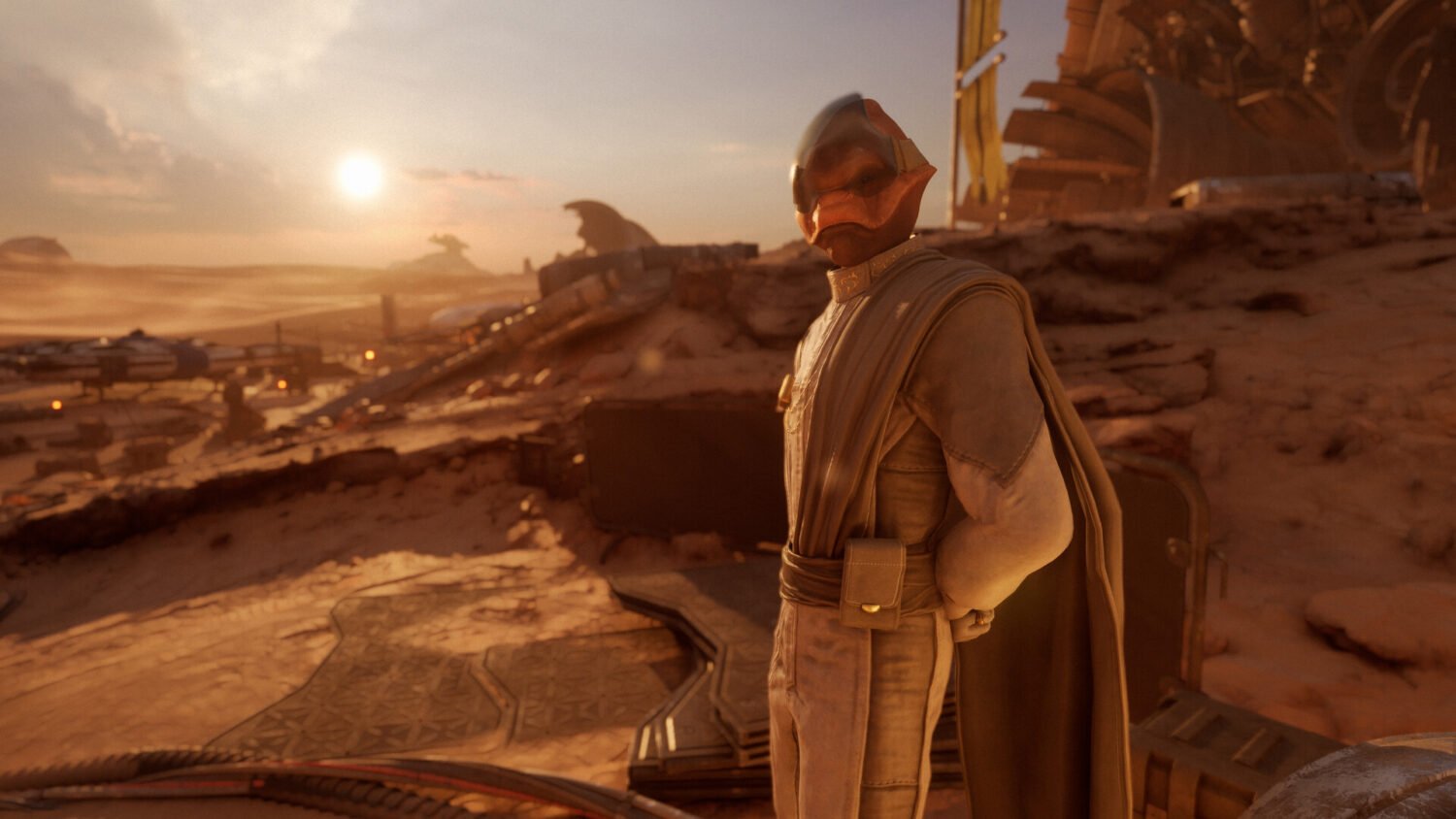
The game lets you pilot landspeeders, speeder bikes, skim speeders and, of course, podracers. Each class has its own physics and playstyle, and you can build a ride to match. Slamming, shunting and takedowns are part of the toolkit, which is where the Burnout comparisons that keep popping up in reviews come from. The studio’s own line is “the greater the risk, the greater the reward.”
Podracing remains the centerpiece, and reviewers say Sebulba’s presence is a nice nod, but it is not the only thing the game does. Critics who tried the full range generally agree that every vehicle type feels fast, which matters in a racer where the sense of speed is half the appeal.
The four vehicle classes at a glance
Source: official Steam store page.
The roguelite twist
The biggest structural decision is that the campaign is built from runs. Reviewers describe each attempt as a “tour”: you choose a loadout, race through the league, earn credits, upgrade and then start again if you fail. GameSpot frames the story around qualifying for the racing league across several planets, and its reviewer admitted to being surprised that a “silly Star Wars racing roguelite” ended up among their favorite games of 2026.
That structure is a gamble. Roguelites reward repetition, but racing fans tend to want a fixed set of tracks to master. The early consensus is that the loop works because the handling is deep enough to make every run feel different, and because the risk and reward of boost and afterburner timing keeps you engaged rather than reciting a route.
What the critics said
The scores are strong across the board. The Steam page itself leans on three quotes: VGC called it “a modern racing classic” (5/5), GameSpot said it was “my favorite racing game in years” (9/10), and Eurogamer called it “absolute racing paradise” (5/5). Those are the publisher’s chosen highlights, of course, but the aggregates back them up.
How Star Wars: Galactic Racer scored
Normalized to 100. Aggregate figures vary slightly between outlets and change as reviews come in. Sources: Metacritic, OpenCritic, Steam, GameSpot, Eurogamer, VGC.
OpenCritic puts the game in its “Mighty” tier, with roughly 96% of critics recommending it. The one visible gap is on Steam, where early user reviews sit around “Mostly Positive.” That is still a good result, but it is lower than the critic average, and the complaints will sound familiar to anyone who has launched a multiplayer game on day one.
Where it stumbles
The criticisms are narrower than the praise. Reviewers pointed to a thin track list and some early friction in multiplayer, and a few found parts of the structure more repetitive than the marketing suggests. Multiplayer is described as solid but limited: an online tour mirrors the campaign, you earn credits and upgrades, and there is a betting option on your finishing position. Connection quality was reported as strong.
| What works | What does not |
|---|---|
| Handling that is deeper than it first looks | A thin track list at launch |
| A real sense of speed across all vehicle types | Early multiplayer friction |
| Risk and reward built into boost and afterburner timing | Roguelite repetition for players who want fixed tracks |
| A fresh, Jedi-free corner of the Star Wars universe | Denuvo Anti-Tamper on PC, with a five machine activation limit |
How it runs on each platform
Technically, Galactic Racer is a strong launch. Digital Foundry’s analysis, as relayed by several outlets, points to a mostly locked 60fps on consoles. Treat the exact resolutions below as approximate, since they come from secondary write-ups of the video rather than the video itself.
| Platform | Internal resolution | Notes |
|---|---|---|
| PS5 | About 1296p, upscaled | Near locked 60fps |
| PS5 Pro | About 1728p | Performance close to the base console |
| Xbox Series X | About 1296p, upscaled | Almost identical to PS5, minor dips around camera cuts |
| Xbox Series S | About 864p | Baked lighting replaces ray traced Lumen, 60fps target held |
The console story echoes what we saw with Sony’s AI upscaling push for the base PS5: developers are leaning hard on clever reconstruction to hit 60fps without gutting visuals. On PC, GamingOnLinux reported near 60fps at 1440p on a high preset with FSR, with some drops during first runs that it blamed on shader caching. The game also supports DLSS 4.5 at launch.
PC requirements
The official specs are fairly modest, but there is one hard rule: an SSD is required.
| Component | Minimum | Recommended |
|---|---|---|
| CPU | Core i5-8400 / Ryzen 5 2600 | Core i7-10700 / Ryzen 7 3700X |
| GPU | RTX 2060 / Arc A580 / RX 5600 XT 6GB | RTX 3060 Ti / Arc B580 / RX 6700 XT |
| RAM | 12 GB | 16 GB |
| Storage | 50 GB, SSD required | 50 GB, SSD required |
| OS | Windows 10 | Windows 10 or newer |
Standard or Deluxe?
The Standard Edition costs $59.99. The $79.99 Deluxe Edition adds three exclusive Kor Sarun vehicles (the Ciza T speeder bike, the Darc X landspeeder and the Rak S skim speeder), a Naboo N-1 inspired livery, three exclusive Arcade events, a deluxe player banner and a digital art book. That is mostly cosmetic and side content, so the Standard Edition is the sensible pick unless you are a completionist.
If you are buying in a busy fall, the competition is steep. Racing fans already have Gran Turismo 7’s latest update to chew on, and shooter fans have the fallout from the Gears of War: E-Day reviews. Galactic Racer is the more unusual pick, and that is part of the appeal.
Is it worth buying?
For most racing fans, yes. A studio took a license that has been coasting on one famous scene for 25 years and gave it a distinct identity: a lawless league, four vehicle types with their own physics, and a runs-based structure that keeps you coming back. The weak spots, a short track list and a rough multiplayer start, are the kind of problems that patches and free updates usually fix.
If you hate roguelite loops or want a huge track roster on day one, wait for a few patches and a discount. If you have been waiting for a Star Wars game that feels fast, mean and a little unhinged, this is the best shot the franchise has had in a long time.
Sources: Steam store page, Metacritic, OpenCritic, GameSpot, Kotaku, Pure Xbox, GamingOnLinux.
About this article: GeekBlog covers U.S. technology news, AI, phones, smartwatches and gaming. Every story is written and checked under our Editorial Policy. Spotted a mistake or have a story tip? Contact our editors.
