

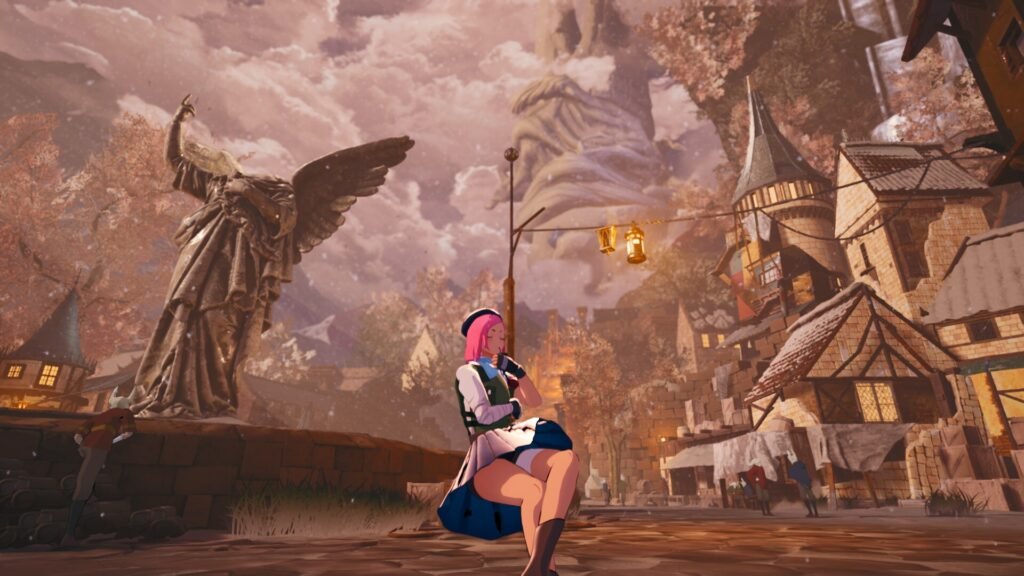
Featured image: Kernel Hearts, the magical girl roguelike whose Fortnite tie-in pushed most of its PC sales to Epic. Source: Ephemera Games / Whitethorn Games, official Kernel Hearts Steam page
Every few months, someone on social media reopens the oldest argument in PC gaming: should indie developers bother with the Epic Games Store? This week it came back with real numbers attached. The solo developer behind the cozy idle farming game Tiny Terraces says the game earned $136,195 on Steam in a year and just $916 on Epic. That is roughly 148 times more money from Valve’s store.
A few replies later, a completely different story surfaced. Ephemera Games, the studio behind the magical girl roguelike Kernel Hearts, says about six out of every ten PC copies of its game sold on Epic, not Steam, and that Epic’s fee structure could leave a game like theirs hundreds of thousands of dollars better off. Both developers are telling the truth. The interesting part is why their results look nothing alike.
The short version
- Tiny Terraces: $136,195 on Steam vs $916 on Epic over one year, both pre-tax, according to developer VuVuu
- Kernel Hearts: roughly 60% of PC copies sold on Epic, 30% on Steam and 10% on Xbox, thanks to a free Fortnite outfit bundled with Epic purchases
- The fees: Steam takes a base 30% cut. Epic takes 0% of the first $1 million per game per year, then 12%
- The catch: a 0% fee is worth nothing if the players are not there, and for most indies they are on Steam
The $916 receipt that kicked it off
The thread started with indie developer Evgeny Grishakov, who laid out the revenue split on both stores and came to a blunt conclusion: Steam is still the better deal for most indie games, “because that’s where the players are.” Epic takes far less money per sale, but a smaller cut of a tiny number is still a tiny number.
Tiny Terraces developer VuVuu jumped in with receipts. The game, a $6.99 early access title where little characters tend a terrace garden while you watch, launched on Steam on July 31, 2025, and sold more than 5,000 copies in its first month. One year later the totals look like this: $136,195 from Steam and $916 from the Epic Games Store, both before tax. VuVuu also said the game made more on Apple’s App Store and Google Play than on Epic, and complained that Epic’s developer dashboard makes basic stats much harder to find. The sign-off was pure internet: “Make sure to get Gaben seven more yachts.”

Other developers piled on with similar experiences. Several said Epic accounts for somewhere between 0% and 3% of their PC sales. Skydome, the studio behind The Hive, said it would “gladly pay Steam 30% for the visibility and revenue they bring,” and that Epic brought in only a sliver of what Steam did for them last year.
Tiny Terraces: one year of PC revenue by store
Pre-tax figures shared by developer VuVuu on November 17, 2026. Bars drawn to scale.
Epic’s share of the two stores combined: 0.67%. Even with a 0% fee, Epic would need to sell around 104 times more to match Steam’s take after Valve’s 30% cut.
That last line is worth spelling out. If you assume the Steam figure is gross revenue, Valve keeps about $40,860 and the developer keeps around $95,000. Under Epic’s current rules, VuVuu keeps every cent of the $916. Fees simply do not matter at this scale. The gap is about audience, not about percentages.
How the two stores actually split the money
Here is where the debate gets confusing, because the two stores do not just charge different rates. They charge in different ways.
| Steam | Epic Games Store | |
|---|---|---|
| Base cut | 30% | 12% |
| Free tier | None | 0% on the first $1M of net revenue per game, per calendar year (since June 2025) |
| Big game discount | 25% on revenue between $10M and $50M, 20% above $50M | Flat 12% above $1M |
| Exclusivity deal | None | Epic First Run: 100% revenue for a six month exclusive |
| Audience | Record of 43.5M concurrent users (October 2026) | 67M average monthly users in 2025, heavily driven by Fortnite |
Notice the irony in Valve’s tiers. Steam’s discounts kick in for games that already make tens of millions of dollars, which helps the biggest publishers most. Epic’s structure is the opposite: it is most generous to small games, since a title that earns under $1 million a year pays nothing at all. On paper, that makes Epic the ideal home for exactly the kind of indie that VuVuu makes. In practice, that is the kind of game that struggles most to get noticed there.
Kernel Hearts and the $17 Fortnite skin
So what makes Kernel Hearts different? One pink-haired magical girl named Fernet.
Kernel Hearts is a co-op roguelike action RPG from Ephemera Games, published by Whitethorn Games, which launched on September 17, 2026, for $19.99. Before release, Epic and Ephemera struck a deal: buy the game on the Epic Games Store, and Fernet shows up as an outfit in your Fortnite locker. Epic began granting the outfit on August 17, and it did not go on sale in the Fortnite Item Shop by itself until September 26. If you already bought the outfit, Epic hands you 1,500 V-Bucks instead. Refund the game and you lose the skin.
“Roughly 6 out of every 10 copies sold across PC were on the Epic Games Store, 3 on Steam and 1 on Xbox. This is a pretty unusual split, especially considering that the game is available on all storefronts at pretty much the same price.”
Ephemera Games, developer of Kernel Hearts
The studio’s explanation is simple. The outfit alone is worth roughly $17, which is close to the price of the whole game. If you like the characters and you play Fortnite, buying on Steam means leaving a nearly free skin on the table. Since so much of Kernel Hearts’ appeal comes from its character designs, the Epic version became the obvious pick for a big chunk of its audience.
Kernel Hearts: where PC players bought the game
Approximate share of copies, as described by Ephemera Games
For comparison, several indie developers in the same thread said Epic makes up just 0% to 3% of their PC sales.
The math that makes Epic look like a bargain
Ephemera then ran a simple scenario. Sell 100,000 copies at $20 and you have $2 million in revenue. Steam would take roughly $600,000 of that. On Epic, the first million is fee-free and the second million gets the 12% cut, so the fee is $120,000. That is a $480,000 difference, which the studio described in all caps as “a whole other game funded.” It admits the example ignores regional pricing, refunds and taxes, but the point stands.
Here is how that gap scales at different revenue levels, assuming every sale happens on one store.
| Yearly revenue | Steam fee (30%) | Epic fee | Developer saves on Epic |
|---|---|---|---|
| $100,000 | $30,000 | $0 | $30,000 |
| $500,000 | $150,000 | $0 | $150,000 |
| $1,000,000 | $300,000 | $0 | $300,000 |
| $2,000,000 | $600,000 | $120,000 | $480,000 |
| $5,000,000 | $1,500,000 | $480,000 | $1,020,000 |
Simplified example. Ignores taxes, refunds, regional pricing and payment processing. Epic’s $1M threshold applies to net revenue and resets every January 1.
Flip the question around and the problem becomes obvious. Because a developer keeps 70 cents of every Steam dollar and a full dollar on Epic (under the threshold), Epic only needs to bring in about 70% of what Steam does for the developer to break even. Kernel Hearts blew past that. Tiny Terraces got less than 1%. Most indies, judging by the replies, land much closer to Tiny Terraces.
Quick rule of thumb for developers
For a game under $1 million a year, Epic pays off only if its sales reach about 70% of your Steam sales. If Epic is doing 3% of Steam’s numbers, the fee savings are close to zero. If you have a hook that pulls Fortnite players over, the math can swing hard the other way.
Why Steam keeps winning anyway
None of this is a secret inside the industry. Steam set a new all-time record of roughly 43.5 million concurrent users in October 2026, and Valve’s store is where PC players keep their libraries, wishlists, friends lists, reviews and achievements. Valve keeps adding small quality of life features too, like the recent change that stops DLC from wrecking your 100% achievement runs. Habits like that are hard to break with a lower fee.
Epic’s own numbers show both its progress and its ceiling. The Epic Games Store reported $1.16 billion in total player spending in 2025, and spending on third-party PC games jumped 57% to a record $400 million. It also hit a record 78 million monthly active users in December 2025. But the average for the year was 67 million, down 1%, and total playtime fell 14%. A big part of that audience opens the launcher to play Fortnite or grab the weekly free game, then closes it again. Store head Steve Allison has compared Epic’s user base to where Steam was around 2017, which is an honest admission that it is still years behind.
Steam is not a perfect deal either. Visibility on Valve’s store is getting harder as releases pile up, and the company has openly admitted it has a problem with AI slop and clone games crowding the storefront. Paying 30% for access to the biggest audience only works if that audience can actually find you.
Our take: the 0% fee is a great deal you can rarely use
Epic has built the most developer-friendly revenue split in PC gaming. A small studio that makes under $1 million a year pays nothing, and that is a genuinely good policy. The problem is that a fee cut does not create players, and the Tiny Terraces receipt is a perfect illustration of that.
Kernel Hearts shows what actually works on Epic: a direct bridge into Fortnite, the one place where Epic has a bigger and more engaged audience than Valve. Most indie games will never get a Fortnite outfit, which means the smartest move for most small developers is still the boring one. Launch on Steam, add Epic as a second store if it is cheap to support, and treat any Fortnite crossover as the lottery ticket it is. If Epic wants that to change, it does not need a lower cut. It needs a store people open when they are not playing Fortnite.
Sources: GamesRadar+, Dexerto, Gamepressure, Epic Games Store, revenue share update, Epic Games Store 2025 Year in Review, Epic Games, Fernet outfit FAQ, GamesRadar+, Steam concurrent user record.
About this article: GeekBlog covers U.S. technology news, AI, phones, smartwatches and gaming. Every story is written and checked under our Editorial Policy. Spotted a mistake or have a story tip? Contact our editors.
