

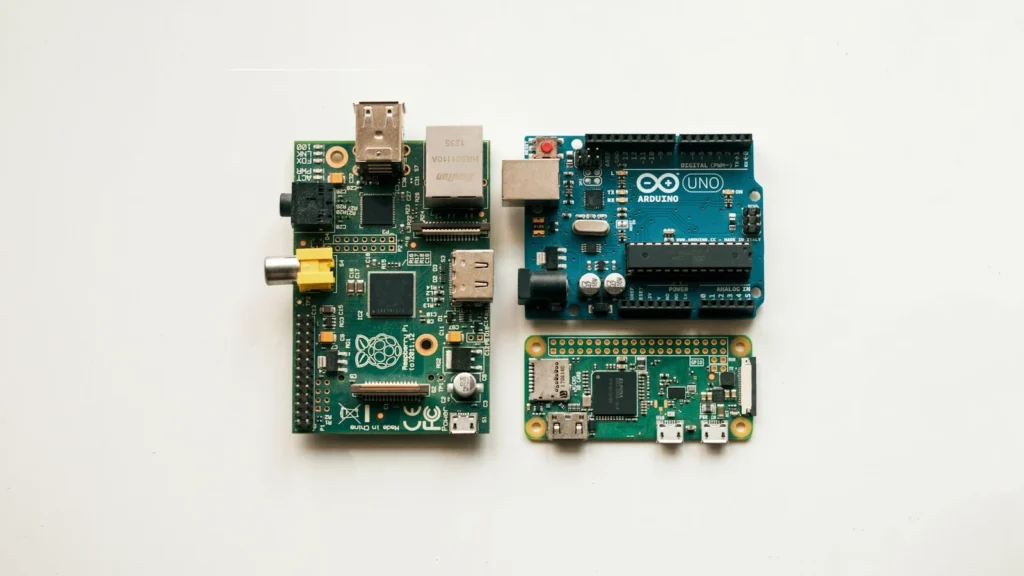
The Raspberry Pi is still the default single board computer, but in 2026 it is no longer the obvious bargain. Memory costs have climbed so sharply that Raspberry Pi raised the 2GB Pi 5 to $77.50 on October 1, 2026, and the 16GB model lists at $305. That makes it worth looking at the alternatives, which range from cheap Pi shaped boards to small x86 machines and AI developer kits.
How to choose a Raspberry Pi alternative
Before you buy, decide what matters more: the huge Raspberry Pi community or raw hardware. Pi boards win on tutorials, accessories and long term software support. Most alternatives win on speed, storage options or networking, but you will lean more on the maker’s own wiki and community forums.
- Software support: check which Linux images the maker publishes and whether they get updates. This matters more than any spec sheet.
- Storage: boards with eMMC or an M.2 slot for NVMe drives are far faster and more reliable than running from a microSD card.
- GPIO compatibility: if you plan to reuse Pi HATs, look for a 40 pin header and confirm the pinout before ordering.
- Total cost: some boards ship without RAM, power supply or cooling. Add those to the price, and remember that tariffs and import fees can apply to boards shipped from overseas.
The best Raspberry Pi alternatives in 2026
| Board | Chip | Best for | Maker list price |
|---|---|---|---|
| ODROID C5 | Amlogic S905X5M, 4 cores | Budget projects, media | $69 |
| Libre Computer Le Potato | Amlogic S905X | Beginners, Pi 3 style cases | Varies by retailer |
| ODROID N2+ 4GB | Amlogic S922X, 6 cores | Home servers, emulation | $95 |
| Radxa ROCK 5B+ | Rockchip RK3588, 8 cores | Fastest ARM tinkering | Varies by RAM |
| ODROID M2 8GB | Rockchip RK3588S2, 8 cores | Compact RK3588 build | $240 |
| ODROID H4 | Intel N97, 4 cores | NAS, x86 home lab | $109, RAM extra |
| ODROID H5 | Intel Core i3 N300, 8 cores | 10 gigabit networking | $230, RAM extra |
| Radxa X4 | Intel N100 plus RP2040 | x86 in a Pi footprint | Varies by RAM |
| NVIDIA Jetson Orin Nano Super | 6 core Arm plus Ampere GPU | Local AI, robotics | Sold via partners |
Hardkernel lists ODROID prices in US dollars on its own store, excluding taxes, tariffs and brokerage fees. Prices for boards with lots of memory have been moving all year, so check the current figure before you order.
Budget picks: ODROID C5 and Le Potato
The ODROID C5 is the closest thing to an affordable Pi replacement right now. Hardkernel pairs a quad core Cortex A55 chip at 2.5GHz with 4GB of RAM and a Mali G310 GPU, and says it is roughly 20 to 25 percent faster than the older C4 with more than double the graphics performance. It runs Android or Linux and suits media players, retro gaming and light server jobs.
The Libre Computer Le Potato (model AML S905X CC) is older and slower, but it copies the Raspberry Pi 3 layout, so many Pi cases and add on boards fit. Libre Computer focuses on mainline Linux support, which helps if you want a stock Debian or Ubuntu image rather than a vendor build.
Power picks: RK3588 boards
Boards built on the Rockchip RK3588 family offer eight CPU cores (four Cortex A76 and four Cortex A55), a Mali G610 GPU, a 6 TOPS neural processing unit and 8K video decoding. The Radxa ROCK 5B+ is the feature monster: two M.2 slots for NVMe drives, onboard eMMC, built in WiFi 6 and Bluetooth 5.2, a full size HDMI input, extra camera connectors and even a slot for a cellular modem. The ODROID M2 uses the RK3588S2 variant in a 90mm square board with 64GB of eMMC soldered on, one NVMe slot and LPDDR5 memory.
The Orange Pi 5 Plus and Orange Pi 5 Max use the same RK3588 chip and are popular with hobbyists, but buying them in the US can mean going through third party sellers, and documentation is thinner than Radxa’s or Hardkernel’s.
x86 picks: when you want a tiny PC
If your project needs regular desktop software, Docker images built for Intel chips, or Windows, skip ARM entirely. The ODROID H4 uses a quad core Intel N97 with a DDR5 SO DIMM slot, four SATA ports, an M.2 NVMe slot and two 2.5 gigabit Ethernet ports, which makes it a favorite for home NAS builds. The ODROID H5 steps up to an eight core Core i3 N300, a 10 gigabit Ethernet port and four M.2 slots. Neither ships with RAM, so add the cost of a memory module.
The Radxa X4 squeezes an Intel N100 into a credit card sized board with LPDDR5 memory, a 2.5 gigabit Ethernet port, an M.2 slot for an NVMe drive, and a 40 pin GPIO header driven by an onboard RP2040 microcontroller, the same chip used in the Raspberry Pi Pico.
AI pick: NVIDIA Jetson Orin Nano Super
For computer vision, local language models or robotics, the Jetson Orin Nano Super Developer Kit is the board to beat. NVIDIA rates it at 67 INT8 TOPS, with a six core Arm Cortex A78AE CPU, an Ampere GPU with 1,024 CUDA cores and 8GB of LPDDR5 memory, all running between 7 and 25 watts. It costs far more than a hobby board and is overkill for a home automation hub, but nothing else here comes close for AI work.
FAQ
Is there a cheaper alternative to the Raspberry Pi 5?
Yes. The ODROID C5 lists at $69 with 4GB of RAM, below even the 2GB Pi 5 at $77.50, though it is slower than a Pi 5 and has a smaller community.
Can a Raspberry Pi alternative run Raspberry Pi OS?
Generally no. Raspberry Pi OS targets Pi hardware. Alternatives run their own Debian, Ubuntu or Armbian images, or Android.
Which alternative is best for a home server or NAS?
The ODROID H4 series, thanks to its SATA ports, NVMe slot and dual 2.5 gigabit Ethernet. The ODROID H5 suits faster networks.
Will Raspberry Pi HATs work on other boards?
Some will, on boards with a 40 pin header, but drivers and pin mapping differ. Check the maker’s documentation for each HAT.
The verdict
Stick with a Raspberry Pi if you want the easiest path and the biggest library of tutorials. If you need more speed, storage or networking for the money, an RK3588 board like the Radxa ROCK 5B+ or an Intel based ODROID H4 or H5 is the smarter buy, and the Jetson Orin Nano Super is the clear choice for AI projects.
Updated October 2026: refreshed with current boards, maker list prices and the latest Raspberry Pi price increases.
Featured photo: Harrison Broadbent on Unsplash.
About this article: GeekBlog covers U.S. technology news, AI, phones, smartwatches and gaming. Every story is written and checked under our Editorial Policy. Spotted a mistake or have a story tip? Contact our editors.
