

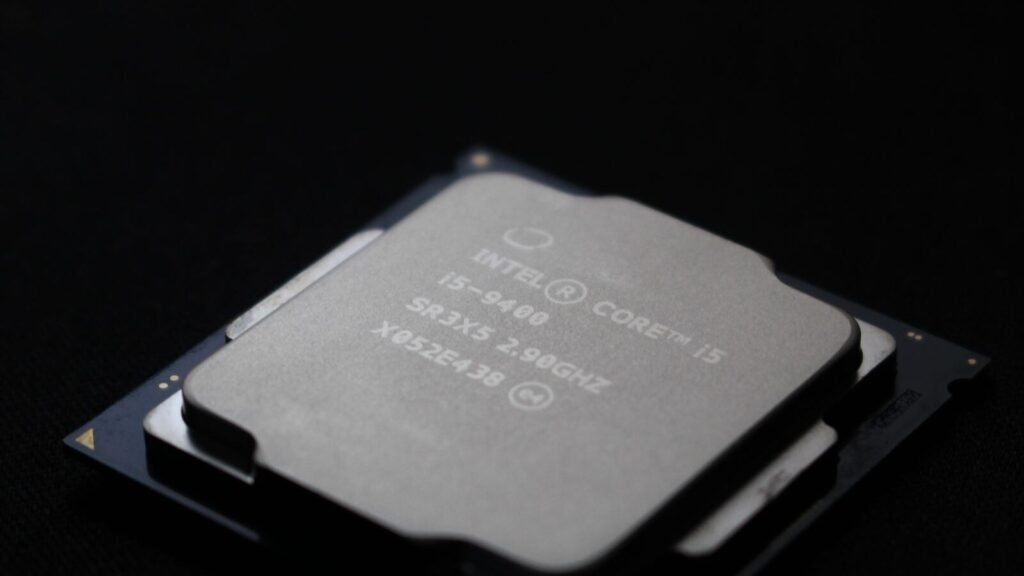
Qualcomm did not say much this month. A short video, a date, and two words that were clearly chosen with care: “Dual 8 Elites.”
That is essentially the whole teaser. Twice the options, September 22, a promise of extraordinary GPU performance and immersive gaming. The kind of clip that gets posted, screenshotted by a dozen leak accounts, and forgotten by Thursday.
This one is worth more attention than that. It confirms something the supply chain has been whispering about since spring, and it quietly rewrites how you should read every Android flagship announcement between now and the middle of 2027. Qualcomm is no longer making one flagship chip a year. It is making two, they are not the same, and the space between them is where a lot of your money is about to go.
⚡ The short version
- Two flagship chips, not one. Qualcomm has confirmed “Dual 8 Elites” for its Snapdragon Summit on September 22. The widely reported names are Snapdragon 8 Elite Gen 6 and 8 Elite Gen 6 Pro.
- 5GHz is officially confirmed. Qualcomm’s own materials state the new Oryon CPU reaches up to 5GHz, which would make it the first phone processor to get there.
- Both are expected on TSMC’s 2nm node. That is the headline efficiency win, and also the reason for everything expensive that follows.
- The Pro chip is rumored to break $300. The current Snapdragon 8 Elite Gen 5 sits near $280, so this would be the priciest mobile processor Qualcomm has ever sold.
- Silicon is not the only thing inflating. Counterpoint Research expects the bill of materials on a premium phone to climb by more than $150 versus early 2025, with retail prices following by $200 or more.
- Xiaomi is reportedly first out. The Xiaomi 18 Pro and 18 Pro Max are said to launch with the new silicon in September, ahead of the Galaxy S27 line in early 2027.
What Qualcomm Has Actually Confirmed
It is worth separating the official record from the leak pile, because they have blurred together over the past two weeks and the official part is unusually specific for a pre-announcement tease.
Qualcomm confirmed the Snapdragon Summit dates back in June: September 22 to 24, in Maui. In late August it posted the teaser video promising “Dual 8 Elites” and “twice the options,” alongside language about the latest connectivity, extraordinary GPU performance, and immersive gaming.
Then came the detail that actually matters. Qualcomm’s official materials state that the new Oryon CPU will run at up to 5GHz. Not a leaked benchmark entry, not a supply chain estimate. The company put the number out itself, and it describes two cores hitting that ceiling alongside six additional performance cores at frequencies it has not disclosed.
No phone chip has crossed 5GHz before. The Snapdragon 8 Elite Gen 5 tops out at 4.61GHz on its two prime cores, which was itself a record when it shipped last September. Getting another 400MHz out of a mobile part without turning the phone into a hand warmer is the kind of thing a full node shrink pays for.
Everything past that point is reporting rather than announcement, and I will flag it as such throughout.
Gen 5 Versus the Two Chips Replacing It
The leaked picture has been consistent enough across enough sources that it is probably close to right, but the two columns on the right are still expectations, not spec sheets.
| 8 Elite Gen 5 shipping now | 8 Elite Gen 6 expected | 8 Elite Gen 6 Pro expected | |
|---|---|---|---|
| Process | TSMC 3nm | TSMC 2nm | TSMC 2nm |
| Peak clock | 4.61GHz | Up to 5GHz | Up to 5GHz |
| CPU layout | 2 prime + 6 performance | 8 Oryon cores | Reported 2+3+3, 16MB shared L2 |
| GPU | Adreno 840 | Adreno 845, 12MB GMEM | Adreno 850, 18MB GMEM |
| Memory | LPDDR5X | LPDDR5X | LPDDR6 |
| Storage | UFS 4.1 | UFS 4.1 | UFS 5.0 |
| Reported chip price | About $280 | Not leaked | Over $300 |
Read down that table and the shape of the strategy becomes obvious. The two chips share a manufacturing node and a headline clock speed, which lets both wear the 8 Elite badge honestly. Then the Pro quietly collects every expensive component in the building: the bigger GPU, half again as much graphics memory, a memory standard nobody else is shipping yet, and a storage interface that does not exist in retail phones today.
The standard Gen 6 is not a bad chip. It is a 2nm part with a 5GHz core, which would have been science fiction two years ago. It is just no longer the best chip Qualcomm makes, and that is new.
Why Two Chips, and Why Now
The generous reading is that Qualcomm is giving manufacturers flexibility. The honest reading is that 2nm silicon got so expensive that a single flagship part stopped making commercial sense.
A 300mm wafer on TSMC’s 2nm line runs somewhere around $30,000, close to double what 3nm production costs. Apple reportedly booked more than half of the first 2nm batch for its own A20 chips, which pushed Qualcomm and MediaTek toward the slightly tweaked N2P line rather than the base node. Scarce capacity plus a premium node is a reliable formula for sticker shock.
Where the money went
Three cost pressures stacking on top of each other at the same time.
2NM WAFER COST
~$30,000
Roughly double the going rate for a 3nm wafer, before anyone is paid to package it.
FLAGSHIP CHIP PRICE
$280 to $300+
Gen 5 to the reported Gen 6 Pro. Qualcomm is said to be lifting prices at least 10 percent.
MEMORY SHARE OF BOM
Up to 40%
On an $800 wholesale phone, about three times what memory cost a year earlier.
Sources: TSMC wafer pricing estimates, supply chain reporting on Qualcomm pricing, and Counterpoint Research bill of materials analysis.
MediaTek is wrestling with the identical problem and reportedly considering the identical answer. Its Dimensity 9600 was originally planned as a single flagship, and the company has been weighing a two tier split precisely because 2nm wafer costs make one universal chip hard to price. One rumored Dimensity 9600 Pro figure lands near $216, which would undercut Qualcomm by close to 30 percent and explains why Qualcomm cannot simply raise prices and hope nobody notices.
So the split solves two problems at once. Manufacturers building a $900 phone get a part they can still afford. Manufacturers building a $1,400 Ultra get something genuinely faster to justify the number on the box. Qualcomm protects its margin at the top without pricing itself out of the tier underneath.
What This Does to Phone Prices
Here is where it stops being a chip story. Silicon inflation arrived in the same year as a memory crisis, and the two are compounding.
Memory prices climbed 40 to 50 percent in the fourth quarter of 2025, and again by a similar margin in the first quarter of 2026, with another 20 percent on top in the second quarter. AI data centers are eating the supply, and phones are competing for what is left. On a phone that wholesales around $800, memory now accounts for as much as 40 percent of the bill of materials, roughly triple its share a year ago.
The bill arrives at retail
Counterpoint Research projections for premium devices, comparing Q2 2026 against Q1 2025.
BUILD COST
+$150
Added to the bill of materials on a premium handset.
RETAIL PRICE
+$200
What the shopper pays, an increase of 25 percent or more.
AVERAGE SELLING PRICE
+6.9%
Across the whole market in 2026, nearly double the earlier 3.6% forecast.
SHIPMENTS
-2.1%
Revised down from a flat to positive outlook. People buy fewer expensive phones.
Put a $300 processor into that context and the arithmetic gets uncomfortable. On a hypothetical $1,300 Ultra, the chip alone would represent close to a quarter of the retail price. Manufacturers have three ways out, and none of them are pleasant: raise the price, cut something else, or take the standard Gen 6 and hope buyers do not read the fine print.
We have already watched option two play out this year. The spec sheet quietly regressing on phones that cost the same or more is exactly what has been happening across the 2026 lineup as memory costs bite, and a more expensive flagship chip only sharpens that pressure.
Which Phones Get Which
Assignment is where this gets interesting, because the tier a phone lands in is going to become a shopping consideration whether manufacturers like it or not.
From teaser to retail shelf
The road to the first 5GHz phone, as it stands today.
June 30
Qualcomm confirms Snapdragon Summit for September 22 to 24 in Maui. No chip names attached yet.
August 20
The teaser lands. “Dual 8 Elites” and “twice the options,” which ends the debate about whether the two tier rumor was real.
Late August
Qualcomm materials confirm the Oryon CPU reaching 5GHz. Two cores at the ceiling, six more at undisclosed speeds.
September 22 to 24
Snapdragon Summit. Full specs, official naming, and the first credible performance figures.
September to October
Xiaomi 18 Pro and 18 Pro Max are reported to ship first, with the standard Xiaomi 18 following in October.
Early 2027
Galaxy S27 arrives, with the Pro chip expected to be reserved for the Ultra. OnePlus 16 and iQOO 16 are also on the list.
Xiaomi getting there first is not a surprise. It has taken the launch window at the front of the queue for several generations now, and the Xiaomi 18 Pro and Pro Max are reported to arrive in September with the standard model waiting until October.
Samsung is the one to watch. Reporting on the Galaxy S27 points to the Gen 6 Pro landing in the Ultra, which raises an obvious question about the two cheaper models in the line. If the S27 and S27 Plus get the standard Gen 6 while the Ultra takes the Pro, the internal gap inside a single family becomes wider than it has been in years. That is a meaningful change for a lineup where the argument for the base model has usually been that you get the same brain in a smaller body.
It also complicates the mid tier. Samsung’s cheaper flagships have leaned on last year’s silicon for a while now, and the Galaxy S26 FE made the chip its only genuine upgrade. Add another rung to the ladder above it and that pitch gets harder to make.
Does Any of This Reach You
Worth asking plainly, because chip launches generate enormous coverage relative to how much they change daily life.
The Gen 5 already scores around 3.74 million on AnTuTu and roughly 3,588 single core and 10,207 multi core on Geekbench. It is comfortably faster than the vast majority of software written for it will ever demand. A 2nm successor with a 5GHz core will post better numbers, and for most people those numbers will translate into a phone that feels approximately the same.
Where the upgrade will genuinely show up
- Battery life. A full node shrink is the most reliable efficiency gain in the industry. Gen 5 claimed up to 35 percent CPU power savings over its predecessor, and 2nm should deliver something in that neighborhood again.
- Sustained gaming. Peak scores are marketing. The Adreno 850 with 18MB of graphics memory is aimed at holding frame rates after twenty minutes, which is where phones usually fall apart.
- On device AI. Larger models need memory bandwidth more than they need clock speed, which is precisely what LPDDR6 on the Pro chip is for.
- Almost nothing else. Messaging, browsing, camera launch times, and social apps have not been chip limited for years.
The efficiency case is the real one. Everything else is a benchmark result you will read about and then never think of again.
What to Do With This
If you are shopping between now and next spring, the split changes a few practical calculations.
Four things worth remembering
1. “Snapdragon 8 Elite” stops being one answer. Starting with this generation, the badge covers two different chips. Check which one before you assume you know what you are buying.
2. Gen 5 devices are about to get cheaper. Every new flagship launch discounts the outgoing one, and Gen 5 is more performance than most people need. The value window opens in October.
3. Do not expect prices to come back down. Memory contracts are locked in well ahead, and the 2nm capacity crunch is not a one quarter event. The 2027 flagships were always going to cost more.
4. Wait for the summit before drawing conclusions. The 5GHz figure is confirmed. Chip pricing, GPU tiers, and model assignments are all still reporting, and reporting moves.
The comparison worth keeping in view is Apple, which faces the same 2nm bill and has answered it differently. Rather than splitting the chip, it split the calendar, and the September 9 event now carries only part of the iPhone lineup while the rest slides into 2027. Two companies, one cost problem, two very different ways of hiding it.
The Bottom Line
A 5GHz phone processor is a genuine engineering milestone, and it deserves the applause it will get in Maui next month. Qualcomm hitting a clock speed that desktop chips only reached a few years ago, inside something that runs off a battery, is not nothing.
But the more consequential announcement was the boring half of the teaser. “Twice the options” is a marketing phrase describing a structural change: the flagship tier now has a ceiling and a floor, and the distance between them is measured in dollars you will pay rather than frames you will see.
For a decade, buying any phone with Qualcomm’s top chip meant getting the same silicon as the most expensive Android on the market. That era ends on September 22. What replaces it is a spec sheet you have to actually read.
Sources and further reading
- Android Central: Qualcomm teases Dual 8 Elite chips for Snapdragon Summit
- Android Headlines: Qualcomm confirms two Snapdragon 8 Elite Gen 6 chips
- Gizmochina: Qualcomm confirms Dual 8 Elites launch on September 22
About this article: GeekBlog covers U.S. technology news, AI, phones, smartwatches and gaming. Every story is written and checked under our Editorial Policy. Spotted a mistake or have a story tip? Contact our editors.
