

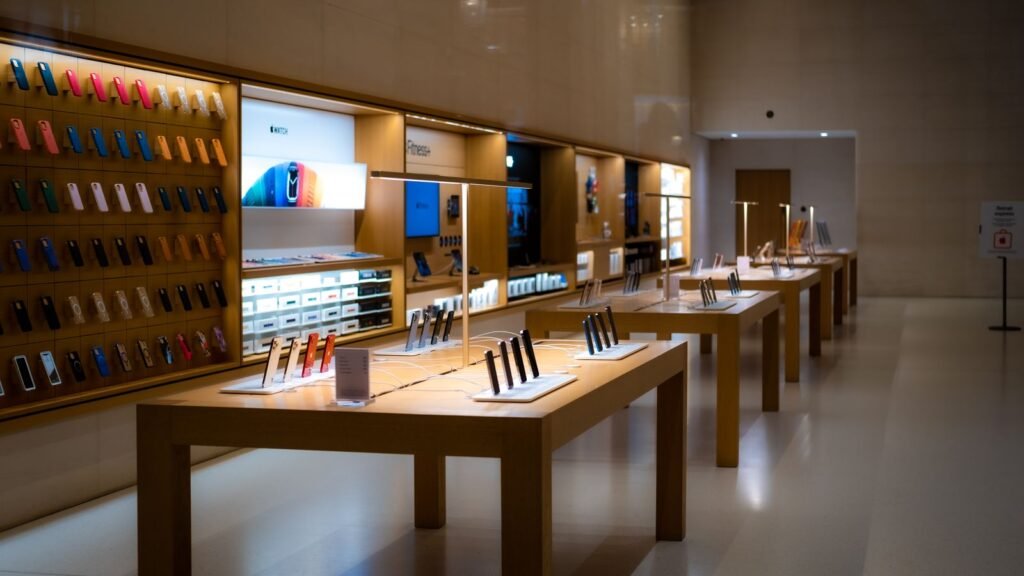
Go and price the phone you bought two years ago. Not the flashy flagship, just the sensible mid-range Android that cost around $400 and did everything you needed. The 2026 version has the same family name, a very similar body, and a price that is either the same or slightly higher. What it does not have is the same amount of memory inside it.
This is the quiet story of the phone industry this year. Everybody expected prices to rise, and they have. What fewer people noticed is that manufacturers found a second lever, one that does not show up on a price tag at all. They started shipping less phone for the money.
The backdrop is brutal. Global smartphone shipments are on track to fall close to 14 percent in 2026, landing somewhere near 1.07 billion units. That is the steepest annual drop the industry has ever recorded, and it takes the market back to volumes last seen in 2013, when the iPhone 5s was new and nobody had heard of a foldable.
⚡ The short version
- 2026 is the worst year on record for phone shipments, with Counterpoint and IDC both landing near a 13 to 14 percent decline to roughly 1.07 billion units.
- Memory is the cause. AI data centers absorbed the DRAM and NAND supply, and mobile memory prices roughly tripled.
- Makers are cutting specs instead of raising prices further. Entry phones drop to 4GB of RAM, mid-rangers fall from 12GB to 8GB, flagships stall at 12GB instead of moving to 16GB.
- Older chips are coming back as manufacturers switch to cheaper, previous-generation silicon to protect the sticker price.
- The value equation flipped. The $700 to $999 tier is now the sweet spot, and the sub-$150 phone is close to extinct.
The Numbers Behind the Worst Year on Record
The decline did not arrive all at once. It built quarter by quarter as memory contracts signed in better times expired and manufacturers had to renegotiate at the new rates.
| Period | Year over year change | What was happening |
|---|---|---|
| Q1 2026 | Down 6% | Shortages start disrupting supply. Apple leads a first quarter for the first time. |
| Q2 2026 | Down 11% | Lowest second quarter volume in 13 years. Budget and mid-range collapse. |
| Full year 2026 | Down about 13.9% | Roughly 1.07 billion units, the lowest total since 2013. |
| 2027 forecast | Up about 1.9% | A slow floor rather than a recovery. Stronger growth is not expected until 2028. |
Worth sitting with that last row for a second. Even the optimistic forecast does not have the market climbing back to 2025 levels next year. Analysts are describing 2026 as a reset rather than a dip, and the volumes it removed are not simply coming back when supply loosens.
Global smartphone shipments, annual units
Approximate figures. Firms differ by a few percent, but every major forecaster puts 2026 at a 13-year low.
2013 around 1.0 billion, the industry still climbing
2019 around 1.37 billion, near the peak
2025 around 1.24 billion, second year of growth
2026 around 1.07 billion, the sharpest fall ever recorded
The drop is not a demand problem in the usual sense. People still want phones. The phones they want stopped being buildable at the prices they were willing to pay.
Why Memory Broke the Phone Business
The mechanism is simple enough to explain in a sentence. Every AI server going into a data center needs an enormous amount of memory, memory makers would rather sell to data centers because the margins are far better, and phones are competing for what is left over.
The resulting price moves have been extraordinary. Mobile DRAM roughly tripled between late 2025 and the middle of this year. Contract prices for NAND flash jumped as much as 70 to 75 percent in a single quarter. We covered the underlying squeeze when it first started biting in the memory boom that has been quietly crushing the budget smartphone, and the numbers have only hardened since.
What makes memory such a pressure point is how much of a phone’s cost it represents. On a sub-$400 device, memory now accounts for roughly 60 percent of the bill of materials. Below $99 that figure climbs past 64 percent. When the single largest component in a product triples in price, there is no clever engineering that absorbs it.
So manufacturers did the arithmetic on how much of that they could pass to buyers. The answer, it turned out, was not all of it.
The Part Nobody Advertises: Your Spec Sheet Is Shrinking
Here is where it gets interesting for anyone actually shopping. Raising a phone’s price is visible, comparable and easy for reviewers to punish. Reducing what is inside the phone is none of those things, especially at the budget and mid-range end where buyers rarely compare RAM figures across generations.
The industry took the second option. Across 2026, the memory configuration ladder has moved down a rung at almost every tier.
| Tier | Typical RAM in 2025 | Typical RAM in 2026 | What you feel |
|---|---|---|---|
| Entry level | 6GB to 8GB | 4GB | Apps reload constantly. The browser forgets your tabs. |
| Mid range | 12GB | 8GB | Fine today, tight in two years as on-device AI grows. |
| Flagship | 12GB, heading to 16GB | 12GB, stuck there | Little immediate pain, but the roadmap stalled a year. |
| Processor | Current generation silicon | Previous generation | Shorter software support window, weaker efficiency. |
The processor row is the one that gets missed most often. Counterpoint expects smartphone chip shipments to fall around 10 percent this year, and a meaningful part of that is manufacturers deliberately reaching back to older, cheaper chipsets to keep a device inside its price band. A phone launched in 2026 running silicon designed in 2023 will very likely lose Android updates sooner than its price suggests.
There is a technical wrinkle driving some of this too. The older LPDDR4 memory that cheap phones relied on is being phased out, and moving an entry-level device to newer memory often forces a change of platform as well. That pushes costs up beyond the memory chip itself, which is exactly why the cheapest phones are being cancelled rather than redesigned.
How much more it costs to build a phone in 2026
BUDGET
+25%
Memory is the largest single line item, so there is nothing to trim. This is the tier being deleted.
MID RANGE
+15%
Absorbed through spec cuts rather than price rises, which is why the value here got so much worse.
PREMIUM
+10%
Healthy margins soak up most of it. Buyers see a modest bump and largely pay it.
Increase in bill of materials attributed to DRAM price rises. The cheaper the phone, the harder the hit, which is the opposite of how most cost shocks usually work.
Who Is Getting Hit Hardest
The damage has been strikingly uneven, and it maps almost perfectly onto where each brand makes its money.
| Brand | Q2 2026 share | Direction | Why |
|---|---|---|---|
| Samsung | 24% | Grew | Makes its own memory, so it is partly selling into the shortage it is buying from. |
| Apple | 20% | Grew | No cheap tier to lose, long supply contracts, and buyers who tolerate price rises. |
| Xiaomi | 12% | Fell | Built on high volume value phones, the exact shape the crisis punishes. |
| OPPO and vivo | Mid single digits each | Fell sharply | Thin margins in price sensitive markets leave nowhere to put the extra cost. |
| Transsion | Heavily exposed | Hit hardest | Its entire business is the sub-$150 tier that is close to collapsing. |
The chip suppliers underneath show the same pattern. MediaTek and UNISOC carry the most exposure because so much of their volume sits in 4G parts tied to legacy memory, the corner of the market that the shortage is erasing outright.
Even Google, which sells nowhere near the volume of the Chinese brands, could not hold the line. The Pixel 11 generation arrived with a $100 increase across the range, with RAM named directly as the reason. When a company that controls its own silicon and sells at healthy margins has to raise prices that much, it says something about the pressure everyone else is under.
The Weird Result: Flagships Became the Better Deal
Here is the genuinely counterintuitive part, and it is the single most useful thing to take away if you are shopping this year.
Because the cost shock lands hardest at the bottom, the price gap between a good mid-range phone and an entry-level flagship has narrowed considerably. The mid-ranger went up in price and down in specification. The flagship went up in price and stayed roughly where it was. Do that for a full product cycle and the value proposition inverts.
Why the $700 to $999 tier is winning:
- It was already the fastest growing tier before the crisis, with sales up around 25 percent in 2025.
- Its specs did not go backwards. You still get current silicon, 12GB of RAM and a proper camera system.
- Software support is longer, often seven years, which spreads the cost over far more time than a cheap phone ever could.
- The gap to mid-range shrank, so the extra money buys more relative phone than it did two years ago.
- Carrier financing hides the difference, turning a few hundred dollars into a small monthly delta.
None of that makes an expensive phone cheap. It just means the old advice, that the smart money buys mid-range and ignores the flagship tax, stopped being true in a year where the mid-range quietly lost a third of its memory. If you want the wider picture on how pricing got here, we tracked it as it developed in our look at how smartphone prices started breaking records this year.
How to Spot a Phone That Has Been Quietly Downgraded
Manufacturers are not lying about any of this. The specifications are published. They just are not advertised, and the comparison that reveals them is one almost nobody makes.
A five minute check before you buy:
- Look up last year’s model with the same name. Compare RAM and base storage side by side. If either went down while the price held, you have found a downgrade.
- Check the chipset’s release year, not its name. Marketing names get recycled and renumbered. The launch year of the silicon tells you how long software support realistically lasts.
- Find the memory standard. LPDDR5X is current, LPDDR4X is old. On storage, UFS 3.1 or 4.0 is fine, eMMC in 2026 is a warning sign.
- Read the base storage carefully. A 128GB model where last year’s was 256GB is the same trick in a different component.
- Check the update promise in writing. Brands have started quietly shortening these on cheaper models rather than cutting the price.
- Compare against the used market. A two year old flagship often beats a new mid-ranger on every number that matters this year.
The trap worth avoiding
The instinct in a year of rising prices is to buy cheaper. In 2026 that instinct is backwards. The cheapest new phones are exactly the ones that absorbed the deepest cuts, so a $200 handset bought today may be noticeably slower than a $200 handset bought in 2024, and it will likely stop getting updates sooner.
Buying down protects your wallet this month and costs you the whole ownership period. If the budget is genuinely fixed, a refurbished phone from a better tier is the stronger move.
Buy Storage You Do Not Need Yet
One more piece of practical advice, and it applies to anyone buying at any price this year. Whatever tier you land on, take the larger memory and storage option if you can stretch to it.
Phone memory cannot be upgraded after purchase. On most modern phones neither can storage, since expandable card slots have been all but abandoned across the industry. Whatever configuration you buy is the configuration you live with for the entire life of the device. In a normal year, buying the base model and upgrading sooner is reasonable. In a year where next year’s equivalent phone may ship with less memory than this year’s, paying once for headroom is unusually good value.
This matters more than it used to because on-device AI features keep growing their memory appetite. Assistants that run locally, live translation, on-device photo editing, all of it wants RAM. A phone bought with 8GB in 2026 is being asked to do things a phone with 8GB in 2022 never was.
When Does This End
The honest answer is slowly, and not completely.
The most extreme price increases have already cooled. Contract price growth slowed noticeably into the third quarter of this year, down from the 60 to 75 percent quarterly jumps seen earlier to something in the low teens. Forecasters broadly converge on 2027 as the year memory supply normalizes, with prices stabilizing around the middle of that year.
But stabilizing is not the same as falling back. The consensus is that memory prices settle at a permanently higher level than the 2024 baseline, because the demand that caused this is structural rather than temporary. AI infrastructure spending is not a spike that passes, and memory suppliers have every reason to keep prioritizing the customers paying the most. SK Hynix has publicly suggested the tightness could persist past 2030.
The clearest casualty is the very cheap phone. Analysts increasingly describe the sub-$100 segment, roughly 171 million devices a year, as permanently uneconomical even after prices settle. That is not a market that recovers when supply loosens. It is a market that gets replaced by refurbished hardware and longer upgrade cycles.
For most people reading this in the United States, the practical effect is narrower but real. You will keep your phone longer, you will pay more when you do replace it, and the spec sheet you compare against your memory of the last one will look a little thinner than you expected. None of that is your imagination, and none of it is really about phones. It is about where the world’s memory went, and phones simply being outbid for it.
About this article: GeekBlog covers U.S. technology news, AI, phones, smartwatches and gaming. Every story is written and checked under our Editorial Policy. Spotted a mistake or have a story tip? Contact our editors.
