

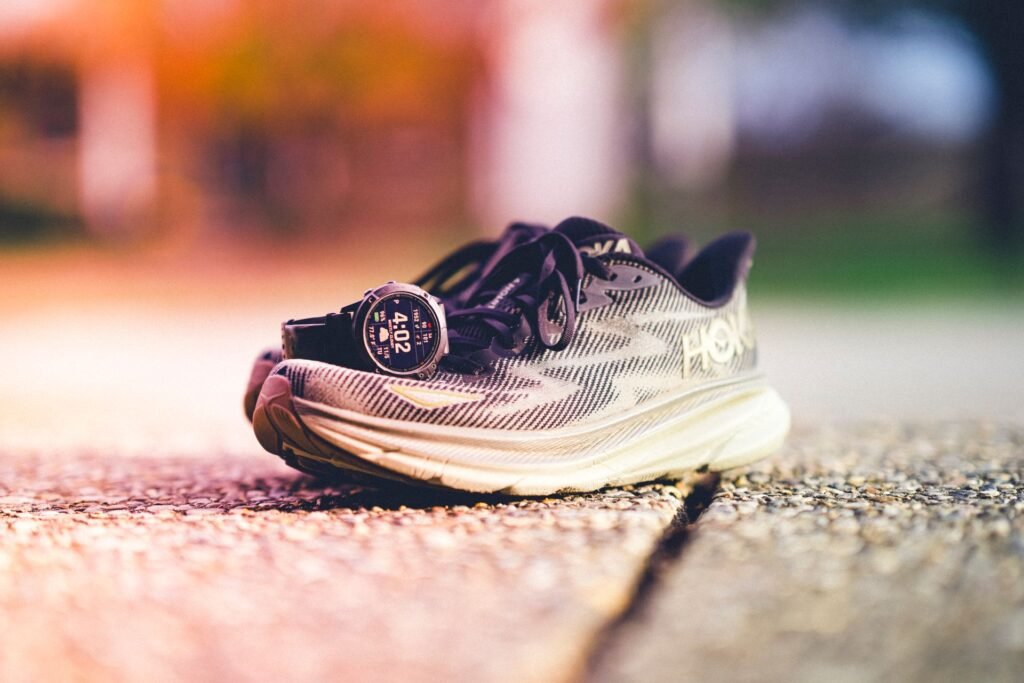
Every smartwatch brand now says “built-in GPS” on the box, and that makes the phrase almost meaningless. A $50 band and a $750 triathlon watch both have it. What changes is how well the watch holds your position between tall buildings, how many hours it lasts while recording, and whether it needs your phone nearby to be useful.
This guide explains what actually separates one GPS smartwatch from another, then walks through the models worth considering in 2026. Prices and battery figures come from manufacturer specs and published reviews, and they move with sales, so check the retailer before you buy.
Quick answer
Pick by phone and by how long you record. On iPhone, the Apple Watch is the easiest GPS smartwatch to live with, as long as a 10 hour workout limit is enough. For the best value, the Coros Pace 4 ($250 list) records up to 41 hours of GPS with dual-frequency tracking. Serious runners and triathletes should look at the Garmin Forerunner 970 (about $749), and Pixel Watch 4 is the pick for Android users who want a full smartwatch first and a sports watch second.
What a GPS Smartwatch Actually Does
GPS is a receiver, not a connection. The watch listens to satellites and works out where it is, with no phone and no mobile signal. That is why you can leave your phone at home, run a trail with zero coverage and still get a clean map afterward.
Cellular (LTE) is a different feature. It lets the watch make calls, send messages and stream music without a phone, and it usually needs a paid plan. A watch can have excellent GPS and no cellular at all, and most sports watches work exactly that way. If you only want accurate distance and routes, you do not need to pay extra for LTE.
Single-Band vs Dual-Band GPS
This is the spec that matters most, and the one most product pages bury. A basic receiver listens on one frequency called L1 (1.575 GHz). Dual-band receivers also use L5 (1.176 GHz), a newer signal that handles reflections better. In cities, signals bounce off glass and concrete before they reach your wrist, and a single-band watch can mistake the bounce for your real position. Dual-band hardware is better at ignoring it.
Be realistic about when you will notice. On an open road or a track, a single-band watch is usually fine. Dual-band earns its price in downtown races, forest trails and canyons. If you mostly run suburban loops, do not pay a premium just for the spec.
GPS Smartwatches Compared
| Watch | GPS type | Rated GPS battery | Works with | Best for |
|---|---|---|---|---|
| Coros Pace 4 | Dual-frequency | Up to 41 hours | iPhone and Android | Best value, long races |
| Garmin Forerunner 970 | Multi-band | 26 hours (21 in all-systems mode) | iPhone and Android | Triathletes, serious training |
| Garmin Forerunner 265 | Multi-GNSS | Up to 20 hours | iPhone and Android | Runners on a budget |
| Google Pixel Watch 4 | Dual-band | About 8 to 10 hours | Android | Android users who want apps |
| Apple Watch Series 12 | Standard GPS (Ultra models add dual-frequency) | Up to 10 hours | iPhone | iPhone owners, everyday use |
Sources: manufacturer specifications, The5KRunner, Android Central and Tom’s Guide testing. Rated figures assume ideal settings, so expect less with always-on display, maps and music.
Battery Life While Recording GPS
Rated battery life on the box is for casual use. What matters for a GPS watch is the number with tracking running, and the spread is huge. A Coros Pace 4 will record an ultramarathon, while most full-feature smartwatches are built for a morning run and a recharge.
If battery is your main worry, our roundup of smartwatches with the longest battery life covers the full range, including multi-week models that trade away some smart features.
Best GPS Smartwatch for Most People
Best value: Coros Pace 4
The Pace 4 lists at $250 and has been around $279 at retailers. It has dual-frequency GPS, up to 41 hours of continuous tracking and up to 19 days of everyday battery. In a half marathon test by Tom’s Guide against the Forerunner 265, the two matched on GPS accuracy, with Coros ahead on battery. The catch is the ecosystem: Garmin’s training tools, apps and accessory support are deeper.
Best for serious training: Garmin Forerunner 970
At about $749, the Forerunner 970 is the watch to buy if GPS accuracy feeds a real training plan. It offers multi-band GPS, 26 hours in GPS-only mode and a bright AMOLED screen. It is expensive, and reviewers note it adds relatively little over the 265 if you are not racing triathlons. The Forerunner 265 is the smarter buy for most runners, listed at $449 and often on sale below that.
Best for iPhone: Apple Watch
The Apple Watch Series 12 gives you up to 10 hours of workout battery and 24 hours of general use, and 15 minutes on the charger adds up to 12 hours. That is plenty for a run or a hike, but it is not an all-day expedition tool. If you regularly record more than ten hours, look at the Apple Watch Ultra line or a dedicated sports watch.
Best for Android: Pixel Watch 4 and Galaxy Watch 8
The Pixel Watch 4 has dual-band GPS and the cleanest Wear OS experience, with roughly 8 to 10 hours of continuous GPS. The Galaxy Watch 8 is rated for up to 40 hours of general use, or about 30 with the always-on display. Both are better at being a smartwatch than at being a sports watch, so choose them when notifications and apps matter as much as your route.
Which GPS Smartwatch Fits Your Activity?
For activity-specific picks, see our guides to the best smartwatches for running and the best smartwatches for hiking, both of which dig deeper into accuracy and mapping.
What to Check Before You Buy
Worth paying for
- ✓ Dual-band GPS if you run in cities
- ✓ 20+ hours of GPS for long events
- ✓ Offline maps for trails and travel
- ✓ A watch that works with your phone
Often not worth it
- ✕ LTE if you only want routes and distance
- ~ Dual-band for casual suburban walks
- ~ Flagship price for basic tracking
- ✕ Unbranded watches with unverified specs
How to Get a More Accurate GPS Track
- Wait for the lock. Stand still outside for 10 to 30 seconds before you press start, especially after travel or a software update.
- Turn on every satellite system. If your watch offers an all-systems or multi-band mode, it gains accuracy and costs battery. Use it for races and dense areas, not every walk.
- Update your watch. Manufacturers regularly tune GPS algorithms, and older firmware can add drift.
- Wear it snug on the outside of your wrist. A watch hidden under a thick sleeve loses signal.
Frequently Asked Questions
Does a GPS smartwatch need my phone?
No. The watch calculates its own position from satellites, so it can record a workout alone. You only need the phone to sync the data afterward, plus for notifications if you want them.
Is GPS the same as cellular?
No. GPS only reads your position. Cellular lets the watch call, text and stream without a phone, and it generally needs a monthly plan with your carrier.
Does dual-band GPS really matter?
It does in places where signals bounce, like downtown streets and forests. In open areas the difference is small, so it is not a must-have for everyone.
Which GPS smartwatch has the best battery life?
Among the models covered here, the Coros Pace 4 leads at up to 41 hours of continuous GPS, followed by the Garmin Forerunner 970 at 26 hours in GPS-only mode.
Are GPS smartwatches accurate enough for running?
Yes. Current mainstream watches track distance and pace well enough for training. Differences show up in tough environments, so the extra frequency band is mainly a benefit for city and trail runners.
Final Verdict
The Bottom Line
Decide how many hours you record and what phone you carry, then buy to that. The Coros Pace 4 is the best GPS smartwatch value, the Forerunner 970 is the best for serious training, and the Apple Watch and Pixel Watch 4 are the right calls if smart features matter as much as your route. Skip LTE unless you want to leave your phone behind entirely.
Featured image: Pexels.
About this article: GeekBlog covers U.S. technology news, AI, phones, smartwatches and gaming. Every story is written and checked under our Editorial Policy. Spotted a mistake or have a story tip? Contact our editors.
