

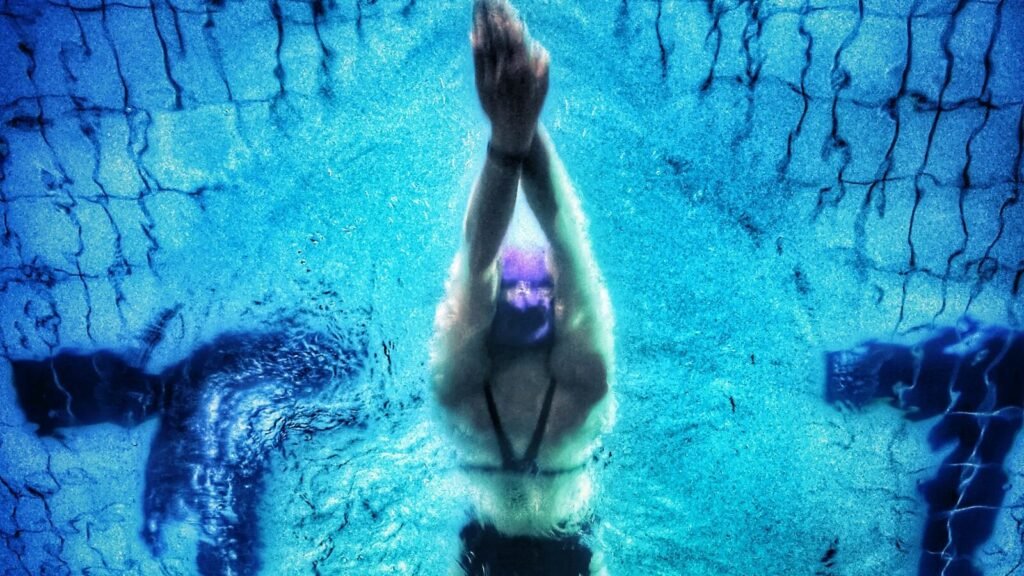
Most smartwatches are built around counting steps, buzzing for texts, and lasting through a workday. Swimming breaks almost all of that. Water muddles the touchscreen, drowns the heart rate sensor’s usual signal, and turns “how many miles did I walk” into a much harder question: how many lengths, at what pace, with what stroke, and how efficiently.
Picking the right watch for the pool or open water comes down to a short list of specs that actually matter, not the ones printed biggest on the box. This guide walks through what to look for, how the top picks for 2026 compare on paper and in the water, and which one fits your kind of swimming, whether that is three laps before work or an open water triathlon leg.
Short Answer
For most swimmers, the Apple Watch Ultra 4 is the best all-around pick, since it handles pool laps and open water with a genuine dive rating on top. Serious lap swimmers chasing SWOLF scores and clean stroke data should look at the Garmin Swim 2 instead, a dedicated swim computer that beats general smartwatches on accuracy. Triathletes want the Coros Pace 3 for its multisport range and battery life, budget swimmers are well served by the Fitbit Charge 6, and Android users who want a full smartwatch experience should look at the Samsung Galaxy Watch 8. Whatever you pick, confirm it carries at least a 5 ATM rating before trusting it in the water.
What Actually Matters for a Swim Watch
Marketing copy tends to bury the specs that decide whether a watch is actually useful in the water underneath ones that do not. Here is what to check before you buy.
- Water rating. Look for at least 5 ATM, ideally paired with an explicit swim claim from the maker. A bare IP68 rating with no ATM number is not a swimming guarantee.
- Automatic stroke recognition. Better watches identify freestyle, backstroke, breaststroke, and butterfly on their own and switch between them mid session, so you are not manually logging every set.
- SWOLF and pace data. This is the efficiency score serious swimmers actually train against, and it needs to be reasonably consistent from session to session to be worth trusting.
- Open water GPS. Pool swimming does not need GPS, since the watch counts wall touches, but open water swimming absolutely does, and accuracy drops fast without a strong signal or a dual frequency chip.
- Water lock and screen behavior. A good swim watch locks its touchscreen automatically so wet taps do not pause your set, then ejects water from the speaker afterward.
- Battery life in swim mode. GPS and continuous heart rate during open water swims drain a battery far faster than daily step tracking does.
Water Rating Is Not Optional Here
Unlike walking around with a watch in the rain, swimming puts sustained pressure and moving water directly against the seals, which is exactly what a bare splash resistant rating was never tested for. If you are not sure what the numbers on a spec sheet actually promise, our waterproof smartwatch guide breaks down the difference between ATM and IP ratings in detail. The short version for swimmers: 5 ATM is the floor, and anything without a clearly stated ATM number should stay out of the pool no matter what the box implies.
Best Smartwatches for Swimming in 2026
| Watch | Best For | Water Rating | Stroke Recognition | Price |
|---|---|---|---|---|
| Apple Watch Ultra 4 | Most swimmers, pool and open water | WR100, EN13319 dive rated | Good, all 4 strokes | About $799 |
| Garmin Swim 2 | Structured lap training | 5 ATM, 50 m | Excellent, all 4 strokes | About $249 |
| Coros Pace 3 | Triathletes and multisport | 5 ATM, 50 m | Good in pool, freestyle only open water | About $229 |
| Fitbit Charge 6 | Budget lap counting | 5 ATM, 50 m | Basic, no stroke type detail | About $160 |
| Samsung Galaxy Watch 8 | Android users, everyday smartwatch feel | IP68 plus 5 ATM, 50 m | Good, auto detected via Samsung Health | About $350 |
Best Overall: Apple Watch Ultra 4
Apple’s Ultra line has built its reputation on toughness rather than swim specific features, and that shows up in the water as a watch that handles both pool laps and open water without much fuss. It switches between pool and open water workouts automatically, tracks distance, pace, and SWOLF, and its dual frequency GPS holds a cleaner track in open water than most rivals manage near buildings, bridges, or overcast skies. The same rugged build that makes it a favorite for hikers and divers, which we cover in our best rugged smartwatches roundup, is what lets it shrug off pool chemicals and saltwater without a second thought. The tradeoff is stroke detail. Breaststroke and butterfly recognition is noticeably less consistent than on Garmin’s dedicated swim tools, so competitive swimmers chasing exact splits may still want a second opinion from a coach’s stopwatch.
Best for Structured Lap Training: Garmin Swim 2
This is the one watch on this list built for swimming and basically nothing else, and it shows in how well it handles the sport’s fine details. It auto detects pool length, counts laps, identifies all four competitive strokes, and calculates SWOLF and Critical Swim Speed, a proxy for anaerobic threshold that serious swimmers actually train against. Drill logging lets you track kick sets, one arm swimming, and sculling drills without fumbling for buttons mid lap. It will not buzz with texts or run apps, but for anyone following a real training plan, that focus is the entire point.
Best for Triathletes and Multisport: Coros Pace 3
Triathletes need a watch that treats swimming as one leg of a longer day, not the whole event, and the Pace 3 is built around exactly that tradeoff. It automatically detects all four strokes in the pool, though open water mode sticks to freestyle only, since breaststroke and backstroke keep the wrist underwater too long for reliable GPS. What sets it apart is battery life: where most swim capable smartwatches need a charge every couple of days, the Pace 3 stretches to roughly 17 days in smartwatch mode, which matters a lot on a multi day training camp or a race weekend with no outlet in sight.
Best Budget Pick: Fitbit Charge 6
Not every swimmer needs SWOLF scores or drill logging, and the Charge 6 is built for that larger group. Its 5 ATM rating covers real lap swimming safely, and it logs total distance, duration, and lap count without much fanfare. What it skips is stroke type detection, so the data stays fairly basic compared with Garmin or Coros. For someone doing a steady 20 to 30 minutes of freestyle a few times a week and mainly wanting proof it happened, that is rarely a dealbreaker, and it costs roughly a third of what the higher end picks on this list do.
Best for Android Users: Samsung Galaxy Watch 8
Samsung’s flagship pairs an IP68 rating with 5 ATM water resistance and Samsung Health’s automatic stroke recognition, giving Android owners a full featured smartwatch that also happens to handle laps well. The touchscreen locks automatically once it detects a swim workout starting, and the speaker runs a water ejection routine afterward, the same courtesy Apple and Garmin both build in. It will not out swim the Garmin Swim 2 on pure training data, but for someone who wants one watch that does notifications, payments, and sleep tracking alongside swim tracking, it is the strongest all rounder on the Android side.
Pool Swimming vs Open Water: What Actually Changes
A watch that nails the pool does not automatically nail open water, because the two modes ask it to solve different problems. In the pool, the watch already knows the exact length, so it just needs to count wall touches and flip turns using its accelerometer, no GPS required. Open water flips that around entirely: there is no wall to count against, so the watch leans on GPS to reconstruct your route and estimate distance, and that estimate gets noisy fast in choppy water, near a shoreline with tall terrain, or under cloud cover that weakens the signal.
That is also why stroke detection quietly gets worse in open water on several watches, including Coros models, which only track freestyle once you leave the pool. Backstroke, breaststroke, and butterfly all keep the wrist submerged for longer stretches, which starves the GPS chip of the satellite view it needs and drags accuracy down across the board. If open water swims are a regular part of your training, weigh GPS chip quality and dual frequency support as heavily as stroke recognition, since a beautiful pool feature set does not travel to the lake or the ocean automatically.
SWOLF and Stroke Recognition, Explained
SWOLF, short for “swim golf,” adds the number of strokes you take in one pool length to the number of seconds that length took, the same lower is better logic as a golf score. A swimmer who covers 25 meters in 20 seconds using 15 strokes gets a SWOLF of 35. Improving that number over weeks, whether through fewer strokes or a faster split, is a genuinely useful proxy for stroke efficiency, and it is one of the few swim metrics that stays consistent enough across sessions to actually train against.
Stroke recognition is the feature that makes SWOLF and lap counting trustworthy in the first place. Watches use the accelerometer and gyroscope to read the rotation and angular velocity of your wrist, then match that pattern against a library of known stroke signatures. The best devices, Garmin’s Swim 2 in particular, correctly separate freestyle, backstroke, breaststroke, and butterfly even mid session, and can tell a genuine turn apart from a rest stop at the wall so it does not accidentally start counting a break as a new lap. Cheaper trackers tend to blur that distinction, especially during drills or when your pace is inconsistent, which is usually where the data quality gap between a $160 fitness band and a dedicated swim watch becomes obvious.
Mistakes That Quietly Wreck Swim Tracking Data
- Not starting swim mode before getting in. Water lock behaves differently once a swim workout is active, and skipping this step is the single most common reason lap counts come out wrong.
- Swapping strokes constantly within one length. Watches expect a stroke to hold steady across a length. Mixing strokes mid lap for fun confuses the detection algorithm and throws off SWOLF.
- Pressing buttons underwater. Pressure on a crown or side button while submerged is more likely to force water past a seal than the swim itself is, on nearly every watch on this list.
- Skipping the post swim rinse. Chlorine and salt residue left in the seams accelerates seal wear over months, quietly shortening the life of a rating that looked fine on the spec sheet.
- Assuming the battery will last a training camp. Continuous GPS during open water swims drains a battery far faster than the smartwatch mode numbers on the box suggest. For anyone planning multi day trips away from a charger, it is worth checking our roundup of smartwatches with the longest battery life before assuming any of these picks will stretch as far as advertised under heavy GPS use.
Frequently Asked Questions
Do I need GPS for pool swimming?
No. Pool mode already knows the length of your pool, so the watch counts laps and turns using its accelerometer rather than satellites. GPS only becomes necessary once you leave the pool for open water, where there is no fixed distance to count against.
Can I wear a regular fitness tracker for swimming instead of a dedicated swim watch?
Only if it carries an explicit 5 ATM rating or a stated swim claim from the manufacturer. Plenty of budget fitness bands are rated IP68 alone, which covers rain and sweat but was never tested against the sustained pressure of a swim stroke.
Why does my watch undercount my laps sometimes?
The most common cause is starting the workout after you are already in the water, or pausing mid set without ending the session properly. Inconsistent pacing and mixing strokes within a single length can also confuse the stroke detection algorithm enough to miscount.
Is stroke recognition accurate for all four competitive strokes?
It varies by watch. Garmin’s dedicated swim devices handle all four strokes reliably, including breaststroke and butterfly, while several general purpose smartwatches, including some open water modes on Coros devices, only reliably track freestyle outside the pool.
Bottom Line
Swimming asks more of a smartwatch than almost any other activity, from sealing out water under real pressure to reconstructing a route with no GPS signal for half the workout. The Apple Watch Ultra 4 covers the widest range of swimmers well, the Garmin Swim 2 still wins on pure training data for anyone serious about technique, and the Coros Pace 3, Fitbit Charge 6, and Samsung Galaxy Watch 8 each solve for a specific priority, whether that is battery life, price, or a full smartwatch experience alongside the swim tracking. Whichever one you pick, the water rating on the spec sheet matters more than any single feature, so confirm it is rated for real swimming before your first lap, not after.
Sources and further reading
- Garmin: Swim 2 swimming watch product page
- Garmin: Swim 2 manual, swimming in open water
- Apple Support: Apple Watch Ultra 3 tech specs
About this article: GeekBlog covers U.S. technology news, AI, phones, smartwatches and gaming. Every story is written and checked under our Editorial Policy. Spotted a mistake or have a story tip? Contact our editors.
