

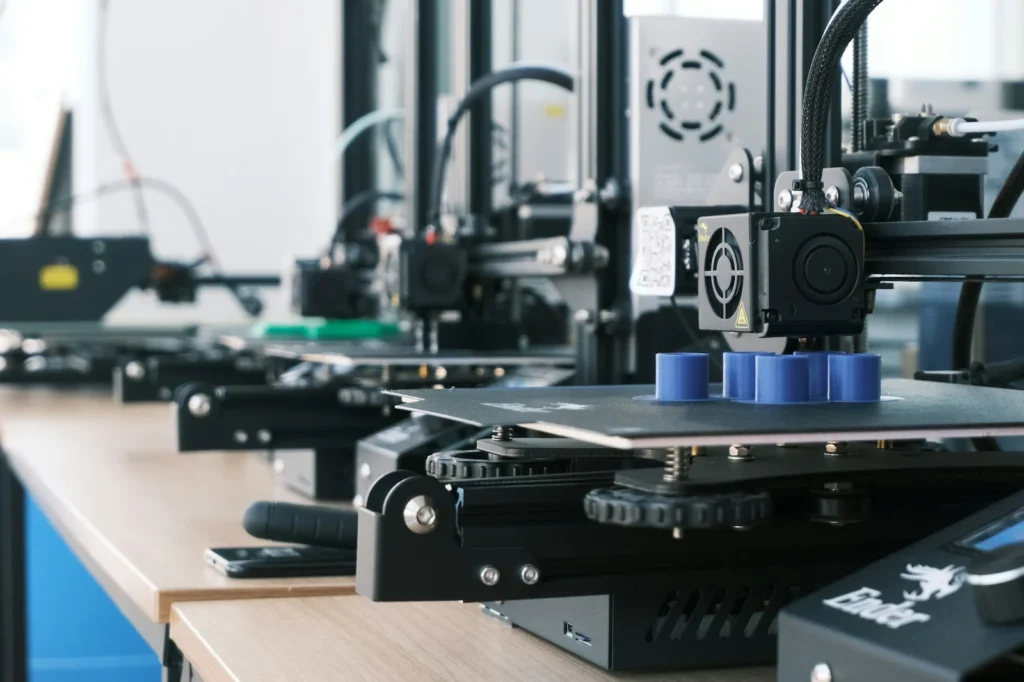
The best 3D printer for most people in 2026 is a fast, mostly automatic FDM machine from Bambu Lab, Prusa, Elegoo, Anycubic or Creality, and the right one depends on how big you print, whether you want multiple colors and where the printer will live. Resin printers are still the choice for tiny, highly detailed miniatures. This guide sorts the current models by the kind of maker you are, explains FDM versus resin, and covers the ventilation and safety basics nobody should skip.
FDM or resin: pick the technology first
FDM printers melt plastic filament and lay it down layer by layer. They are cleaner to live with, handle large and functional parts well, and the materials (PLA, PETG, TPU, ABS, ASA and more) are cheap and easy to store. Layer lines are visible up close, so tiny faces and fine textures look softer.
Resin printers cure liquid photopolymer with light from an LCD screen. They capture remarkable detail, which is why tabletop gamers, model makers and dental labs love them. The tradeoff is mess and chemistry: every print needs washing and curing, uncured resin is a skin irritant, and the build area is smaller.
If you are unsure, start with FDM. It covers about every household project, from replacement knobs to cosplay props, and today’s machines level their own beds and tune themselves.
The current models worth a look
| Printer | Type | Best for |
|---|---|---|
| Bambu Lab A1 mini | Open FDM, small | First printer, small desk, kids projects with supervision |
| Bambu Lab A1 and A2L | Open FDM, mid and large | PLA and PETG hobbyists who want room to grow and multicolor options |
| Bambu Lab P2S | Enclosed CoreXY FDM | The all rounder for most homes and small businesses |
| Prusa CORE One+ and CORE One L+ | Enclosed CoreXY FDM | Tinkerers who value open source firmware and easy repairs |
| Elegoo Centauri Carbon 2 | Enclosed CoreXY FDM | Value buyers who want an enclosure and four color printing |
| Anycubic Kobra S1 | Enclosed CoreXY FDM | Budget multicolor with the ACE Pro unit |
| Creality K2 Plus | Large enclosed FDM | Big parts and up to 16 colors with extra CFS units |
| Bambu Lab H2D, H2S, H2C | Large enclosed FDM | Prosumers, print farms and engineering materials |
| Elegoo Saturn 4 Ultra 16K | Resin | Miniatures and display models |
| Anycubic Photon Mono M7 Pro | Resin | Detail work with a heated resin vat |
A closer look by type of buyer
Beginners and small spaces
The Bambu Lab A1 mini has a roughly 180 mm cube build area and an open bed slinger design, which keeps it small and approachable. The A1 steps up to a 256 mm cube. Both can add the AMS lite for multicolor prints. In June 2026 Bambu Lab added the A2L, an open frame model with a much larger 330 x 320 x 325 mm volume that launched at $469, or $569 with an AMS lite.
Enclosed all rounders
An enclosure keeps heat steady, which helps with ABS and ASA, reduces drafts and keeps curious pets and kids away from hot parts. The Bambu Lab P2S, released in October 2025, is an enclosed CoreXY printer with a 256 mm cube volume and optional AMS 2 Pro for up to four colors per unit. Prusa now sells the CORE One+ (Gen 2) and the larger CORE One L+, and offers its INDX tool changer for multimaterial work. Elegoo’s Centauri Carbon 2 Combo adds an enclosed chamber and four color printing through its CANVAS system, while Anycubic’s Kobra S1 is a 250 mm cube CoreXY machine that pairs with one or two ACE Pro units for up to eight colors.
Large format and multicolor power users
Creality’s K2 Plus Combo offers a 350 x 320 x 325 mm volume, an actively heated chamber and four colors out of the box, expandable to 16 with more CFS units. Bambu Lab’s H series covers the high end: the H2D has dual nozzles, the H2S is a large single nozzle model, and the H2C uses a hot end swapping system to cut waste on color changes.
Resin for detail
The Anycubic Photon Mono M7 Pro uses a 14K screen, a 223 x 126 x 230 mm build area and a temperature controlled vat that keeps resin flowing consistently. Elegoo’s Saturn 4 Ultra 16K pushes screen resolution further for crisp miniatures. If you need professional dental or engineering accuracy, Formlabs’ Form 4 is aimed at businesses rather than hobbyists.
What to check before you buy
- Build volume: measure the largest thing you expect to print. Most people are happy with about 256 mm in each direction.
- Enclosure: worth it for ABS, ASA, nylon and households with pets or children.
- Multicolor: nice for toys and signs, but every color swap wastes filament. Start with a single color unless color is the point.
- Software and cloud: check whether the printer works over your local network if you prefer not to rely on a company cloud.
- Parts and support: nozzles, build plates and belts wear out. Pick a brand with easy replacement parts in the US.
FAQ
What is the easiest 3D printer for a beginner?
A self calibrating FDM printer such as the Bambu Lab A1 mini or A1 is the gentlest start. They handle bed leveling and many tuning steps automatically.
Is resin printing safe at home?
It can be with gloves, eye protection, good ventilation and careful cleanup. It is not a good fit for a shared living space without airflow.
Do I need an enclosed printer?
Not for PLA and PETG. An enclosure matters for heat sensitive materials like ABS and ASA, and for keeping hands and paws away from moving parts.
Can these printers print in multiple colors?
Many can with an add on: Bambu Lab AMS, Creality CFS, Anycubic ACE Pro or Elegoo CANVAS. Expect slower prints and some filament waste.
The verdict
For most buyers in 2026 an enclosed CoreXY machine like the Bambu Lab P2S, Prusa CORE One+, Elegoo Centauri Carbon 2 or Anycubic Kobra S1 hits the sweet spot. Start smaller with an A1 mini if you are just curious, go big with an A2L, K2 Plus or H series model for large builds, and choose resin only if fine detail is your main goal.
Updated October 2026: rewritten as a current buying guide covering the latest FDM and resin models, how to choose between them and essential safety tips.
Featured photo: Minku Kang on Unsplash.
About this article: GeekBlog covers U.S. technology news, AI, phones, smartwatches and gaming. Every story is written and checked under our Editorial Policy. Spotted a mistake or have a story tip? Contact our editors.
