

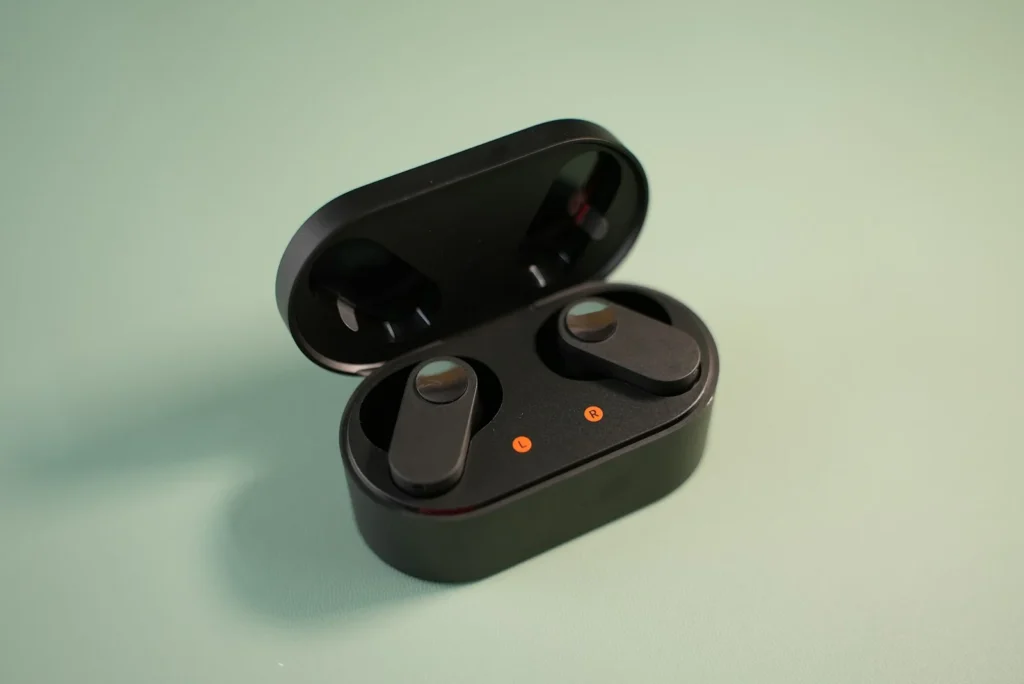
The best wireless earbuds for you depend less on brand loyalty than on the phone in your pocket. Apple, Samsung and Google all reserve their slickest features for their own phones, while Sony and Bose make earbuds that work equally well with anything. This guide lists the current models worth considering in October 2026, with US list prices and the features that actually separate them.
The best wireless earbuds at a glance
| Model | US list price | Best for |
|---|---|---|
| AirPods Pro 3 | $249 | Most iPhone owners |
| AirPods 5 | $129 or $149 | iPhone owners who dislike ear tips |
| Sony WF1000XM6 | $329.99 | Android, high quality Bluetooth audio |
| Bose QuietComfort Ultra Earbuds (2nd Gen) | $299 | Frequent flyers and commuters |
| Samsung Galaxy Buds 4 Pro | $249 | Galaxy phone owners |
| Google Pixel Buds Pro 2 | $229 | Pixel phone owners |
| Beats Powerbeats Pro 2 | $249.99 | Workouts and running |
Best for iPhone: AirPods Pro 3 and AirPods 5
AirPods Pro 3 remain the default choice for iPhone users. Apple rates their noise cancellation at up to twice that of AirPods Pro 2, and they add heart rate tracking during workouts in the Fitness app, an IP57 rating for dust, sweat and water, and up to 8 hours of listening with noise cancelling on. They also support Apple’s hearing health features, including a hearing test, hearing aid mode and hearing protection, plus Live Translation through Apple Intelligence.
AirPods 5 arrived in September 2026 and replace AirPods 4. They keep the open fit with no silicone tips, which many people find more comfortable, and Apple says they remove up to 50 percent more outside noise than AirPods 4 with noise cancellation. The $129 version uses a USB C case, while the $149 version adds a wireless charging case, swipe volume control and up to 5 hours of listening with noise cancelling on. Both gained better dust, sweat and water resistance.
Best for any phone: Sony and Bose
The Sony WF1000XM6 launched in February 2026 at $329.99. Sony claims 25 percent better noise reduction than the previous model, and the buds deliver up to 8 hours with noise cancelling on, or 24 hours in total with the case. They support LDAC for higher bitrate audio on compatible Android phones, multipoint pairing with two devices and an IPX4 rating. If you use Android and care about sound quality over Bluetooth, these are the ones to shortlist.
The Bose QuietComfort Ultra Earbuds (2nd Gen) cost $299 and focus on blocking the world out. CustomTune adjusts sound and noise cancellation to the shape of your ears, Immersive Audio adds a spatial effect, and the wireless charging case holds three extra charges. Battery life is the trade off: up to 6 hours per charge, or about 4 hours with Immersive Audio on. Multipoint pairing and nine ear tip and stability band combinations help with fit across phones and laptops.
Best for Samsung, Pixel and workouts
- Samsung Galaxy Buds 4 Pro ($249): announced alongside the Galaxy S26 in February 2026 at the same price as the model they replace. Samsung highlights stronger noise cancellation, upgraded speakers with a larger woofer and clearer calls. Setup and controls are built into Galaxy phones, so they make the most sense if you already use one. The standard Galaxy Buds 4 cost $179.
- Google Pixel Buds Pro 2 ($229): the natural pick for Pixel phones, with Gemini voice access and tight integration with Android settings. Google often discounts them, and they were listed at $189 on the Google Store in early October 2026.
- Beats Powerbeats Pro 2 ($249.99): flexible ear hooks keep them in place during runs and lifting, and built in heart rate sensors feed data to Apple Fitness on iPhone and to the Beats app on Android. They promise up to 10 hours per charge and 45 hours with the case, with an IPX4 rating on the buds.
How to choose the right earbuds
- Match your phone. Features like automatic device switching, spatial audio tracking and one tap setup work best inside one ecosystem.
- Decide how much quiet you need. Flagship noise cancelling buds from Apple, Sony and Bose are worth the money for flights and loud commutes. For the office or home, cheaper models are often enough.
- Check battery per charge. Case totals look big, but per charge runtime decides whether a pair lasts a long flight.
- Look at water resistance if you train. IPX4 handles sweat and rain. Higher ratings give more margin.
- Wait for a sale if you can. Most of these models are discounted regularly at major retailers.
FAQ
Which earbuds have the best noise cancellation?
The flagship models from Apple, Sony and Bose are the ones to compare: AirPods Pro 3, Sony WF1000XM6 and Bose QuietComfort Ultra Earbuds (2nd Gen). Apple calls its version the best in ear noise cancellation in the world, Bose calls its model the best it has made, and Sony claims a 25 percent gain over its previous generation.
Do AirPods work with Android?
Yes, as standard Bluetooth earbuds, but you lose iPhone features such as automatic switching, easy setup and most of the health and translation tools.
Are AirPods 5 worth it over AirPods Pro 3?
Choose AirPods 5 if you dislike in ear tips and want to save money. Choose AirPods Pro 3 for stronger noise cancellation, heart rate tracking and the hearing health features.
What are the best earbuds for Samsung phones?
Galaxy Buds 4 Pro give Galaxy owners the most features, though Sony and Bose models work well with any Android phone.
The verdict
Buy the earbuds made for your phone unless you have a reason not to: AirPods Pro 3 for iPhone, Galaxy Buds 4 Pro for Samsung and Pixel Buds Pro 2 for Pixel. If you switch between platforms or want the strongest noise cancelling regardless of phone, the Sony WF1000XM6 and Bose QuietComfort Ultra Earbuds (2nd Gen) are the safest premium choices.
Updated October 2026: rewritten with the current lineup, including AirPods 5, Sony WF1000XM6 and Galaxy Buds 4 Pro, and verified US list prices.
Featured photo: Yasin Hasan on Unsplash.
About this article: GeekBlog covers U.S. technology news, AI, phones, smartwatches and gaming. Every story is written and checked under our Editorial Policy. Spotted a mistake or have a story tip? Contact our editors.
