

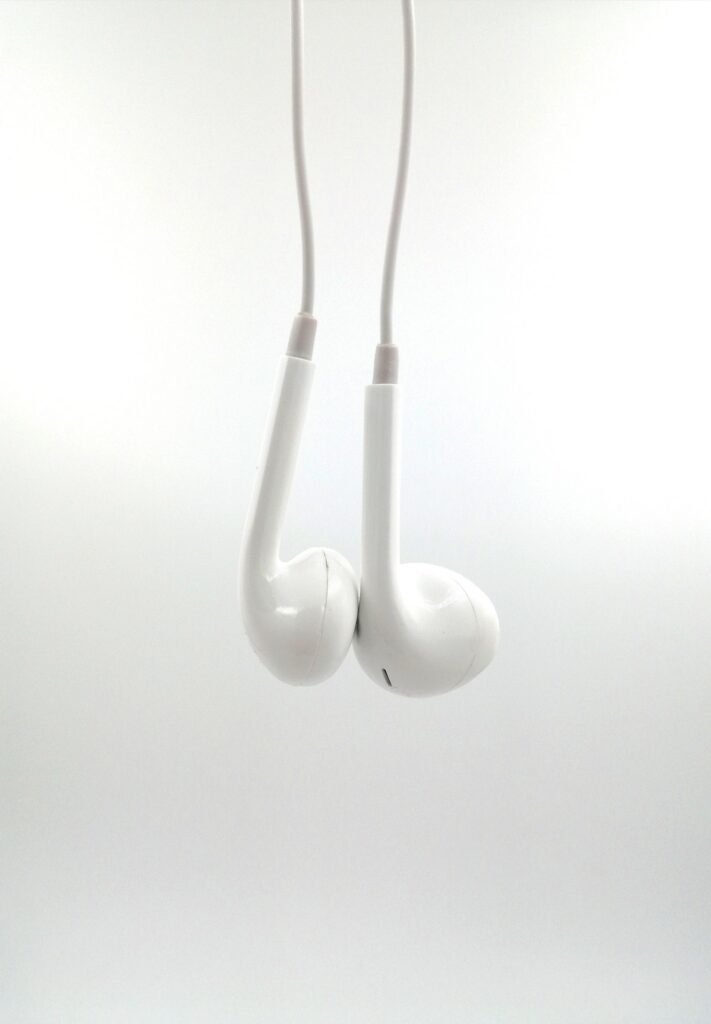
Bose has just done something the audio industry spent a decade insisting nobody wanted. It has released a pair of wired earbuds, in 2026, at $99, and then put active noise cancellation inside them.
The specification that makes it interesting is not the price or the cable. It is the absence of a battery. There is no cell in these earbuds at all. Everything, including the noise cancellation, runs on power drawn from the USB-C port of whatever you plug into.
That one decision changes the ownership experience of a pair of earbuds more than any feature Bose has shipped in years.
The short version
- Bose Noise Cancelling Wired Earbuds, $99 in the US and €99.95 in Europe
- USB-C, no battery. Power comes from the host device, which also means no charging case and no capacity to degrade
- Three modes: Quiet (ANC on), Aware (transparency) and ANC off
- Four microphones, two per earbud, feeding Bose QuietControl noise cancellation
- Uses USB Audio Class 2. It accepts any sample and bit rate from the source, with output fixed at 24-bit/48kHz
- 4.2 foot cable, inline remote and mic, IPX4, silicone tips in three sizes, stability wings in two, carry case included
- Preorders are open now. Shipping starts October 15. Black, White Smoke, and a limited edition Dewdrop Mint
What is actually in the cable
A pair of USB-C earbuds is not an analog product with a different plug on the end. A USB-C port carries digital data, not an audio waveform, so something in the chain has to convert that data into sound. In a wired USB-C earbud, that something lives in the cable and the earbuds themselves.
So these contain a digital to analog converter, an amplifier, Bose’s SoundDesign digital signal processing, four microphones, and the ANC processing that reads those microphones and generates the cancelling signal. That is a genuine little computer, and it is all running off the roughly bus powered budget that a phone will hand out over USB-C.
The clever part is what it lets Bose skip. In a normal pair of ANC earbuds, the battery dominates everything. It sets the size of the housing, it requires a charging case, it forces power management compromises on the ANC, and it is the component that dies first and takes the product with it. Remove it and you get a smaller earbud, no case to lose, no charge anxiety, and ANC that runs at full strength for as long as you are listening.
The lossless claim, translated
Bose says these support lossless listening, and the specification behind that phrase is worth understanding because it is more modest than it sounds.
The earbuds use USB Audio Class 2, a standard protocol, which means they will accept whatever sample rate and bit depth the source sends. There is no Bluetooth codec in the path, so nothing is being lossily compressed on the way over. That is the real claim, and it is a legitimate one.
What they then do with it is output at a fixed 24-bit/48kHz. So a 24-bit/192kHz file is not being played back at 192kHz. It is being resampled down to 48kHz before it reaches your ears.
Is that a problem? Realistically, for almost everybody, no. 24-bit/48kHz is a well above transparent target for headphone listening, and the audible difference between that and higher rates is somewhere between vanishingly small and non-existent for most listeners and most material. It is worth knowing about only so that nobody buys these expecting bit perfect playback of a hi-res library. The meaningful upgrade here is the removal of Bluetooth compression, not the sample rate.
How the $99 compares
| Bose Noise Cancelling Wired Earbuds | Apple EarPods (USB-C) | Typical $99 wireless ANC buds | |
|---|---|---|---|
| Price | $99 | About $19 | $79 to $129 |
| Active noise cancellation | Yes, four mics, plus a transparency mode | No | Usually yes, quality varies widely |
| Battery | None. Nothing to charge or replace | None | In buds and case, degrades over time |
| Fit in ear | Sealed silicone tips, S/M/L, stability wings | Unsealed hard shell, one size | Sealed tips, usually S/M/L |
| Uses your USB-C port | Yes, so no charging while listening | Yes | No |
| Drains phone battery | Yes, powers the DSP and ANC | Slightly | Only the Bluetooth radio |
| Water resistance | IPX4 | None rated | Commonly IPX4 to IPX5 |
Bose is charging a five times premium over Apple’s EarPods, and the thing you are paying for is legible: a sealed fit, four microphones and working noise cancellation. Nobody has been selling that combination in a wired form factor at this price, which is why the launch is getting attention.
The trade-offs, stated plainly
The pitch writes itself, so here is the other column.
- Your port is occupied. No charging while you listen, unless you carry a dongle or a hub. On a long flight this is a real annoyance
- It draws from your phone battery. Running a DAC, DSP and ANC off bus power is not free. Expect a measurable hit on long listening sessions
- There is a cable. Cable noise, snagging, and the wire against your jacket collar are all back. Bose has not abolished physics
- No app-free device switching. Plugging and unplugging is the only pairing mechanism, which is either a feature or a chore depending on your day
- Lightning iPhones are out. This needs a USB-C port, so older iPhones and any USB-A laptop need an adapter
- A cable is a failure point. Wireless buds die from battery wear. Wired buds die from cable flex, usually right where the strain relief ends
Worth checking before you preorder. Some Android phones and some laptops are stingy with how much current they will deliver over USB-C, and a few older machines are inconsistent about USB Audio Class 2 devices entirely. If you plan to use these primarily with a specific laptop or an older Android handset, that compatibility is the thing to confirm, not the sound quality.
Who these are actually for
There is a clear buyer here and it is not the person who already owns a good pair of wireless earbuds.
If you want over-ear isolation and a battery you charge once a week instead, that is a different product category and a different budget. Bose’s own QuietComfort Ultra second generation headphones remain the company’s serious noise cancelling option, and the gap in cancellation performance between a $99 wired earbud and a flagship over-ear is not going to be small.
Why wired is coming back
This launch is not a nostalgia play, whatever the marketing says about throwback vibes. Three things changed at once.
USB-C won. Since the EU forced the connector and Apple complied, essentially every phone, tablet and laptop worth selling has the same port, which means a wired accessory can finally be designed once and sold everywhere. That was not true in the headphone jack era, and it was certainly not true during Lightning.
Charging fatigue is real. Most people now carry a phone, a watch and earbuds, all with their own batteries and their own cables. A product that removes one of those charging obligations is solving a problem people genuinely feel every night.
And there is a quieter reason. Battery powered earbuds have a hard lifespan. When the cells go, the product is finished, because almost none of them are serviceable. A battery-free earbud has no such clock on it, which makes $99 a different kind of purchase from $99 spent on something that will be noticeably worse in three years.
The same logic is showing up across audio pricing right now, where the interesting products are the ones stripping out a flagship feature set to hit a price rather than adding to it. That is essentially the argument behind the Beats 360 matching the AirPods Max on most things for $200 less.
Buying advice
- Do not preorder for the sound alone. No independent measurements exist yet. Bose’s ANC record is strong, but a bus powered implementation in a new form factor is worth waiting a couple of weeks to see reviewed
- Preorder if the convenience is the point. If your actual complaint about earbuds is charging them, this product solves your complaint and there is no reason to wait
- Check your port situation first. USB-C on the phone, the laptop and the tablet you use most, or budget for adapters
- Skip if you already own good wireless buds. This is not an upgrade, it is a different set of compromises
- The limited Dewdrop Mint will go. If the color matters to you, that is the only reason to order on day one
If you are weighing this against the obvious alternative in the same rough price bracket, our breakdown of which AirPods model actually makes sense in 2026 covers where Apple’s line sits now.
The bottom line
A $99 wired earbud with four microphones, real noise cancellation, three listening modes and nothing to charge is a genuinely novel product, and Bose is the right company to have made it. The engineering interest is in how much processing it turns out you can run on bus power alone.
What it is not is a wireless replacement. You are trading freedom of movement and a free USB-C port for never thinking about a battery again. For a commuter who has spent three years resenting a charging case, that is an easy trade. For everybody else, it is worth being honest about which of those two annoyances bothers you more.
Sources and further reading
- Bose newsroom: Bose unveils new Noise Cancelling Wired Earbuds
- Bose product page: Noise Cancelling Wired Earbuds, full specifications
- UNILAD Tech: Bose just made their elite noise-cancellation available for $99
- Engadget: Bose’s throwback to wired earbuds adds much-needed ANC
- SoundGuys: Bose’s new $99 earbuds make a surprisingly good case for going wired
