

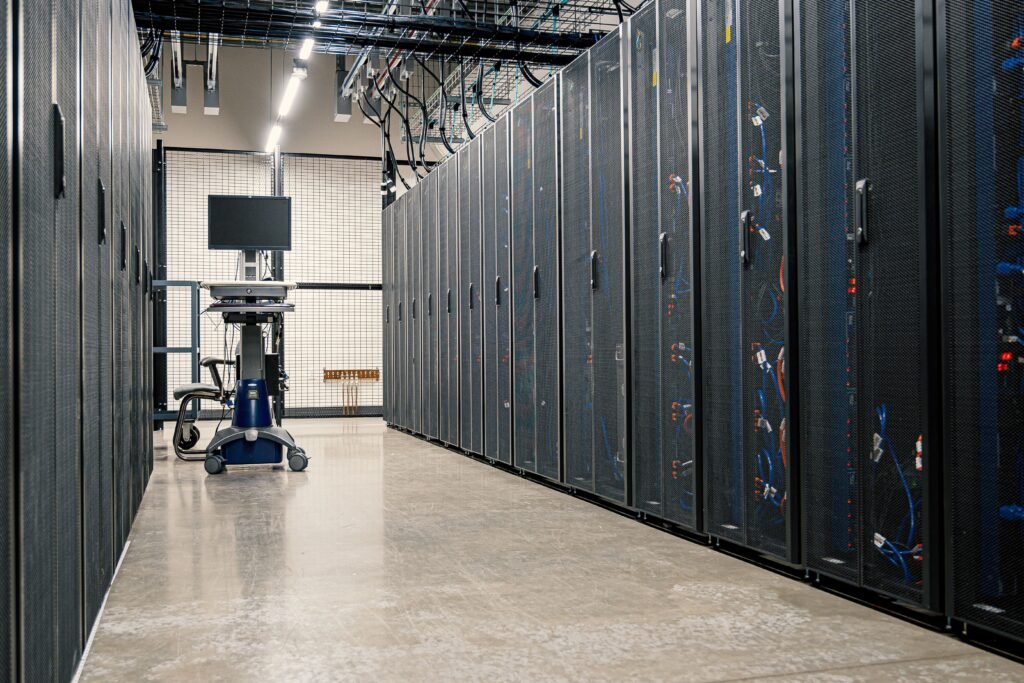
Somewhere in Ohio, Indiana, or rural Texas right now, a construction crew is pouring concrete for a building that will never house a single employee. It will hold racks of servers instead, thousands of them, all wired together to train and run artificial intelligence models. Projects like this one are going up faster than at any point in computing history, and that speed is the real reason memory chips have become so hard to find.
Most of the coverage of the memory shortage has focused on what shoppers see: pricier laptops, shrinking RAM configurations, and phones that cost more than they did last year. That is real, and it matters. But it is a symptom. The underlying cause is a construction boom, one measured in gigawatts and capital expenditure rather than square footage, and it explains why this shortage looks nothing like the ones that came before it.
A Building Boom Measured in Gigawatts
Data centers are expected to absorb roughly 70 percent of all memory chips produced worldwide in 2026. As recently as 2022, that share sat somewhere between 20 and 30 percent. That shift did not happen because phone and laptop demand fell. It happened because Microsoft, Google, Amazon, and Meta collectively plan to spend hundreds of billions of dollars this year alone on new data center campuses, and every one of those campuses needs memory chips before it can process a single AI query.
Unlike a normal office building, an AI data center is essentially a memory-hungry machine wrapped in concrete and cooling systems. A single AI server can burn through 10 to 20 times more memory than the kind of server that used to run a company’s email or website. Multiply that by the thousands of racks going into each new campus, and it becomes clear why hyperscalers are willing to outbid everyone else, including the companies that make your phone, for whatever memory comes off the production line.
Why Chipmakers Would Rather Build for Data Centers Than for You
The chips going into these data centers are not ordinary DRAM. They are high bandwidth memory, or HBM, a stacked design that sits directly next to AI processors and moves data at speeds regular memory cannot match. Roughly a quarter of all DRAM wafer capacity worldwide is now dedicated to HBM production, and that share is growing by about 70 percent a year.
That reallocation comes at a real cost. Micron has said that every wafer it shifts toward HBM effectively gives up the output of about three wafers of standard DDR5 memory it could otherwise have produced. Chipmakers accept that tradeoff because HBM sells at a steep premium, and a data center customer buying under a multiyear contract is a far more attractive customer than a laptop maker haggling over commodity pricing. Micron’s HBM and cloud memory business grew from 17 percent of its DRAM revenue in 2023 to nearly half by 2025, which tells you exactly where the industry’s attention has gone.
The Price Spiral Keeps Outrunning Forecasts
Analysts have repeatedly underestimated how far this would go. Contract DRAM prices rose somewhere between 90 and 95 percent in the first quarter of 2026, blowing past earlier forecasts of a 55 to 60 percent increase. The second quarter brought another 58 to 63 percent jump. Samsung, which along with SK Hynix and Micron controls more than 95 percent of global DRAM production, is reportedly pushing for a further 20 percent increase in the third quarter, and some LPDDR pricing hikes could run even higher. SK Hynix has reportedly gone as far as scrapping price caps in some of its long-term supply contracts entirely, a sign that even the chipmakers are struggling to predict where this market goes next.
New Fabs Are Coming, Just Not Soon Enough
The obvious fix, building more factories, is already underway. Micron is constructing an HBM fab in Singapore that is expected to reach production in 2027, and separately retooling a fab it purchased from PSMC in Taiwan that should come online in the second half of that year. SK Hynix is building HBM and packaging facilities in West Lafayette, Indiana, targeted for production by the end of 2028, along with an HBM fab in Cheongju, South Korea, expected to finish in 2027.
Even those timelines are optimistic by the industry’s own standards. It typically takes a minimum of two years from the decision to expand capacity until that capacity actually ships product, and semiconductor fabs are some of the most expensive and technically demanding facilities on the planet to build. A good portion of that new supply, once it does arrive, has reportedly already been pre-sold to AI customers under long-term contracts, meaning it may never reach the open market at all.
The Fallout Keeps Spreading
The squeeze has not stayed contained to server farms. Lenovo has already warned that the pressure on its pricing is not easing anytime soon, and it is far from alone. What started as a RAM problem has since spilled over into GPUs, high-capacity SSDs, and even conventional hard drives, as manufacturers scramble to secure whatever storage and memory components they can. We broke down the full scope of that price shock, from Apple’s hardware lineup to Xbox pricing, in our earlier look at how AI is eating the world’s memory chips, but the pattern keeps repeating itself: any product with memory or storage inside it is now vulnerable to a price hike with little warning.
How Long Does This Actually Last
The industry’s own guidance is not encouraging. Most forecasts point to 2027 or 2028 before new capacity finally starts outpacing demand growth, and few analysts expect prices to fall all the way back to where they sat before the AI boom began. Leadership at SK Group has gone further, suggesting publicly that shortages could stretch toward 2030 if AI demand keeps outrunning the industry’s ability to invest in new capacity, and lead times on advanced packaging equipment remain as long as they are today.
That is the uncomfortable truth sitting underneath every headline about a pricier laptop or a smaller default storage tier. This is not a factory fire or a shipping delay that will resolve itself in a quarter or two. It is a structural bet that the world’s biggest tech companies are making on artificial intelligence, funded in part by memory that used to go into the devices sitting in your pocket and on your desk. The data centers are getting built either way. The only real question left is how much of the bill everyone else ends up paying while they wait.
About this article: GeekBlog covers U.S. technology news, AI, phones, smartwatches and gaming. Every story is written and checked under our Editorial Policy. Spotted a mistake or have a story tip? Contact our editors.
