

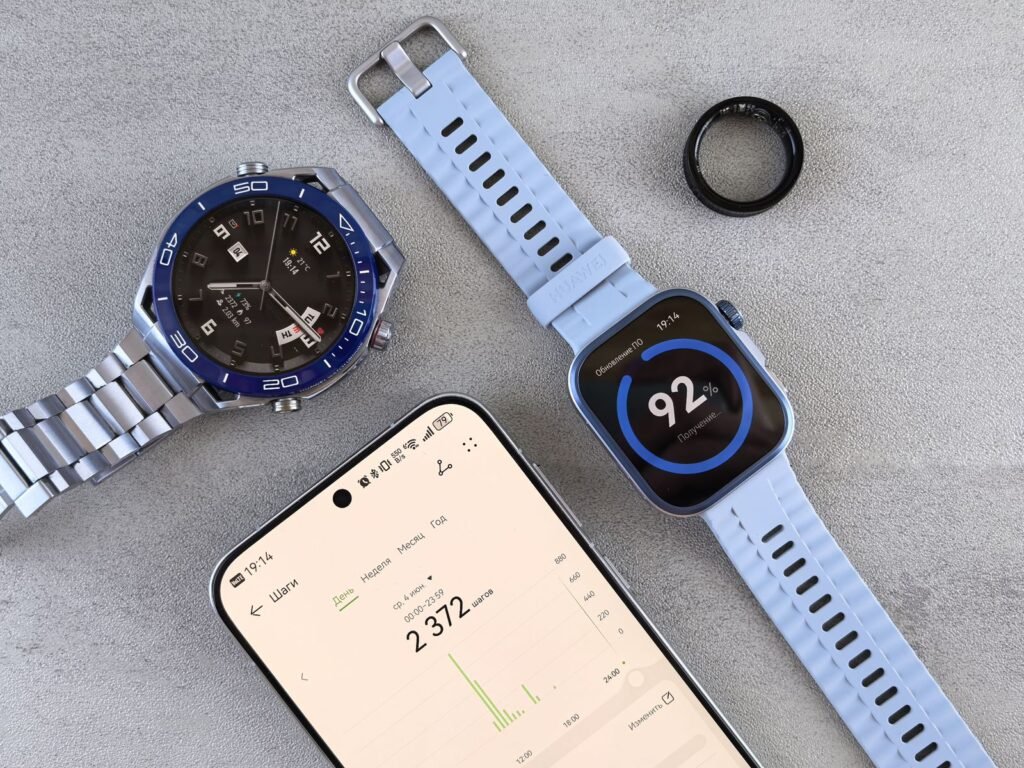
Apple has spent almost a decade telling everyone that the future of wearables is a small rectangle strapped to your wrist. According to a new report, the people who design that rectangle are no longer convinced.
What the Report Actually Says
The core claim is narrower than the headlines suggest, and that matters. Gurman is not saying Apple has built a screenless wearable. He is saying Apple’s design team has been exploring one, alongside several other directions, as part of a wider review of what the Apple Watch should even be.
He described it as a potential revolutionary design change, and pointed to the reason plainly enough: screenless fitness bands and smart rings are cheaper, lighter, and for a lot of people simply more pleasant to live with. That is not a technical argument. It is a comfort argument, and comfort is the thing wearables win or lose on.
Worth separating the two categories of claim here, because they have very different odds of ever reaching a store shelf.
| Concept | Status | Realistic timing |
|---|---|---|
| Screenless wearable | Exploratory. Reported as a design study, not a product | Years out, if ever |
| Round Apple Watch | Exploratory. Repeatedly rumored, never shipped | Years out |
| Wider price ladder, budget and ultra premium | Under consideration | Plausible sooner than a new shape |
| Series 12 and Ultra 4 | Expected September launch, rectangular, iterative | This fall |
So the honest summary is that Apple is thinking, not building. That is still news, because Apple thinking about abandoning the screen on its second most important hardware product tells you something real about where the market has moved.
Why Apple Would Even Consider This
The Apple Watch is not in trouble. It is still the best selling smartwatch on the planet by a wide margin. What has changed is the slope of the line.
Apple held roughly 35.9% of the smartwatch market in the first quarter of 2021. By the first quarter of 2026, that figure was closer to 23%. Sales recovered somewhat this year after two rough ones, but nobody at Apple is looking at those numbers and calling it momentum.
Meanwhile, the category Apple does not compete in at all is doing this:
| Metric | Where it stands |
|---|---|
| Smart ring shipment growth | Projected to jump around 49%, against roughly 6% for smartwatches |
| Oura’s share of smart rings | Over 76% in 2025, according to market trackers |
| Oura revenue | Around $1 billion in 2025, with the CEO telling CNBC the company expects close to $2 billion in 2026 |
| Category size | Analyst estimates put smart rings near $1 billion in 2026, growing at roughly 25% a year |
A billion dollar category growing at that rate is not a rounding error to Apple, but it is not the real threat either. The real threat is behavioral. Every person who decides that a ring or a band is enough for sleep and recovery tracking is a person who did not buy a $399 watch, and who is a little further outside the ecosystem than they were last year. If you want a sense of how close that fight already is, we put an Apple Watch head to head with a ring you barely notice wearing, and the answer depends far more on what you want out of a device than on which one has better sensors.
What a Screenless Apple Wearable Would Give Up
Removing the display is not a small edit. It rewrites what the product is for.
The Apple Watch earns its price by being three things at once: a health sensor, a notification surface, and a tiny computer that can run Apple Pay, Maps, Messages, and increasingly Apple Intelligence features. Take away the screen and the second and third pillars mostly collapse. You get sensors and haptics, and everything else has to happen on your phone.
That is exactly the trade Oura and Whoop customers have already accepted, and many of them are happier for it. The upside list is genuinely strong:
- Battery life measured in days or weeks, not hours. This is the single biggest complaint about the Apple Watch and the single biggest reason people switch.
- You can sleep in it comfortably. A ring or a fabric band does not press into your wrist all night, which matters if the whole point is sleep tracking.
- No screen means no glancing. Plenty of buyers want the health data without another surface pulling at their attention.
- Lower cost to build. Displays are expensive, and they drive the size of the battery, which drives the size of everything else.
The catch is that Apple has never been comfortable shipping a product whose main selling point is doing less. It sells accessories that extend the iPhone, and a screenless band would extend it in a very limited way. That tension, more than any engineering problem, is probably why this has stayed at the concept stage.
The Subscription Problem Nobody Mentions
Here is a detail that gets skipped in most coverage. Oura and Whoop do not really sell hardware. They sell subscriptions, with the hardware as the entry ticket. Oura reported roughly 5 million paying subscribers by 2026.
Apple already has Fitness Plus, but Apple Watch health features have always been free with the device. A screenless Apple band would land awkwardly between those two models. Charge nothing and Apple is subsidizing a low margin accessory. Charge monthly and Apple is asking customers to pay a recurring fee for something its watch does for free. Neither answer is obvious, and it is one more reason to treat this as a long term study rather than a 2027 product.
What Is Actually Shipping This Fall
None of this changes the near term picture. The Apple Watch Series 12 and Ultra 4 are still expected in September with the same rectangular design and incremental improvements. The bigger software story is on the phone, where the more capable and conversational Siri arriving with iOS 27 is set to reshape how Apple devices talk to each other, including whatever ends up on your wrist.
If you are shopping now, a few practical notes:
- Do not wait for a round watch. This rumor has resurfaced roughly every two years since 2015. Buying on it is buying on nothing.
- If sleep is your priority, the answer today is probably not a watch. Battery and comfort still decide this, and they still favor rings and bands. We ranked the sleep trackers that hold up in daily use if that is your main use case.
- If notifications and payments matter, a screenless device will never replace the watch. These are different products solving different problems, and Apple exploring one does not mean it is retiring the other.
- Expect the price ladder to move before the shape does. A cheaper entry model or a more expensive premium tier is a far easier change for Apple to make than throwing out the display.
The Bottom Line
The interesting part of this report is not the screenless wearable. It is the admission buried inside it. Apple’s design team looked at the wearables market, saw that the fastest growth is happening in devices that do less, cost less, and stay on your body longer, and started sketching answers.
That is a healthy instinct and a slow one. Design studies at Apple die quietly all the time, and the September lineup tells you where the company actually is right now. But the fact that a screenless Apple wearable is being drawn at all suggests the smart ring makers have won an argument that Apple spent ten years assuming it had already settled.
About this article: GeekBlog covers U.S. technology news, AI, phones, smartwatches and gaming. Every story is written and checked under our Editorial Policy. Spotted a mistake or have a story tip? Contact our editors.
