

Featured image: Photo by Mick Haupt, via Pexels
Rockstar announced a soundtrack album this week, which is not normally the kind of news that starts an argument. Thirty four original songs, written for the game, from a guest list that runs from PinkPantheress to Keith Richards. Out November 19, the same day as the game.
Then people got to the bottom of the product page, where a limited edition vinyl was listed at $124.98. That is about 25 percent more than the Ultimate Edition of Grand Theft Auto VI itself.
It sold out in under an hour. And because the game ships without a disc, a sizable part of the fanbase spent the rest of the day pointing out that Rockstar had just manufactured physical media for the music and not for the thing the music is from.
The short version
- Grand Theft Auto VI: The Album lands November 19, alongside the game
- 34 original tracks, written for the game rather than licensed into it
- CD is $19.98. Standard vinyl, transparent magenta with blue splatter, is $49.98
- The limited edition is $124.98: two transparent magenta discs filled with blue liquid
- That is roughly 25 percent more than the game’s Ultimate Edition
- It sold out in under an hour, and resale listings appeared at around three times the price, some far higher
- The game itself is digital only. Boxed retail copies contain a download code, not a disc
- The album is a fraction of the total music. Hundreds more tracks are expected across in-game radio
The price ladder
Laid out in order, the pricing tells the story better than any of the quote tweets did.
The gap between the standard vinyl and the limited edition is $75. For that, the difference appears to be the discs themselves: transparent magenta filled with blue liquid rather than magenta with blue splatter. It is a genuinely striking object, and watching liquid move through a record as it spins is a real novelty.
It is also, as far as anyone can tell from the listings, the only difference. Same 34 tracks, same album, different physical gimmick, $75.
What each version actually gets you
| Format | Price | What makes it different | Status |
|---|---|---|---|
| CD | $19.98 | All 34 tracks, standard packaging | Available |
| Vinyl | $49.98 | Transparent magenta discs with blue splatter | Available |
| Limited edition vinyl | $124.98 | Two transparent magenta discs filled with blue liquid | Sold out |
| The game, on a disc | n/a | Does not exist. Boxed copies carry a download code | Not offered |
Prices as listed at announcement. UK pricing runs £10.99, £44.99 and £108.99 respectively.
Why the disc thing hit a nerve
Rockstar decided some time ago that Grand Theft Auto VI would not ship on physical media. Boxed copies at retail are a case with a code in it. That decision was absorbed, grumbled about, and largely filed away.
Announcing a pressed, manufactured, collectible physical release for the soundtrack reopened it, and the objection is not really about nostalgia for plastic cases.
“The irony to release this on disc but not the game itself,” one reply to the announcement read. Another, more bluntly: “At this point, this feels like a humiliation ritual for your own fan base. Just spitting in our faces.”
The frustration has a specific shape. A record is yours. You can shelve it, lend it, sell it, and play it in forty years without asking anyone’s permission. A download code is an entitlement attached to an account, and the last few years have made very clear that an entitlement is not the same as ownership. Sony spent part of this year reminding its customers in writing that digital games are licensed rather than sold, which did not go over any better there.
So the album is not just a merchandise item. It is an unusually clean illustration of the asymmetry: the publisher will happily sell you a durable physical object, as long as that object is not the game.
The scalping problem, on schedule
The limited edition sold out in well under an hour. Resale listings went up almost immediately at roughly three times the retail price, with some asking into the thousands.
This is the predictable outcome of an artificially scarce collectible with a guaranteed audience, and it is worth being clear about who absorbs the cost. Rockstar receives $124.98 either way. The buyer who actually wanted the record pays the markup. The scarcity that makes the item desirable is the same scarcity that prices out the people it was made for.
What is actually on the record
Lost in the pricing argument is that the tracklist is genuinely unusual for a game soundtrack. These are not licensed songs dropped into a radio station. They are 34 original recordings commissioned for the game, meant to establish the sound of Vice City and Leonida.
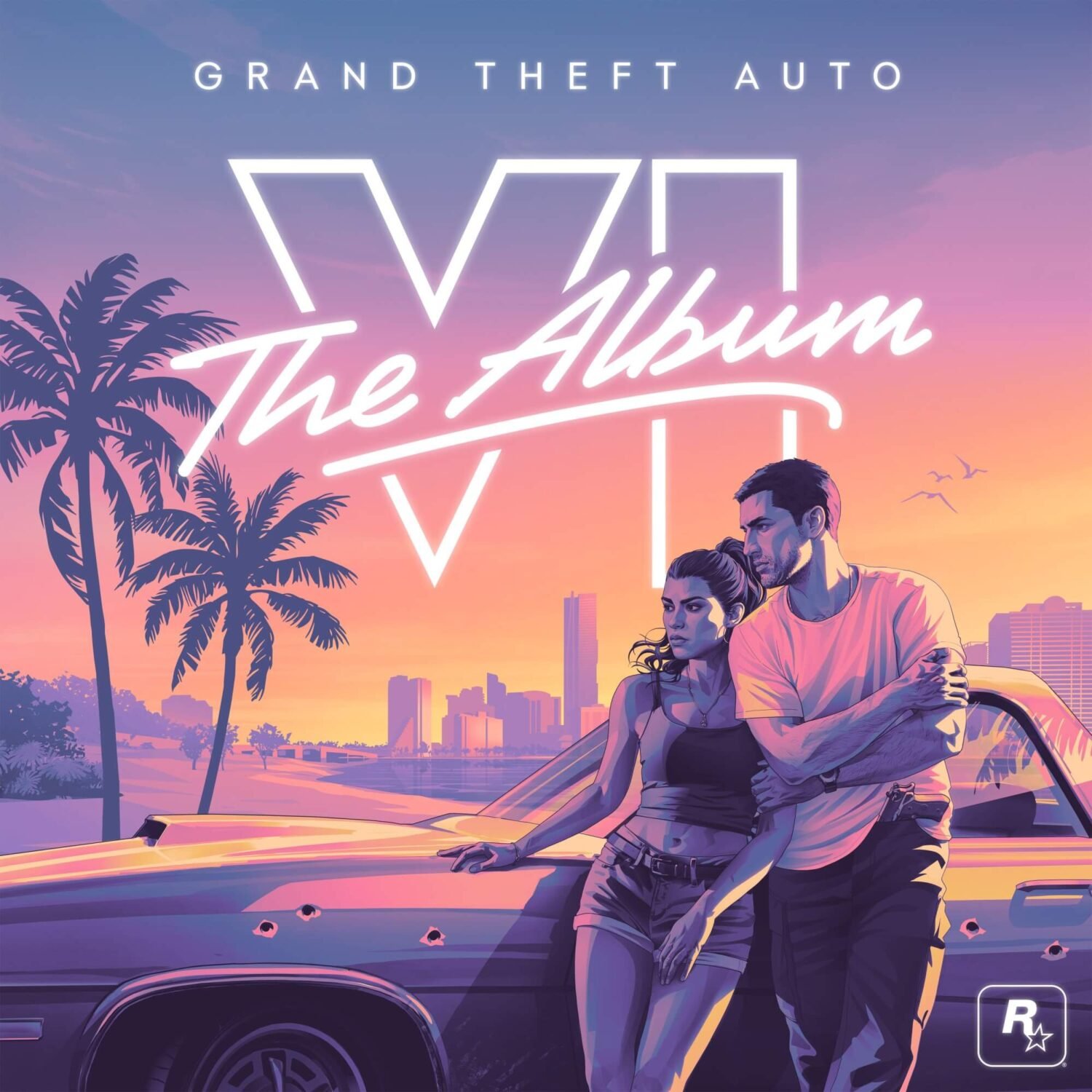
Confirmed so far:
| Artist | Track |
|---|---|
| Yung Lean | That’s It (featuring Future and Metro Boomin) |
| Travis Scott | RHYNO (produced by Guy-Manuel de Homem-Christo) |
| CA7RIEL & Paco Amoroso, PinkPantheress, Fred again.., Etienne de Crécy | Sexy Magic |
| Morgan Wallen | Last Thing You Need |
| Rauw Alejandro | Macacoa 2000 |
| Keith Richards | Bright Lights, Big City |
Six of 34 confirmed so far. The remainder are being revealed through a rolling social campaign.
Getting a Rolling Stone, a Daft Punk producer, a country chart leader and a Swedish cloud rap veteran onto the same commissioned tracklist is a serious piece of music supervision. Whatever the pricing looks like, the album is not a cash-in with a logo on it.
It is also only a slice of the music in the game. Hundreds of tracks are expected across the in-game radio stations, and some of them have already surfaced through leaks. That material is unconfirmed, and given how much of this game has escaped early, including a playable build that leaked well ahead of release, it is genuinely unclear which leaked songs are final and which were placeholders in a development build.
The wider physical media pattern
Games are late to a shift that music and film worked through first, and the industries have landed in noticeably different places.
Vinyl has spent a decade growing on the strength of exactly what Rockstar is selling here: an object, an artifact, something you hold. Film has a smaller but committed version of the same, with filmmakers including Christopher Nolan arguing that discs remain meaningfully better than streams and buying habits partly backing him up.
Games went the other way, and mostly for reasons that are not sinister. Modern releases are enormous, day-one patches make the disc a partial copy anyway, and physical sales have collapsed as a share of the market. Sony noted that physical accounted for a small single-digit percentage of PlayStation software sales, and once it is that small, pressing discs stops making commercial sense.
The awkwardness is that Rockstar has now demonstrated it is entirely willing to manufacture, warehouse and ship physical objects to this audience. It picked the soundtrack. Fans noticed.
What to watch before November 19
- Whether the limited edition gets a second run. Restocking would defuse the scalping, and undercut the exclusivity that sold it out. Publishers rarely choose the first option
- The remaining 28 tracks. The rolling reveal is doing real promotional work and the confirmed six suggest the rest are worth waiting for
- Whether the standard vinyl also sells out. At $49.98 it is the version most people will actually buy, and its supply has had far less attention
- Whether any physical edition of the game appears. Nothing suggests it will. But this is the first time the question has had a concrete comparison attached to it
None of this will dent the launch. Grand Theft Auto VI is going to sell in numbers that make the soundtrack discourse a rounding error, and the album looks like a legitimately good record that a lot of people will enjoy owning.
The complaint is narrower than it sounds, and harder to dismiss for being narrow. Rockstar has shown it can still put something real in your hands. It just decided the game would not be the thing.
About this article: GeekBlog covers U.S. technology news, AI, phones, smartwatches and gaming. Every story is written and checked under our Editorial Policy. Spotted a mistake or have a story tip? Contact our editors.
