

HP is betting big on gaming at the exact moment the gaming hardware market is losing steam. The company has folded its HyperX accessories brand into its long running OMEN laptop and desktop line, merging both under a single name: HyperX OMEN. The result is a refreshed lineup of laptops, desktops, monitors, and peripherals that share one design language, one piece of control software, and a set of cross device features HP says will make it easier to build or buy a gaming setup without juggling two brands.
Two Brands Become One
Until now, OMEN covered HP’s gaming laptops and desktops, while HyperX handled headsets, keyboards, mice, and other accessories after HP acquired the brand from Kingston back in 2021. Keeping them separate meant separate app ecosystems and separate marketing, even though most buyers were mixing and matching gear from both lines anyway.
Under the new structure, every new laptop, desktop, monitor, and peripheral ships as a HyperX OMEN product. HP is pitching this as more than a rebrand. The company says the unified lineup brings single platform software control, synchronized RGB lighting across every connected device, AI assisted performance tuning, and simpler setup with fewer steps than before. Whether that translates into a meaningfully better day to day experience is something reviewers will only be able to judge once the hardware ships in volume, but the pitch itself signals how much HP wants gaming customers to see one brand instead of two.
The New Laptops
Three laptops anchor the refresh: the HyperX OMEN MAX 16, the OMEN 16, and the OMEN 15. The MAX 16 sits at the top, offering up to an Nvidia GeForce RTX 5090 laptop GPU with 24GB of GDDR7 memory, paired with Intel’s newest Core Ultra 300 series chips. Buyers can configure it with as much as 64GB of DDR5-6400 memory, up to 2TB of Gen5 SSD storage, and a 16 inch 2.5K OLED display running at 240Hz.
The standard OMEN 16 trims the ceiling slightly, topping out at an RTX 5070 laptop GPU with up to 64GB of DDR5-5600 memory and the same size OLED panel at a 165Hz refresh rate. The OMEN 15 is the entry point of the family, built around a 15.3 inch 16:10 display and a choice of RTX 5050, 5060, or 5070 GPUs, each carrying 8GB of GDDR7 memory, with up to 32GB of system RAM. Pricing for the lineup starts around $2,679 for an Intel and RTX 5070 Ti configuration and climbs to roughly $4,469 for a maxed out RTX 5090 build.
The New Desktops
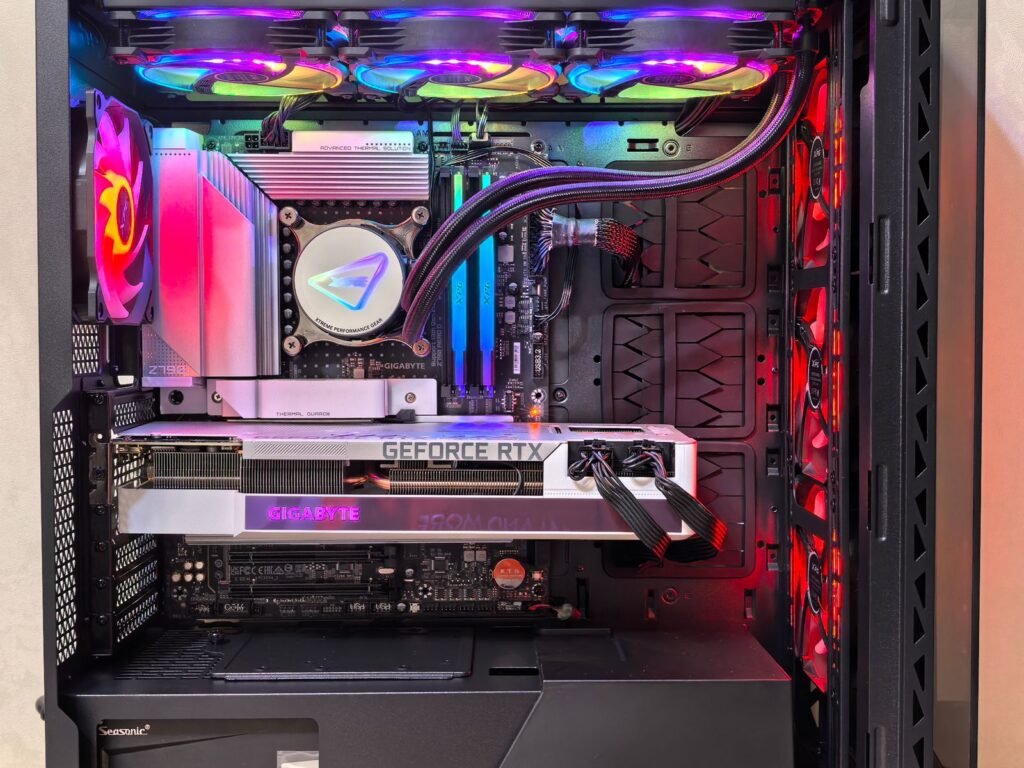
On the desktop side, HP introduced the HyperX OMEN MAX 45L and the smaller OMEN 35L. The MAX 45L is aimed squarely at enthusiasts, running an Intel Core Ultra 7 270K Plus processor with configurations up to an RTX 5090, support for up to 128GB of DDR5 memory, and a fully modular 1200W power supply. Cooling comes from HP’s second generation Cryo Chamber system, with support for liquid coolers as large as 360mm. It is available now starting at $3,199.
The OMEN 35L uses the same processor but pairs it with an RTX 5080 and a quieter, more compact chassis aimed at buyers who want strong performance without the MAX 45L’s footprint or price. Both machines keep the tool less internal design and standardized parts that HP has leaned on in recent desktop generations, making upgrades and repairs more straightforward than in earlier OMEN towers.
Why HP Is Pushing Now
The timing is not an accident. Gaming hardware costs in the United States have climbed roughly 16 percent since the start of the year, with the average selling price of new gaming hardware moving from around $452 in January to about $525 by June, according to industry tracking cited by analysts. Shipments of graphics cards and other add in boards are expected to fall by close to 10 percent in 2026, and several major motherboard makers have already cut their annual shipment targets.
Much of that pressure traces back to the same story that has been reshaping the rest of the electronics industry this year: memory chips are being pulled toward AI data centers faster than manufacturers can replace the supply. When DRAM and NAND get diverted to AI servers because that demand is more profitable, everything else built with the same components, including gaming laptops, desktops, and graphics cards, gets more expensive to build. That same dynamic is behind the broader global chip supply crunch tied to the data center construction boom, and it is a big part of why gamers are seeing sticker prices creep upward even on hardware that looks familiar on paper.
Gaming PCs are not the only corner of the industry adjusting to a shakier hardware landscape this year. Console makers have been rethinking their own strategies too, with Xbox’s own overhaul of its hardware and services lineup arriving as part of a similar effort to keep players engaged while costs across the industry keep shifting.
What It Means for Buyers
For anyone shopping for a new gaming laptop or desktop this year, the unified HyperX OMEN lineup is worth a look, but it will not escape the pricing pressure hitting the rest of the market. A single ecosystem with synced lighting and shared software is a genuine convenience, and the specs on the MAX 16 and MAX 45L are serious for anyone chasing top tier frame rates. Just do not expect the merger itself to bring prices down. If anything, buyers who have been waiting for a good moment to upgrade may want to compare current configurations carefully, since component costs tied to the memory shortage are unlikely to ease before next year.
HP has not said whether older OMEN or standalone HyperX products will keep receiving support and software updates, or how quickly the rebrand will roll out across its full retail catalog. For now, new purchases are the clearest way to get the unified experience the company is promoting.
About this article: GeekBlog covers U.S. technology news, AI, phones, smartwatches and gaming. Every story is written and checked under our Editorial Policy. Spotted a mistake or have a story tip? Contact our editors.
